Round table | Creativity of artists in exile. Art as a means of resistance
What is being an artist in exile? How can art be a means of resistance? So many questions that we will try to answer in the presence of our three speakers.
Zaterdag 16 maart 2024, 15u00Verlopen
Voorwaarden
Gratis toegang op basis van beschikbaarheid
Toegankelijkheidsvoorzieningen
Motorische beperking
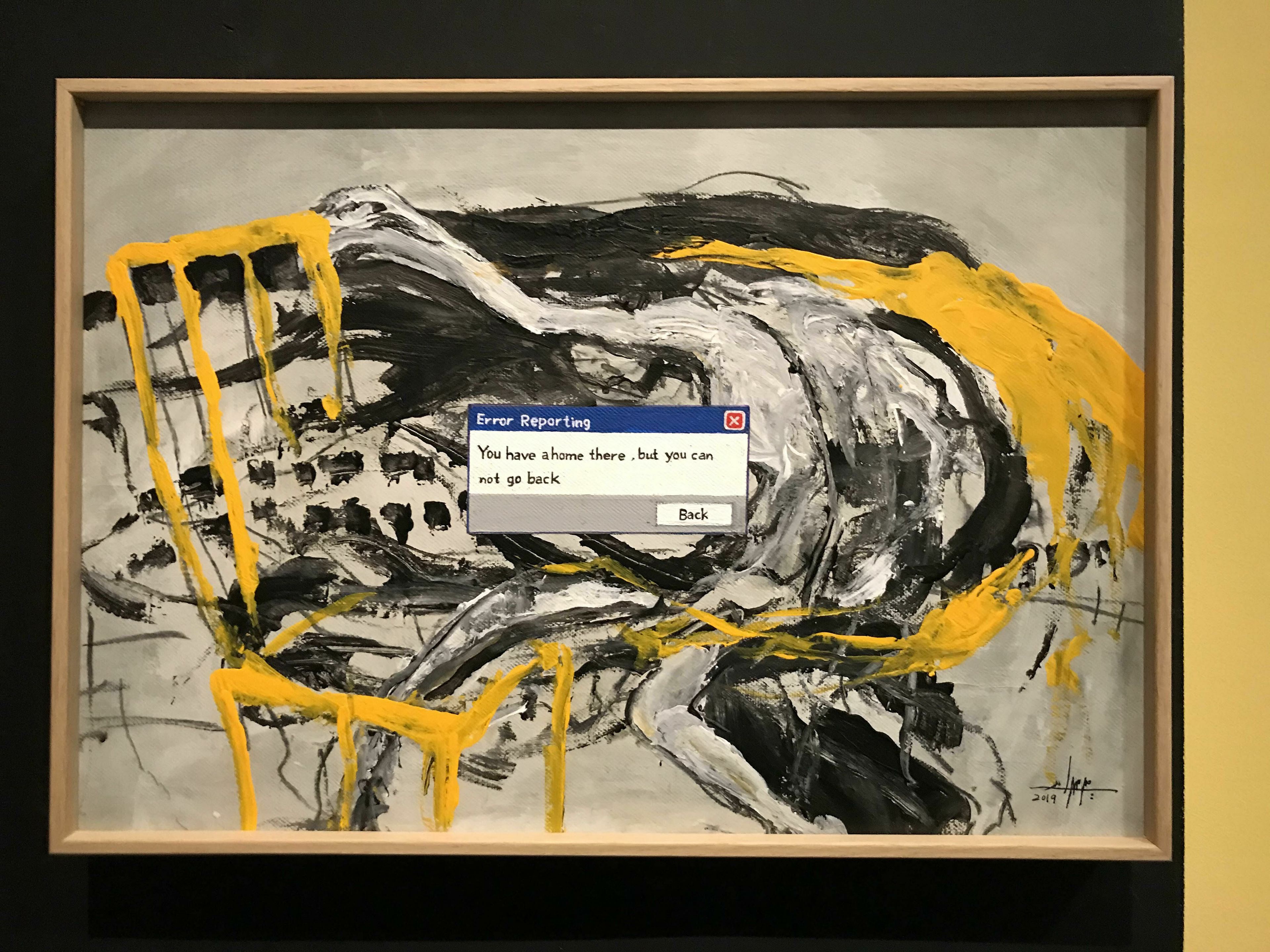
© May Murad
Round table in partnership with the Observatory of Heritage of the East and Mediterranean
The Observatory brings together international researchers and experts working to protect heritage in the Mediterranean and Middle East through the publication of online articles, the production of specific reports and participation in international projects.
Website: https://patrimony.org/
The distance with the chosen or suffered homeland is always an exile, it gives rise in many artists the need to create differently. This question of exile in the artistic field is not new and has inspired many artistic currents. Today, the resurgence of international conflicts, particularly in the Middle East, has led to the emergence of a generation of exiled artists, often refugees, who question how to inhabit the creative process. If exile is a source of inner torment, it can also be a powerful lever for creativity and also a means of resistance.
What is being an artist in exile? What place for creation in exile? How can art be a means of resistance? So many questions that we will try to answer in the presence of our three speakers.
With
Writer, poet, translator of the poet Mahmoud Darwich, member of the Palestinian Parliament in exile, and former ambassador of Palestine to UNESCO from 2006 to 2022. He is the director of the collection of the future National Museum of Modern and Contemporary Art in Palestine.
May Murad Arrived in France in 2019, May Murad is a refugee artist from Gaza. From figurative to abstract, May Murad is interested in faces, bodies, man and his inextricable link to the earth.Her art, a true field of expression of reality tells the story, the banality and the daily life under the yoke of occupation. Life is tirelessly present as an act of faith.
Graphic artist, originally from Homs, Syria, Fares Cachoux arrived in France in 2013 for his studies. He works mainly on political, social and environmental issues. Minimalist but bold, his work depicts the people’s struggle for freedom and dignity using strong and striking colors and simple silhouettes.
Table-ronde | Créativité des artistes en exil. L'art comme moyen de résistance
Qu’est-ce qu’être un artiste en exil ? De quelle manière, l’art peut-il être un moyen de résistance? Autant de questions auxquelles nous tenterons de répondre en présence de nos trois intervenants.
Zaterdag 16 maart 2024, 15u00Verlopen
Voorwaarden
Gratis toegang op basis van beschikbaarheid
Toegankelijkheidsvoorzieningen
Motorische beperking
© May Murad
Table-ronde en partenariat avec l’Observatoire du patrimoine d’Orient et de Méditerranée
L’Observatoire réunit des chercheurs et experts internationaux qui œuvrent à la protection du patrimoine en Méditerranée et au Moyen-Orient à travers la publication d’articles en ligne, la production de rapports spécifiques et la participation à des projets internationaux.
Site internet : https://patrimoinedorient.org/
____________________________
L’éloignement avec la terre natale choisi ou subi est toujours un exil, il fait naître chez de nombreux artistes le besoin de créer autrement. Cette question de l’exil dans le champ artistique n’est pas nouvelle et a inspiré de nombreux courants artistiques. Aujourd’hui, la recrudescence des conflits internationaux notamment au Moyen-Orient a fait émerger une génération d’artistes exilés, souvent réfugiés qui questionnent la manière d’habiter le processus créatif. Si l’exil est source de tourment intérieur, il peut être aussi un puissant levier au service de la créativité et également un moyen de résistance.
Qu’est-ce qu’être un artiste en exil ? Quelle place pour la création en exil? De quelle manière, l’art peut-il être un moyen de résistance? Autant de questions auxquelles nous tenterons de répondre en présence de nos trois intervenants.
Avec
Elias Sanbar Écrivain, poète, traducteur du poète Mahmoud Darwich, membre du Parlement palestinien en exil, et ancien ambassadeur de la Palestine auprès de l’Unesco de 2006 à 2022. Il est le directeur de la collection du futur Musée national d’art moderne et contemporain en Palestine.
May Murad Arrivée en France en 2019, May Murad est une artiste réfugiée de Gaza. Du figuratif à l’abstrait, May Murad, s’intéresse aux visages, aux corps, à l’homme et à son lien inextricable à la terre.Son art, véritable champ d’expression du réel raconte l’histoire, la banalité et le quotidien sous le joug de l’occupation. La vie y est inlassablement présente, comme un acte de foi.
Fares Cachoux Artiste graphiste, originaire de Homs, en Syrie, Fares Cachoux est arrivé en France en 2013 pour ses études. Il travaille principalement sur des questions politiques, sociales et environnementales. Minimaliste mais audacieux, son travail dépeint la lutte du peuple pour la liberté et la dignité en utilisant des couleurs fortes et frappantes et des silhouettes simples.
Ronde tafel | creativiteit van kunstenaars in ballingschap. Kunst als verzetsmiddel
Wat is een kunstenaar in ballingschap? Hoe kan kunst een middel van verzet zijn? Zoveel vragen die we in aanwezigheid van onze drie sprekers zullen proberen te beantwoorden.
Zaterdag 16 maart 2024, 15u00Verlopen
Voorwaarden
Gratis toegang op basis van beschikbaarheid
Toegankelijkheidsvoorzieningen
Motorische beperking
© May Murad
Rondetafelconferentie in samenwerking met de Waarnemingspost voor het erfgoed van het Oosten en het Middellandse Zeegebied
Het Waarnemingscentrum brengt internationale onderzoekers en deskundigen samen die zich inzetten voor de bescherming van het erfgoed in het Middellandse-Zeegebied en het Midden-Oosten door middel van de publicatie van online artikelen, de productie van specifieke verslagen en deelname aan internationale projecten.
Website: https://patrimony.org/
De afstand tot het gekozen of geleden vaderland is altijd een ballingschap, het geeft aanleiding tot de noodzaak om anders te creëren bij veel kunstenaars. Deze kwestie van ballingschap in het artistieke veld is niet nieuw en heeft vele artistieke stromingen geïnspireerd. De heropleving van internationale conflicten, met name in het Midden-Oosten, heeft geleid tot de opkomst van een generatie van verbannen kunstenaars, vaak vluchtelingen, die zich afvragen hoe het creatieve proces moet worden bewoond. Als ballingschap een bron van innerlijke kwelling is, kan het ook een krachtige hefboom zijn voor creativiteit en ook een middel tot verzet.
Wat is een kunstenaar in ballingschap? Welke plaats voor creatie in ballingschap? Hoe kan kunst een middel van verzet zijn? Zoveel vragen die we in aanwezigheid van onze drie sprekers zullen proberen te beantwoorden.
Met
Schrijver, dichter, vertaler van de dichter Mahmoud Darwich, lid van het Palestijnse Parlement in ballingschap, en voormalig ambassadeur van Palestina bij UNESCO van 2006 tot 2022. Hij is directeur van de collectie van het Future National Museum of modern and Contemporary Art in Palestina.
May Murad May Murad is in 2019 in Frankrijk aangekomen en is een vluchtelingenkunstenaar uit Gaza. Van figuratief tot abstract, May Murad is geïnteresseerd in gezichten, lichamen, de mens en zijn onlosmakelijk verbonden met de aarde.haar kunst, een waar veld van expressie van de werkelijkheid vertelt het verhaal, de banaliteit en het dagelijkse leven onder het juk van de bezetting. Het leven is onvermoeibaar aanwezig als een daad van geloof.
Grafisch kunstenaar, oorspronkelijk uit Homs, Syrië, Tarieven Cachoux Aangekomen in Frankrijk in 2013 voor zijn studie. Hij werkt voornamelijk aan politieke, sociale en milieukwesties. Zijn minimalistische maar gedurfde werk toont de strijd van de mensen voor vrijheid en waardigheid met sterke en opvallende kleuren en eenvoudige silhouetten.


