The Digital Future of Humanity by Mark Hunyadi
A professor at UCLouvain, Mark Hunyadi is a philosopher and a leading thinker on trust and social bonds. Faced with AI, he argues for recognising the human mind as a shared heritage of humanity.
Dinsdag 10 februari, 12u00Verlopen
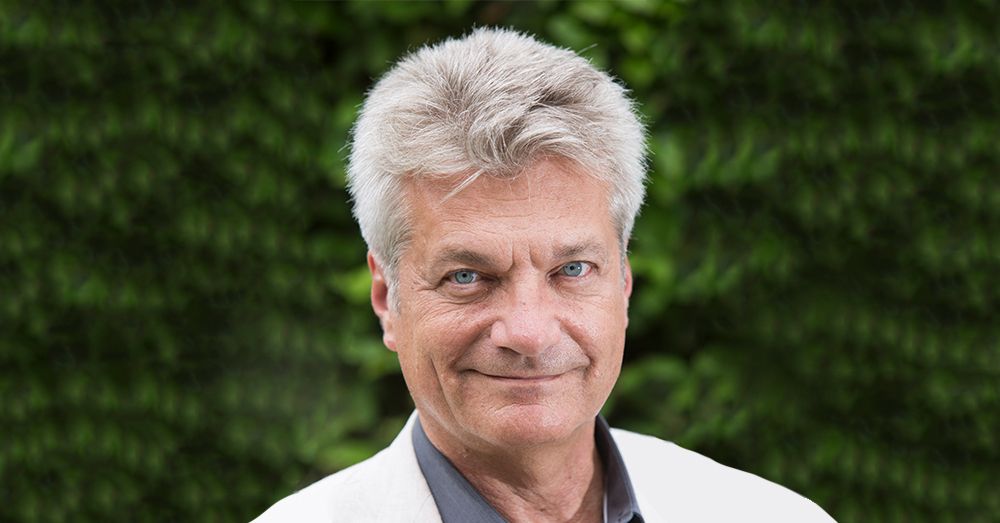
DR
Born in Geneva in 1960 to parents who had fled Hungary four years earlier, Mark Hunyadi has been Professor of Social, Moral and Political Philosophy at the Catholic University of Louvain since 2007. He studied in Geneva, Paris and Frankfurt, where he spent two formative years working closely with Jürgen Habermas, before completing his PhD in Geneva in 1995. He also taught at Université Laval in Quebec between 2004 and 2007. A prominent theorist of trust and social cohesion, he is the author of In the Beginning Was Trust (Le Bord de l’eau, 2020) and, more recently, Trusting Trust (Erès, 2023), as well as A Universal Declaration of the Rights of the Human Mind: A Proposal (PUF, 2024). In the face of rapid digitalisation and advances in AI, he actively advocates for the recognition of the human mind as a common heritage of humanity, comparable to the status granted to the deep seabed.
Event organised by the Société de Lecture
New technologies, Artificial intelligence, AI, Digital technology, Critical thinking, Heritage, Future, Discussion
L'avenir numérique de l'humanité par Mark Hunyadi
Professeur à l’UCLouvain, Mark Hunyadi est philosophe et théoricien de la confiance et du lien social. Il propose, face à l’IA, de reconnaître l’esprit humain comme patrimoine commun de l’humanité.
Dinsdag 10 februari, 12u00Verlopen
DR
Né en 1960 à Genève de parents réfugiés ayant quitté la Hongrie quatre ans plus tôt, Mark Hunyadi est depuis 2007 professeur de philosophie sociale, morale et politique à l’Université catholique de Louvain. Il a fait ses études à Genève, Paris et Francfort (où il passe deux années intenses auprès de Jürgen Habermas), avant d’obtenir son doctorat à Genève en 1995. Il a également été professeur à l’Université Laval de Québec entre 2004 et 2007. Théoricien de la confiance (Au début est la confiance, Le Bord de l'eau, 2020) et du lien social, il est l’auteur, ces dernières années, de Faire confiance à la confiance (Erès, 2023) et de la Déclaration universelle des droits de l’esprit humain. Une proposition (PUF, 2024). Face aux avancées du numérique et de l’IA, il promeut activement l'idée de déclarer l’esprit humain patrimoine commun de l’humanité, comme on l’a fait pour les fonds marins.
Événement proposé par la Société de Lecture
Nouvelles technologies, Intelligence artificielle, IA, Philosophie sociale, Numérique, Esprit critique, Patrimoine, Futur, Discussion


