Besichtigung der Kirche Notre-Dame de Montluçon
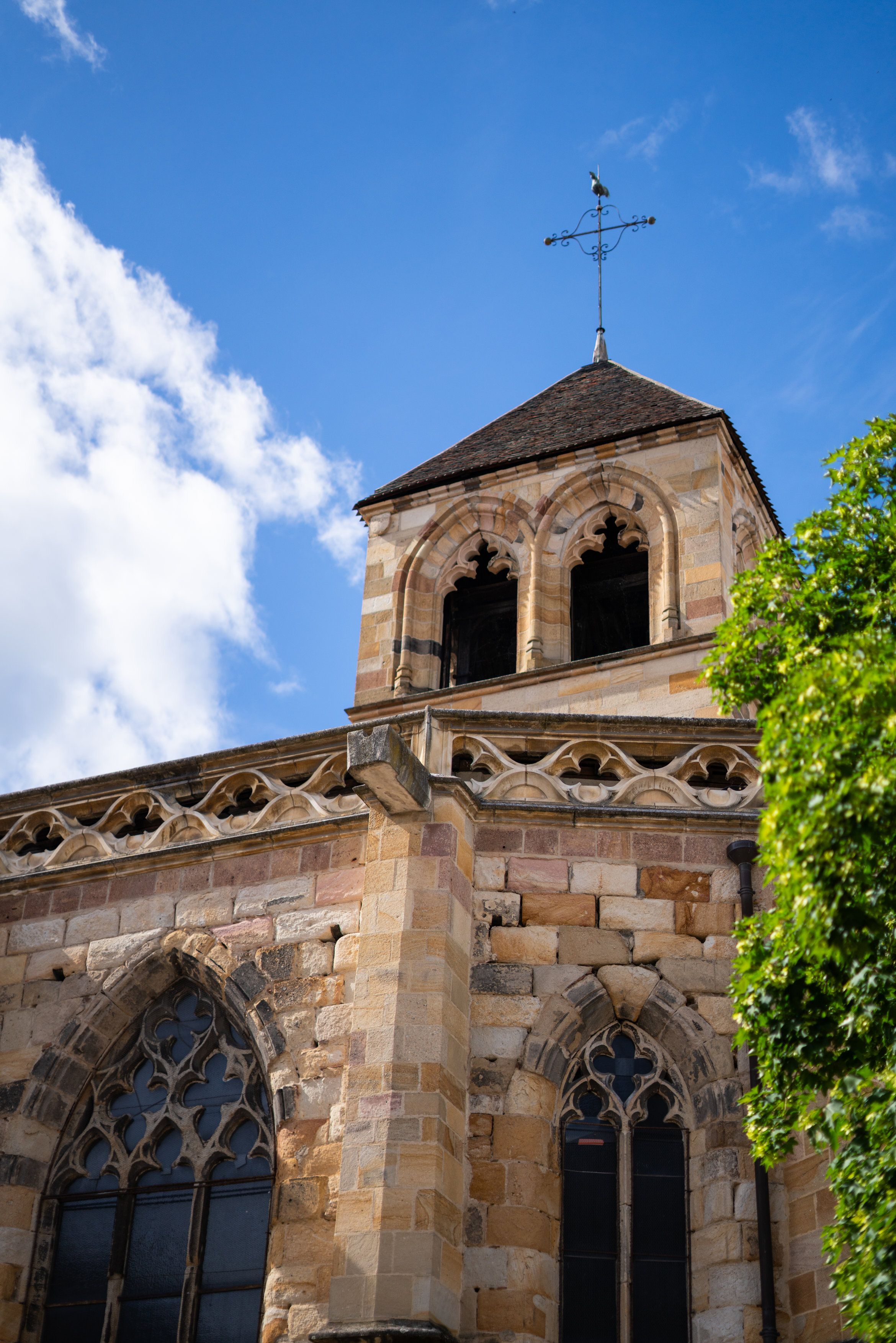
Gotische Kirche, die in drei Bauphasen auf Initiative des Herzogs Ludwig II. von Bourbon errichtet wurde.
Toegankelijkheidsvoorzieningen
Motorische beperking
©Les Coflocs
Gotische Kirche, die in drei Bauphasen auf Initiative des Herzogs Ludwig II. von Bourbon errichtet wurde.
Diese untypische Kirche wurde vom Ende des 14. bis zum Ende des 15. Jahrhunderts an der Stelle einer romanischen Kirche aus dem Jahr 1000 errichtet. Einst an ein benediktinisches Priorat angrenzend, weist sie zwei breite Schiffe und eine Seitenwand mit vier schmalen gotischen Kapellen auf. Zahlreiche Kunstobjekte aus dem 15., 15. und 17. Jahrhundert sind hier untergebracht, darunter eine bemerkenswerte Jungfrau von Pitié, ein Christus mit Fesseln und ein Gemälde von Boucher, das die Himmelfahrt darstellt.
Nicht zu verpassen: ein prächtiges Polyptychon in 7 Bildern aus dem späten 15. Jahrhundert, das dem Leben der Jungfrau Maria gewidmet ist.
Visit of the church Notre-Dame de Montluçon
Gothic church built in 3 construction campaigns on the initiative of Duke Louis II of Bourbon.
Toegankelijkheidsvoorzieningen
Motorische beperking
©Les Coflocs
Gothic church built in 3 construction campaigns on the initiative of Duke Louis II of Bourbon.
This church with an atypical plan was built from the end of the 14th century to the end of the 15th, on the site of a Romanesque church dating back to the year 1000. Formerly attached to a Benedictine priory, it has 2 wide naves and a side pierced by 4 narrow chapels with Gothic windows. Many works of art from the 15th, 15th and 17th centuries are housed here, including a remarkable Virgin of Mercy, a Christ in Bonds and a painting by Boucher depicting the Assumption.
Not to be missed: a magnificent polyptych in 7 paintings from the end of the 15th century, dedicated to the life of the Virgin Mary.
Visita della chiesa di Notre-Dame de Montluçon
Chiesa gotica costruita in 3 campagne su iniziativa del duca Luigi II di Borbone.
Toegankelijkheidsvoorzieningen
Motorische beperking
©Les Coflocs
Chiesa gotica costruita in 3 campagne su iniziativa del duca Luigi II di Borbone.
Questa chiesa dal piano atipico è stata costruita tra la fine del XIV e la fine del XV secolo, sul sito di una chiesa romanica risalente all'anno 1000. Un tempo annessa a un priorato benedettino, presenta 2 ampie navate e una parte inferiore traforata da 4 strette cappelle a bacini gotici. Vi sono ospitati numerosi oggetti d'arte del XV, XV e XVII secolo, tra cui una notevole Madonna della Pietà, un Cristo con i legami e un quadro di Boucher che rappresenta l'Assunzione.
Da non perdere: un magnifico poliptico in 7 quadri della fine del XV secolo, dedicato alla vita della Vergine Maria.
Visite de l'église Notre-Dame de Montluçon
Église gothique bâtie en 3 campagnes de construction sur l'initiative du duc Louis II de Bourbon.
Toegankelijkheidsvoorzieningen
Motorische beperking
©Les Coflocs
Église gothique bâtie en 3 campagnes de construction sur l'initiative du duc Louis II de Bourbon.
Cette église au plan atypique a été bâtie de la fin du XIVe à la fin du XVe, sur l'emplacement d'une église romane datant de l'an 1000. Autrefois accolée à un prieuré bénédictin, elle présente 2 larges nefs et un bas-côté percé de 4 étroites chapelles à baies gothiques. De nombreux objets d'art des XVe, XVe et XVIIe siècle y sont abrités, dont une Vierge de Pitié remarquable, un Christ aux liens et un tableau de Boucher représentant l'Assomption.
À ne pas manquer : un magnifique polyptyque en 7 tableaux de la fin du XVe, consacré à la vie de la Vierge Marie.
Visita a la iglesia de Notre-Dame de Montluçon
Iglesia gótica construida en 3 campañas de construcción por iniciativa del duque Luis II de Borbón.
Toegankelijkheidsvoorzieningen
Motorische beperking
©Les Coflocs
Iglesia gótica construida en 3 campañas de construcción por iniciativa del duque Luis II de Borbón.
Esta iglesia de planta atípica fue construida desde finales del siglo XIV hasta finales del siglo XV, en el lugar de una iglesia románica que data del año 1000. Antiguamente adosada a un priorato benedictino, presenta 2 amplias naves y una parte inferior atravesada por 4 estrechas capillas con bóvedas góticas. Alberga numerosos objetos de arte de los siglos XV, XV y XVII, entre ellos una notable Virgen de la Piedad, un Cristo con lazos y un cuadro de Boucher que representa a la Asunción.
No se puede perder: un magnífico políptico en 7 cuadros de finales del siglo XV, dedicado a la vida de la Virgen María.

