Führung, Erhaltung des Bauwerks und des Gartens
Führung über die Restaurierung des ehemaligen Priorats aus dem 11\. Jahrhundert zu Beginn der 90er Jahre unter Berücksichtigung der Traditionen. Neugestaltung des Landschaftsparks durch sehr unterschi
Zondag 20 september, 15u00
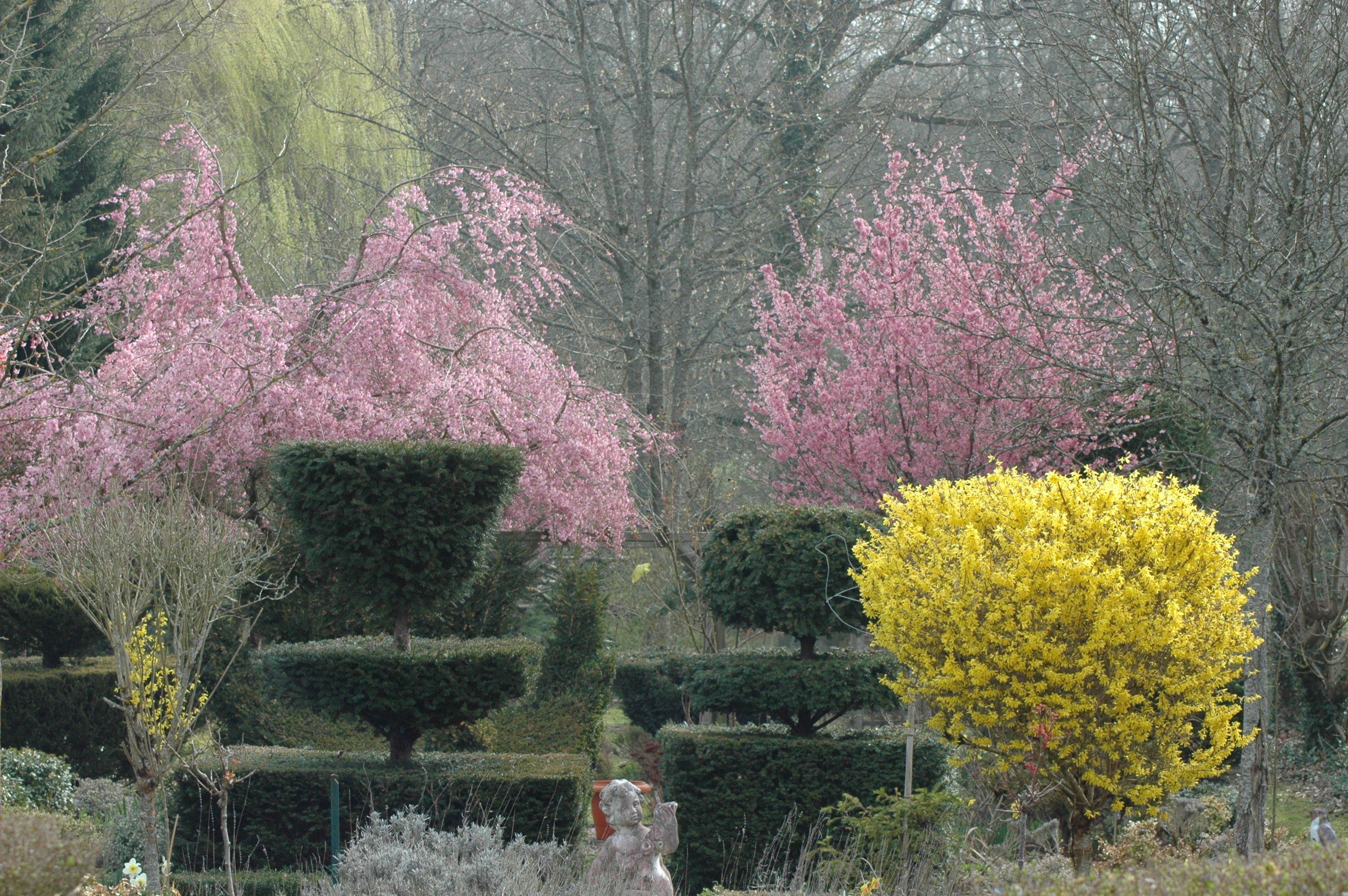
©lesmetamorphozes
Führung über die Restaurierung des ehemaligen Priorats aus dem 11. Jahrhundert zu Beginn der 90er Jahre. Neugestaltung des Landschaftsparks.
Besuch mit der Eigentümerin des Priorats und Gartens mit Erklärungen zu seiner Sanierung, Beschreibung dessen, was ein Priorat bedeutete.
Ein Priorat aus dem 11. Jahrhundert ist eine "Abtei". Im Gegensatz zu einer Abtei, die völlig autonom ist und von einem Abt geleitet wird, gehört das Priorat einer Mutterabtei an (oft der mächtigen Abtei von Cluny im 11. Jahrhundert). Es wird von einem Prior geleitet.
Die Gemeinde ist in der Regel kleiner als die einer Abtei, manchmal nur wenige Mönche, genannt Prior oder Mönche-Prior).
Das Zeitliche und das Geistige: Die Priorei verwaltete oft landwirtschaftliche Flächen, Mühlen oder Weinberge für die Mutterabtei.
Das 11. Jahrhundert entspricht dem Aufstieg der romanischen Kunst.
Der Roman bevorzugt Kraft, Halbschatten und Besinnlichkeit.
Licht: es ist selten und kostbar. Enge oder mörderische Fenster.
Massives Aussehen, die Wände sind dick,
Die Mönche lebten im Rhythmus der kanonischen Stunden (Morgen mitten in der Nacht, Laude bei Tagesanbruch, Vesper bei Sonnenuntergang).
Das Schweigen: die Regel der absoluten Stille, unterbrochen nur vom Murmeln der Gebete, dem Summen der Gewänder und dem Klingeln der Glocke.
"Gegründet in der Nähe von An Mil, ist diese Priorei ein bemerkenswertes Zeugnis der ersten romanischen Kunst. Bescheidene Abhängigkeit vom Cluny-Orden, er zeichnet sich durch die Ausgrabung des 11. Jahrhunderts aus."
Wir sind nicht nur Eigentümer, wir sind die temporären "Hüter" eines Jahrtausends Geschichte.
"Demut im Angesicht der Zeit"
Wenn man den Stein aus dem 11. Jahrhundert erneuert, weckt, bewahrt, rehabilitiert, festigt oder erhellt.
Wir sind Geschichtsvermittler:
"Dieses Priorat hat zehn Jahrhunderte vor uns durchquert, wir haben versucht, ihm seinen Glanz zurückzugeben, damit er noch zehn weitere durchqueren kann."
2. Den Dialog zwischen dem Alten und dem Modernen aufwerten
Das Leben in einem Ort des 11. Jahrhunderts erfordert einen gewissen modernen Komfort (Heizung, Strom, Isolierung), aber dies muss geschehen, ohne die romanische Seele des Ortes zu verfälschen. Diesen Kontrast muss man würdigen.
Die Verbindung der Materialien: eine Verbindung zwischen den ursprünglichen Rohstoffen (Kalk, Schnittstein, jahrhundertealte Balken)
Respekt vor den Volumen, bewahren Sie die Majestät der Räume, die Deckenhöhen, die Wandstärke von einem Meter und machen es gleichzeitig warm und bewohnbar.
Auch eine Erinnerung an die Bedeutung der französischen Gärten, die untrennbar mit den Schlössern verbunden sind.
Guided tour, safeguarding the building and the garden
Guided tour around the restoration of the former priory in the early 90s, 11th century, respecting traditions. Redevelopment of the landscaped park with very varied creations.
Zondag 20 september, 15u00
©lesmetamorphozes
Guided tour around the restoration of the former priory in the early 1990s. Redevelopment of the landscaped park.
visit with the owner of the priory and garden with explanations about its rehabilitation, description of what a priory represented.
A priory of the eleventh century is a "branch" of an abbey. Unlike an abbey which is totally autonomous and directed by an abbot, the priory depends on a mother-abbey (often the powerful abbey of Cluny in the 11th century). It is led by a prior.
The community is generally smaller than that of an abbey, sometimes only a few monks, called priors or monk-priors.
The temporal and the spiritual: the priory often managed farmland, mills or vineyards on behalf of the parent abbey.
The eleventh century corresponds to the emergence of Romanesque art.
the novel favors strength, penumbra, and meditation
Light: it is rare and precious. Narrow windows or loopholes.
Massive appearance, the walls are thick,
The monks lived at the rhythm of canonical hours (Matins in the middle of the night, Lauds at dawn, Vespers at sunset).
Silence: the rule of absolute silence, interrupted only by the murmur of prayers, the rustle of frocks and the ringing of the bell.
Founded around the year 1000, this priory is a remarkable witness of the first Romanesque art. Humble dependence of the order of Cluny, it is characterized by the bareness of the eleventh century."
We are not only owners, we are temporary "guardians" of a millennium of history.
"Humility in the face of time"
When we renovate from the eleventh century, we awaken, preserve, rehabilitate, consolidate, or sublimate stone.
We are passers of history:
"This priory has survived ten centuries before us; we have tried to restore its splendour so that it would pass through ten more."
2. Enhancing the dialogue between the old and the new
Living in a place of the eleventh century requires some modern comfort (heating, electricity, insulation), but this must be done without distorting the Romanesque soul of the place. It is this contrast that must be valued.
The marriage of materials: alliance between original raw materials (lime, cut stone, century-old beams)
Respect for volumes, maintain the majesty of spaces, the heights under ceiling, the thickness of walls of one meter, while making it warm and habitable.
Also a reminder of the meaning of French gardens, inseparable from castles.
Visita guidata, salvaguardia dell'edificio e del giardino
Visita guidata intorno al restauro all'inizio degli anni '90 dell'ex priorato dell'XI secolo nel rispetto delle tradizioni. Riqualificazione del parco paesaggistico con creazioni molto varie.
Zondag 20 september, 15u00
©lesmetamorphozes
Visita guidata intorno al restauro all'inizio degli anni '90 dell'ex priorato del XI secolo. Ristrutturazione del parco paesaggistico.
visita con la proprietaria del priorato e giardino con le spiegazioni sulla sua riabilitazione, descrizione di ciò che rappresentava un priorato.
Un priorato dell'XI secolo è una "succursale" di un'abbazia. A differenza di un'abbazia che è totalmente autonoma e diretta da un abate, il priorato dipende da un'abbazia madre (spesso la potente abbazia di Cluny nell'XI secolo). È diretto da un priore.
La comunità è generalmente più piccola di quella di un'abbazia, a volte solo pochi monaci, chiamati priori o monaci-priori).
Il temporale e lo spirituale: il priorato gestiva spesso terreni agricoli, mulini o vigneti per conto dell'abbazia madre.
L'XI secolo corrisponde all'emergere dell'arte romanica.
il romanzo privilegia la forza, la penombra e il raccoglimento
La luce: è rara e preziosa. Finestre strette o letali.
Aspetto massiccio, le pareti sono spesse,
I monaci vivevano al ritmo delle ore canoniche (Matinee a mezzanotte, Laudes all'alba, Vespri al tramonto).
Il silenzio: la regola del silenzio assoluto, interrotta solo dal sussurro delle preghiere, dal ruggito delle vesti di bure e dal tintinnio della campana.
"Fondato intorno all'An Mil, questo priorato è una testimonianza notevole della prima arte romanica. Umile dipendenza dall'ordine di Cluny, si caratterizza per lo spogliamento dell'XI secolo."
Non siamo solo proprietari, siamo i "guardiani" temporanei di un millennio di storia.
"L'umiltà di fronte al tempo"
Quando si fa una ristrutturazione dell'XI secolo, si risveglia, preserva, riabilita, consolida o sublima la pietra.
Siamo dei passatori di storia:
"Questo priorato ha attraversato dieci secoli prima di noi, abbiamo cercato di restituirgli il suo splendore affinché ne attraversasse altri dieci."
2. Valorizzare il dialogo tra antico e contemporaneo
Vivere in un luogo dell'XI secolo richiede un certo comfort moderno (riscaldamento, elettricità, isolamento), ma questo deve essere fatto senza alterare l'anima romanica del luogo. È questo contrasto che va valorizzato.
Il matrimonio dei materiali: alleanza tra le materie prime d'origine (calce, pietra da taglio, travi centenarie)
Il rispetto dei volumi, mantenere la maestosità degli spazi, le altezze sotto il soffitto, lo spessore delle pareti di un metro, rendendolo caldo e abitabile.
Richiamo anche al significato dei giardini alla francese, indissociabili dai castelli.
Visite guidée, sauvegarder le bâti et le jardin
Visite guidée autour de la restauration début des années 90 de l'ancien prieuré du XIᵉ siècle dans le respect des traditions. Réaménagement du parc paysager par des créations très variées.
Zondag 20 september, 15u00
©lesmetamorphozes
Visite guidée autour de la restauration début des années 90 de l'ancien prieuré du XIᵉ siècle. Réaménagement du parc paysager.
visite avec la propriétaire du prieuré et jardin avec les explications sur sa réhabilitation, description de ce que représentait un prieuré.
Un prieuré du XIe siècle est une "succursale" d’une abbaye. Contrairement à une abbaye qui est totalement autonome et dirigée par un abbé, le prieuré dépend d'une abbaye-mère (souvent la puissante abbaye de Cluny au XIe siècle). Il est dirigé par un prieur.
La communauté est généralement plus petite que celle d'une abbaye parfois seulement quelques moines, appelés des prieurs ou moines-prieurs).
Le temporel et le spirituel : le prieuré gérait souvent des terres agricoles, des moulins ou des vignes pour le compte de l'abbaye-mère.
Le XIe siècle correspond à l'émergence de l'art roman.
le roman privilégie la force, la pénombre et le recueillement
La lumière : elle est rare et précieuse. Fenêtres étroites ou meurtrières.
Aspect massif, les murs sont épais,
Les moines vivaient au rythme des heures canoniales (Matines au milieu de la nuit, Laudes à l'aube, Vêpres au coucher du soleil).
Le silence : la règle du silence absolu, interrompue seulement par le murmure des prières, le bruissement des robes de bure et le tintement de la cloche.
"Fondé aux alentours de l'An Mil, ce prieuré est un témoin remarquable du premier art roman. Humble dépendance de l'ordre de Cluny, il se caractéristique par le dépouillement du XIe siècle."
Nous sommes pas seulement propriétaire, nous sommes les "gardiens" temporaires d'un millénaire d'histoire.
"L'humilité face au temps"
Quand on rénove du XIe Siècle on réveille, préserve, réhabilite, consolide, ou sublime la pierre.
Nous sommes des passeurs d'histoire :
"Ce prieuré a traversé dix siècles avant nous, nous avons essayer de lui redonner sa superbe pour qu’il en traverse dix de plus."
2. Valoriser le dialogue entre l'ancien et le contemporain
Vivre dans un lieu du XIe siècle exige un certain confort moderne (chauffage, électricité, isolation), mais cela doit se faire sans dénaturer l'âme romane du lieu. C'est ce contraste qu'il faut valoriser.
Le mariage des matériaux : alliance entre les matières brutes d'origine (la chaux, la pierre de taille, les poutres centenaires)
Le respect des volumes, conservez la majesté des espaces, les hauteurs sous plafond, l'épaisseur des murs d'un mètre, tout en le rendant chaleureux et habitable.
Également rappel de la signification des jardins à la Française, indissociables des châteaux.
Visita guiada, salvar el edificio y el jardín
Visita guiada en torno a la restauración de principios de los años 90 del antiguo priorato del siglo XI respetando las tradiciones. Reacondicionamiento del parque paisajístico mediante creaciones muy
Zondag 20 september, 15u00
©lesmetamorphozes
Visita guiada alrededor de la restauración a principios de los años 90 del antiguo priorato del siglo XI. Renovación del parque paisajístico.
visita con la propietaria del priorato y jardín con las explicaciones sobre su rehabilitación, descripción de lo que representaba un priorato.
Un priorato del siglo XI es una "sucursal" de una abadía. A diferencia de una abadía que es totalmente autónoma y dirigida por un abad, el priorato depende de una abadía madre (a menudo la poderosa abadía de Cluny en el siglo XI). Está dirigido por un prior.
La comunidad es generalmente más pequeña que la de una abadía, a veces solo unos pocos monjes, llamados priores o monjes-priores).
Lo temporal y lo espiritual: el priorato gestionaba a menudo tierras agrícolas, molinos o viñedos por cuenta de la abadía madre.
El siglo XI corresponde al surgimiento del arte románico.
la novela privilegia la fuerza, la penumbra y el recogimiento
La luz: es rara y preciosa. Ventanas estrechas o asesinas.
Aspecto macizo, las paredes son gruesas,
Los monjes vivían al ritmo de las horas canónicas (Matinas en medio de la noche, Laudes al amanecer, Vísperas al atardecer).
El silencio: la regla del silencio absoluto, interrumpido sólo por el murmullo de las oraciones, el rugido de las túnicas de bure y el tintineo de la campana.
"Fundado en torno al An Mil, este priorato es un testigo notable del primer arte románico. Humilde dependencia de la orden de Cluny, se caracteriza por el despojo del siglo XI."
No sólo somos los propietarios, sino también los "guardianes" temporales de un milenio de historia.
"La humildad ante el tiempo"
Cuando se renueva la piedra del siglo XI, se despierta, se preserva, se restaura, se consolida o se sublima.
Somos intermediarios de la historia:
"Este priorato ha pasado diez siglos antes que nosotros, hemos tratado de devolverle su esplendor para que pase diez más."
2. Valorizar el diálogo entre lo antiguo y lo contemporáneo
Vivir en un lugar del siglo XI exige cierto confort moderno (calefacción, electricidad, aislamiento), pero esto debe hacerse sin desnaturalizar el alma románica del lugar. Es este contraste lo que hay que valorar.
El matrimonio de los materiales: alianza entre las materias primas originales (cal, piedra tallada, vigas centenarias)
El respeto de los volúmenes, mantener la majestuosidad de los espacios, las alturas bajo techo, el espesor de las paredes de un metro, a la vez que lo hacen cálido y habitable.
También recuerda el significado de los jardines a la francesa, indisociables de los castillos.

