Szabó: BLOW-UP
Blow-Up präsentiert sich in einer traditionellen und thematischen Lesart als eine Serie von fotografischen Porträts in Schwarz-Weiß. Das Gerät, mit dem diese Bilder aufgenommen werden, ist eine Kamera
Toegankelijkheidsvoorzieningen
Motorische beperking
©Dezső Szabó
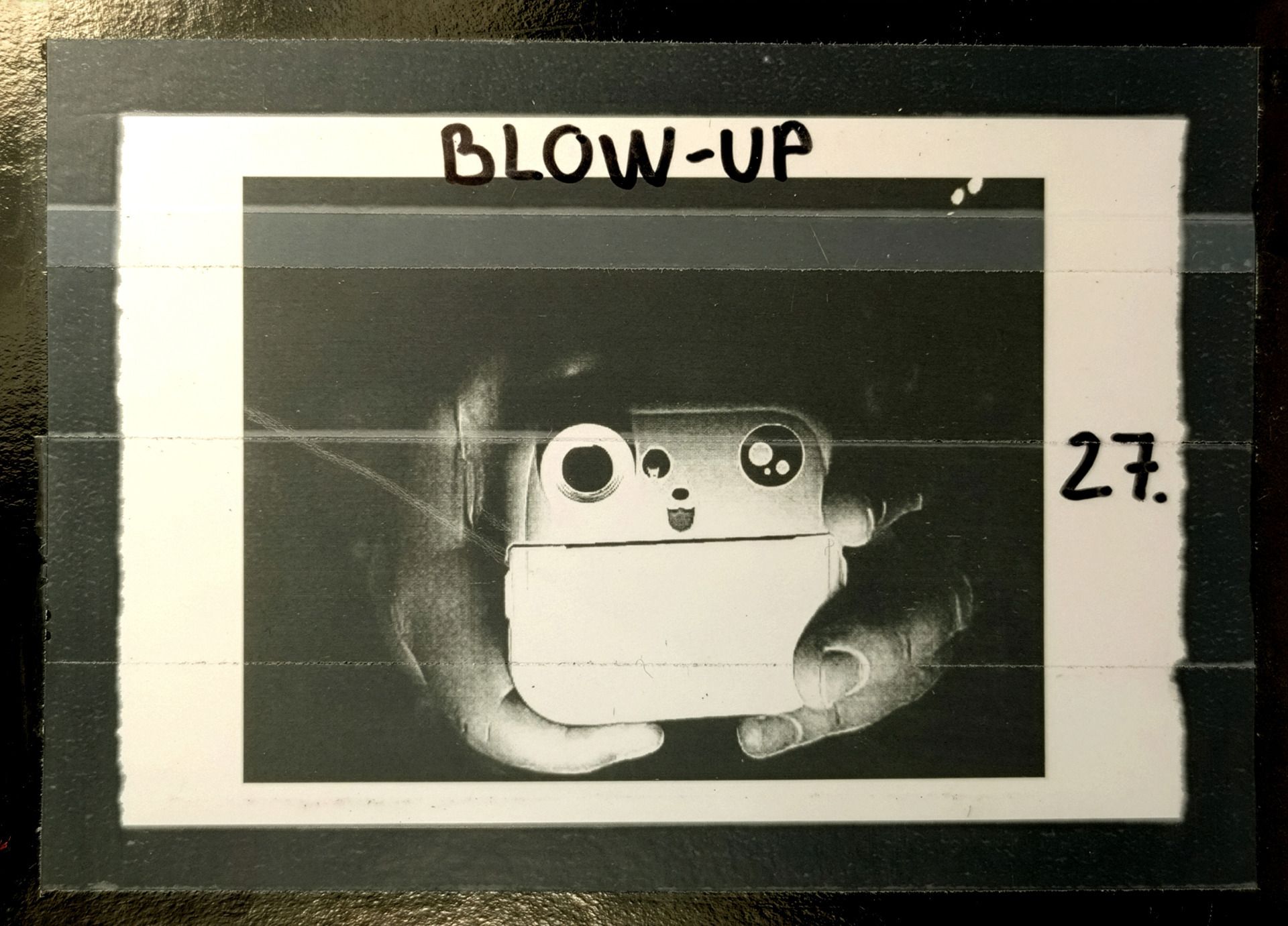
Blow-Up präsentiert sich in einer traditionellen und thematischen Lesart als eine Serie von fotografischen Porträts in Schwarz-Weiß. Das Gerät, mit dem diese Bilder aufgenommen werden, ist eine einfache digitale Kamera für Kinder. Seine Besonderheit ist, dass das Gerät die aufgenommenen Bilder sofort ausdruckt. Das Schwarzweißbild erinnert an die analoge Fotografie auf Silberbasis. Die stark vergrößerte Struktur des Drucks zeigt, wie das Bild entstanden ist: Man nimmt gleichzeitig ein menschliches Gesicht und das abstrakte System wahr, aus dem dieses Bild aufgebaut ist. Der Titel bezieht sich auf den Film Blow-Up von Michelangelo Antonioni (1966). Das Porträt als Wahl des Motivs ist auch eine unvermeidliche Hommage an die fotorealistische Malerei von Chuck Close. Die Bilder stellen Persönlichkeiten der zeitgenössischen ungarischen Kunstszene dar.
Dezső Szabó: BLOW-UP
Blow-Up presents itself, in a traditional and thematic reading, as a series of photographic portraits in black and white. The device used to make these images is a simple digital camera, intended for…
Toegankelijkheidsvoorzieningen
Motorische beperking
©Dezső Szabó
Blow-Up presents itself, in a traditional and thematic reading, as a series of photographic portraits in black and white. The device used to make these images is a simple digital camera, intended for children. Its particularity lies in the fact that the device immediately prints the captured images. The black and white image is reminiscent of analog silver photography. The structure of the print, greatly enlarged, reveals how the image is formed: we perceive simultaneously a human face and the abstract system from which this image is constructed. The title of the series refers to the film Blow-Up by Michelangelo Antonioni (1966). The portrait, as a choice of subject, is also an inevitable tribute to Chuck Close’s photorealistic painting. The images represent figures of the contemporary Hungarian art scene.
Dezső Szabó: BLOWUP
Blow-Up si presenta in una lettura tradizionale e tematica come una serie di ritratti fotografici in bianco e nero. Il dispositivo utilizzato per scattare queste immagini è una macchina fotografica...
Toegankelijkheidsvoorzieningen
Motorische beperking
©Dezső Szabó
Blow-Up si presenta in una lettura tradizionale e tematica come una serie di ritratti fotografici in bianco e nero. Il dispositivo utilizzato per scattare queste immagini è una semplice macchina fotografica digitale, destinata ai bambini. La sua particolarità è che il dispositivo stampa immediatamente le immagini catturate. L'immagine in bianco e nero ricorda la fotografia analogica a base di argento. La struttura della stampa, fortemente ingrandita, rivela il modo di formazione dell'immagine: si percepisce contemporaneamente un volto umano e il sistema astratto dal quale questa immagine è costruita. Il titolo della serie si riferisce al film Blow-Up di Michelangelo Antonioni (1966). Il ritratto, come scelta del soggetto, è anche un omaggio inevitabile all'opera di pittura fotorealistica di Chuck Close. Le immagini rappresentano figure della scena artistica ungherese contemporanea.
Dezső Szabó: BLOW-UP
Blow-Up se présente, dans une lecture traditionnelle et thématique, comme une série de portraits photographiques en noir et blanc. Le dispositif utilisé pour réaliser ces images est un appareil photo…
Toegankelijkheidsvoorzieningen
Motorische beperking
©Dezső Szabó
Blow-Up se présente, dans une lecture traditionnelle et thématique, comme une série de portraits photographiques en noir et blanc. Le dispositif utilisé pour réaliser ces images est un appareil photo numérique simple, destiné aux enfants. Sa particularité réside dans le fait que l’appareil imprime immédiatement les images capturées. L’image en noir et blanc rappelle la photographie analogique à base d’argent. La structure de l’impression, fortement agrandie, révèle le mode de formation de l’image: on perçoit simultanément un visage humain et le système abstrait à partir duquel cette image est construite. Le titre de la série fait référence au film Blow-Up de Michelangelo Antonioni (1966). Le portrait, en tant que choix de sujet, constitue également un hommage inévitable à l’œuvre de peinture photoréaliste de Chuck Close. Les images représentent des figures de la scène artistique hongroise contemporaine.
Dezső Szabó: BLOW-UP
Blow-Up se presenta, en una lectura tradicional y temática, como una serie de retratos fotográficos en blanco y negro. El dispositivo utilizado para obtener estas imágenes es una cámara...
Toegankelijkheidsvoorzieningen
Motorische beperking
©Dezső Szabó
Blow-Up se presenta, en una lectura tradicional y temática, como una serie de retratos fotográficos en blanco y negro. El dispositivo utilizado para obtener estas imágenes es una simple cámara digital para niños. Su particularidad reside en el hecho de que el dispositivo imprime inmediatamente las imágenes capturadas. La imagen en blanco y negro recuerda a la fotografía analógica basada en plata. La estructura de la impresión, fuertemente ampliada, revela el modo de formación de la imagen: se percibe simultáneamente un rostro humano y el sistema abstracto a partir del cual esta imagen está construida. El título de la serie hace referencia a la película Blow-Up de Michelangelo Antonioni (1966). El retrato, como elección de tema, constituye también un homenaje inevitable a la obra de pintura fotorrealista de Chuck Close. Las imágenes representan figuras de la escena artística húngara contemporánea.


