"Raoul Allier (1862-1939): Protestant im Dienste der Republik"
Die Ausstellung stellt das Leben und das Werk von Raoul Allier, seine kritischen Analysen der Gesellschaft seiner Zeit und seine Verwicklung in den Fall Dreyfus und die Diskussionen über den vor, die…
Sabato 19 settembre, 10:00Passato
Condizioni
Ingresso libero, condizionato al misuratore installato al momento dell'evento
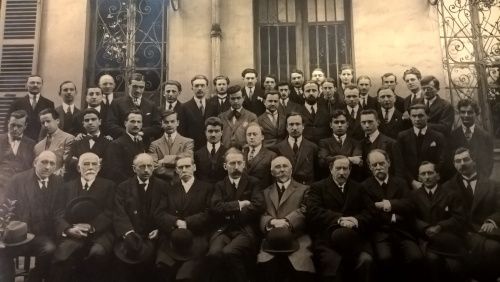
© IPT
Die Ausstellung stellt das Leben und das Werk von Raoul Allier, seine kritischen Analysen der Gesellschaft seiner Zeit und seine Verwicklung in den Fall Dreyfus und die Diskussionen über den Laizismus vor, die zum Gesetz von 1905 führten.
"Ehemaliger Schüler der Ecole Normale Supérieure de la Rue d'Ulm, Fakultät für Philosophie 1885, wird er zum Professor für Philosophie an der Montauban High School und einige Monate später zum Dozenten an der evangelisch-theologischen Fakultät dieser Stadt ernannt.
1889 war er Dozent an der Theologischen Fakultät in Paris, die er 1902 (Dissertation über den Cabale des Devoten) übernehmen wird. Von der Persönlichkeit und der christlichen Predigt von Tommy Fallot geprägt, nimmt er an den Arbeiten der von ihm gegründeten Gesellschaft für brüderliche Hilfe und soziale Studien teil. Er ist einer der Gründer und erster Präsident der französischen Vereinigung christlicher Studentenverbände und entwickelt die Ausstrahlung der Vereinigung protestantischer Studenten in Paris (Rue Vaugirard), deren Vorsitzender er seit 1920 ist.
Überzeugt von der Unschuld von Captain Dreyfus veröffentlicht er eine transparente Studie über Voltaire und Calas und eine Reihe von Artikeln in der Zeitung Das Jahrhundert. Dieser zutiefst patriotische Reformer knüpft positive Kontakte, sowohl auf der linken Seite mit Mitgliedern der Menschenrechtsliga als auch auf der rechten Seite mit Mitgliedern eines katholischen Komitees für die Verteidigung der Rechte.
Bei der Ausarbeitung des Gesetzes zur Trennung von Kirche und Staat setzt er sich im Jahrhundert und bei den Parlamentariern für eine liberale Konzeption der neuen Organisation, d.h. für eine vollständige und endgültige Trennung von Kirche und Staat ein.
Er ist Mitglied des Vorstands der Gesellschaft der Evangelischen Missionen von Paris und setzt sich mit Nachdruck für die Religionsfreiheit ein, die in Madagaskar durch die Politik der Säkularisierung durch den Generalgouverneur bedroht ist; Victor Augagneur, vor allem gegen die protestantischen Missionen gerichtet. Der Krieg von 1914-1918, in dem er seinen ältesten Sohn verlor, der bereits im August 1914 getötet wurde, markiert ihn zutiefst und beteiligt sich am Kampf gegen den «Defätismus» durch eine große Aktivität als weltlicher Prediger und Referent. Die 80 Kriegsvorträge, die Raoul Allier, ein Patriot und ein Gläubiger, am Dienstag in den vier größten Tempeln Paris hält, haben ein großes Echo gefunden.
Als Dekan der Theologischen Fakultät von Paris 1920 ließ er eine ehrgeizige Politik der Aufnahme ausländischer Studenten und des Kontakts mit Studenten aus Mittel-und Osteuropa verfolgen." Quelle:http://www.museeprotestant.org/notice/raoul-allier-1862-1939[/].
"Raoul Allier (1862-1939): a Protestant in the service of the Republic"
The exhibition presents the life and work of Raoul Allier, his critical analyses of the society of his time and his involvement in the Dreyfus affair and in the discussions on secularism that led to…
Sabato 19 settembre, 10:00Passato
Condizioni
Ingresso libero, condizionato al misuratore installato al momento dell'evento
© IPT
The exhibition presents the life and work of Raoul Allier, his critical analyses of the society of his time and his involvement in the Dreyfus affair and in the discussions on secularism that led to the 1905 law.
"A former student of the Ecole Normale Supérieure de la rue d'Ulm, who graduated in philosophy in 1885, he was appointed professor of philosophy at the Lycée de Montauban and, a few months later, lecturer at the Protestant theological faculty of that city.
In 1889, he was lecturer at the Faculty of Theology of Paris, where he became titular in 1902 (thesis on the Cabal of the Devotees). Deeply marked by the personality and social Christian preaching of Tommy Fallot, he took part in the work of the Société d'aide fraternelle et d'études sociales that he founded. He was one of the founders and first president of the French Federation of Christian Student Associations, and developed the influence of the Association des étudiants protestants de Paris (rue Vaugirard), which he chaired from 1920.
Convinced of the innocence of Captain Dreyfus, he published a transparent study on Voltaire and Calas, then a series of articles in the newspaper Le siècle. This deeply patriotic reformer establishes beneficial contacts, both on the left with members of the League of Human Rights, and on the right with members of a Catholic Committee for the Defense of the Right.
During the preparation of the law of separation of the Church and the State, he strongly advocated in Le Siècle and among parliamentarians for a liberal conception of the new organization, that is to say, for a complete and definitive separation of the Churches and the State.
Member of the Board of Directors of the Society of Evangelical Missions of Paris, he defends forcefully in The Century the freedom of worship threatened in Madagascar by the policy of secularization led by the Governor General, Victor Augagneur, and directed especially against the Protestant missions. The 1914-1918 war, during which he lost his eldest son, killed in August 1914, deeply marked him and he took part in the fight against «defeatism» through a great activity of lay preacher and lecturer. The eighty-one war conferences that Raoul Allier, a patriot and believer, gave in the four largest temples in Paris from Tuesday to Tuesday, had a great impact.
He became dean of the Faculty of Theology in Paris in 1920 and adopted an ambitious policy of welcoming foreign students and contacts with students from Central and Eastern Europe." [source:http://www.museeprotestant.org/notice/raoul-allier-1862-1939/].
"Raoul Allier (1862-1939): un protestante al servizio della Repubblica"
L'esposizione presenta la vita e l'opera di Raoul Allier, le sue analisi critiche della società del suo tempo e il suo coinvolgimento nell'affare Dreyfus e nelle discussioni sulla laicità che hanno a…
Sabato 19 settembre, 10:00Passato
Condizioni
Ingresso libero, condizionato al misuratore installato al momento dell'evento
© IPT
L'esposizione presenta la vita e l'opera di Raoul Allier, le sue analisi critiche della società del suo tempo e il suo coinvolgimento nell'affare Dreyfus e nelle discussioni sulla laicità che hanno portato alla legge del 1905.
"Ex allievo della Scuola Normale Superiore di rue d'Ulm, aggregato a filosofia nel 1885, fu nominato professore di filosofia al liceo di Montauban e, qualche mese dopo, docente alla facoltà di teologia protestante di questa città.
Nel 1889 fu docente presso la facoltà teologica di Parigi, di cui divenne titolare nel 1902 (tesi sulla cabala dei devoti). Molto segnato dalla personalità e dalla predicazione cristiana sociale di Tommy Fallot, partecipa ai lavori della Società di aiuto fraterno e di studi sociali che quest'ultimo ha fondato. Fu uno dei fondatori e primo presidente della Federazione francese delle associazioni cristiane di studenti e sviluppò l'influenza dell'Associazione degli studenti protestanti di Parigi (rue Vaugirard) che presiedette a partire dal 1920.
Convinto dell'innocenza del capitano Dreyfus, pubblica uno studio trasparente su Voltaire e Calas, poi una serie di articoli sul giornale Le siècle. Questo riformista profondamente patriottico intrattiene contatti positivi, sia a sinistra con membri della Lega dei Diritti dell'Uomo, sia a destra con membri di un Comitato cattolico per la difesa del diritto.
Durante la preparazione della legge di separazione tra Chiesa e Stato, milita ardentemente nel Le Siècle e presso i parlamentari, per una concezione liberale della nuova organizzazione, cioè per una separazione completa e definitiva delle Chiese e dello Stato.
Membro del comitato direttivo della società delle missioni evangeliche di Parigi, difende con forza nel secolo la libertà dei culti minacciata in Madagascar dalla politica di laicizzazione condotta dal governatore generale, Victor Augagneur, diretto soprattutto contro le missioni protestanti. La guerra del 1914-1918, durante la quale perde il figlio maggiore, ucciso nell'agosto 1914, lo segna profondamente e partecipa alla lotta contro il «disfattismo» con una grande attività di predicatore laico e di conferenziere. Le ottanta conferenze di guerra che, patriota e credente, Raoul Allier pronuncia di martedì in martedì nei quattro più grandi templi di Parigi, hanno una grande risonanza.
Divenuto decano della facoltà teologica di Parigi nel 1920, fece adottare un'ambiziosa politica di accoglienza di studenti stranieri e di contatti con gli studenti dell'Europa centrale e orientale." fonte:http://www.museeprotestant.org/notice/raoul-allier-1862-1939[/] .
"Raoul Allier (1862-1939) : un protestant au service de la République"
Exposition "Raoul Allier (1862-1939) : un protestant au service de la République"
Sabato 19 settembre, 10:00Passato
Condizioni
Ingresso libero, condizionato al misuratore installato al momento dell'evento
© IPT
L'exposition présente la vie et l’œuvre de Raoul Allier, ses analyses critiques de la société de son temps et son implication dans l'affaire Dreyfus et dans les discussions sur la laïcité qui ont conduit à la loi de 1905.
"Ancien élève de l’École Normale supérieure de la rue d’Ulm, agrégé de philosophie en 1885, il est nommé professeur de philosophie au lycée de Montauban et, quelques mois plus tard, chargé de cours à la faculté de théologie protestante de cette ville.
En 1889, il est chargé de cours à la faculté de théologie de Paris, dont il deviendra titulaire en 1902 (thèse sur la Cabale des dévots). Très marqué par la personnalité et la prédication chrétienne sociale de Tommy Fallot, il participe aux travaux de la Société d’aide fraternelle et d’études sociales que ce dernier a fondée. Il est un des fondateurs et premier président de la Fédération française des associations chrétiennes d’étudiants, et développe le rayonnement de l’Association des étudiants protestants de Paris (rue Vaugirard) qu’il préside à partir de 1920.
Convaincu de l’innocence du capitaine Dreyfus, il publie une étude transparente sur Voltaire et Calas, puis une série d’articles dans le journal Le siècle. Ce réformiste profondément patriote noue des contacts bénéfiques, tant à gauche avec des membres de la Ligue des Droits de l’Homme, qu’à droite avec des membres d’un Comité catholique pour la défense du droit.
Lors de la préparation de la loi de séparation de l’Église et de l’État, il milite ardemment dans Le Siècle et auprès des parlementaires, pour une conception libérale de la nouvelle organisation, c’est-à-dire pour une séparation complète et définitive des Églises et de l’État.
Membre du comité directeur de la société des Missions Évangéliques de Paris, il défend avec force dans Le siècle la liberté des cultes menacée à Madagascar par la politique de laïcisation menée par le gouverneur général, Victor Augagneur, et dirigée surtout contre les missions protestantes. La guerre de 1914-1918, durant laquelle il perd son fils aîné, tué dès août 1914, le marque profondément et il participe à la lutte contre le « défaitisme » par une grande activité de prédicateur laïc et de conférencier. Les quatre-vingt-une conférences de guerre que, patriote et croyant, Raoul Allier prononce de mardi en mardi dans les quatre plus grands temples de Paris, ont un grand retentissement.
Devenu doyen de la Faculté de théologie de Paris en 1920, il fait adopter une politique ambitieuse d’accueil d’étudiants étrangers et de contacts avec les étudiants d’Europe centrale et orientale." [source:http://www.museeprotestant.org/notice/raoul-allier-1862-1939/http://www.museeprotestant.org/notice/raoul-allier-1862-1939/] .
"Raoul Allier (1862-1939): un protestante al servicio de la República"
La exposición presenta la vida y la obra de Raoul Allier, sus análisis críticos de la sociedad de su tiempo y su implicación en el caso Dreyfus y en las discusiones sobre la laicidad que condujeron a…
Sabato 19 settembre, 10:00Passato
Condizioni
Ingresso libero, condizionato al misuratore installato al momento dell'evento
© IPT
La exposición presenta la vida y la obra de Raoul Allier, sus análisis críticos de la sociedad de su tiempo y su implicación en el caso Dreyfus y en las discusiones sobre la laicidad que condujeron a la ley de 1905.
"Antiguo alumno de la École Normale Supérieure de la rue d'Ulm, agregado de filosofía en 1885, es nombrado profesor de filosofía en el liceo de Montauban y, unos meses más tarde, encargado de cursos en la facultad de teología protestante de esta ciudad.
En 1889 fue profesor en la Facultad de Teología de París, de la que se convirtió en titular en 1902 (tesis sobre la Cábala de los devotos). Muy marcado por la personalidad y la predicación cristiana social de Tommy Fallot, participa en los trabajos de la Sociedad de ayuda fraterna y de estudios sociales que este último fundó. Fue uno de los fundadores y primer presidente de la Federación Francesa de Asociaciones Cristianas de Estudiantes, y desarrolló la influencia de la Asociación de Estudiantes Protestantes de París (rue Vaugirard), que presidió a partir de 1920.
Convencido de la inocencia del capitán Dreyfus, publica un estudio transparente sobre Voltaire y Calas, y luego una serie de artículos en el diario Le siècle. Este reformista profundamente patriota entabla contactos benéficos, tanto a la izquierda con miembros de la Liga de Derechos Humanos, como a la derecha con miembros de un Comité católico para la defensa del derecho.
Durante la preparación de la ley de separación de la Iglesia y del Estado, milita ardientemente en Le Siècle y ante los parlamentarios, por una concepción liberal de la nueva organización, es decir, por una separación completa y definitiva de las Iglesias y del Estado.
Miembro del comité directivo de la Sociedad de las Misiones Evangélicas de París, defiende con fuerza en Le siècle la libertad de cultos amenazada en Madagascar por la política de laicización llevada a cabo por el gobernador general, Víctor Augagneur, y dirigido sobre todo contra las misiones protestantes. La guerra de 1914-1918, durante la cual pierde a su hijo mayor, muerto en agosto de 1914, lo marca profundamente y participa en la lucha contra el «derrotismo» mediante una gran actividad de predicador laico y de conferenciante. Las ochenta y una conferencias de guerra que, patriota y creyente, Raoul Allier pronuncia desde el martes hasta el martes en los cuatro templos más grandes de París, tienen una gran resonancia.
Convertido en decano de la facultad de teología de París en 1920, hizo adoptar una política ambiciosa de acogida de estudiantes extranjeros y de contactos con los estudiantes de Europa central y oriental." [fuente:http://www.museeprotestant.org/notice/raoul-allier-1862-1939/] .

