Und wenn Sie herausfinden, was sich hinter Ihrer Steckdose verbirgt?
Angesichts der Alterung der nationalen Energieinfrastruktur und der sich beschleunigenden klimatischen Unsicherheiten ist der Erhalt und die Modernisierung des Stromübertragungsnetzes eine...
Sabato 19 settembre, 09:00, 10:30, 13:00, 14:30
Condizioni
Gratuito e su prenotazione al numero 03 26 05 53 53
Questo evento include sistemazioni accessibili
Disabilità motoria
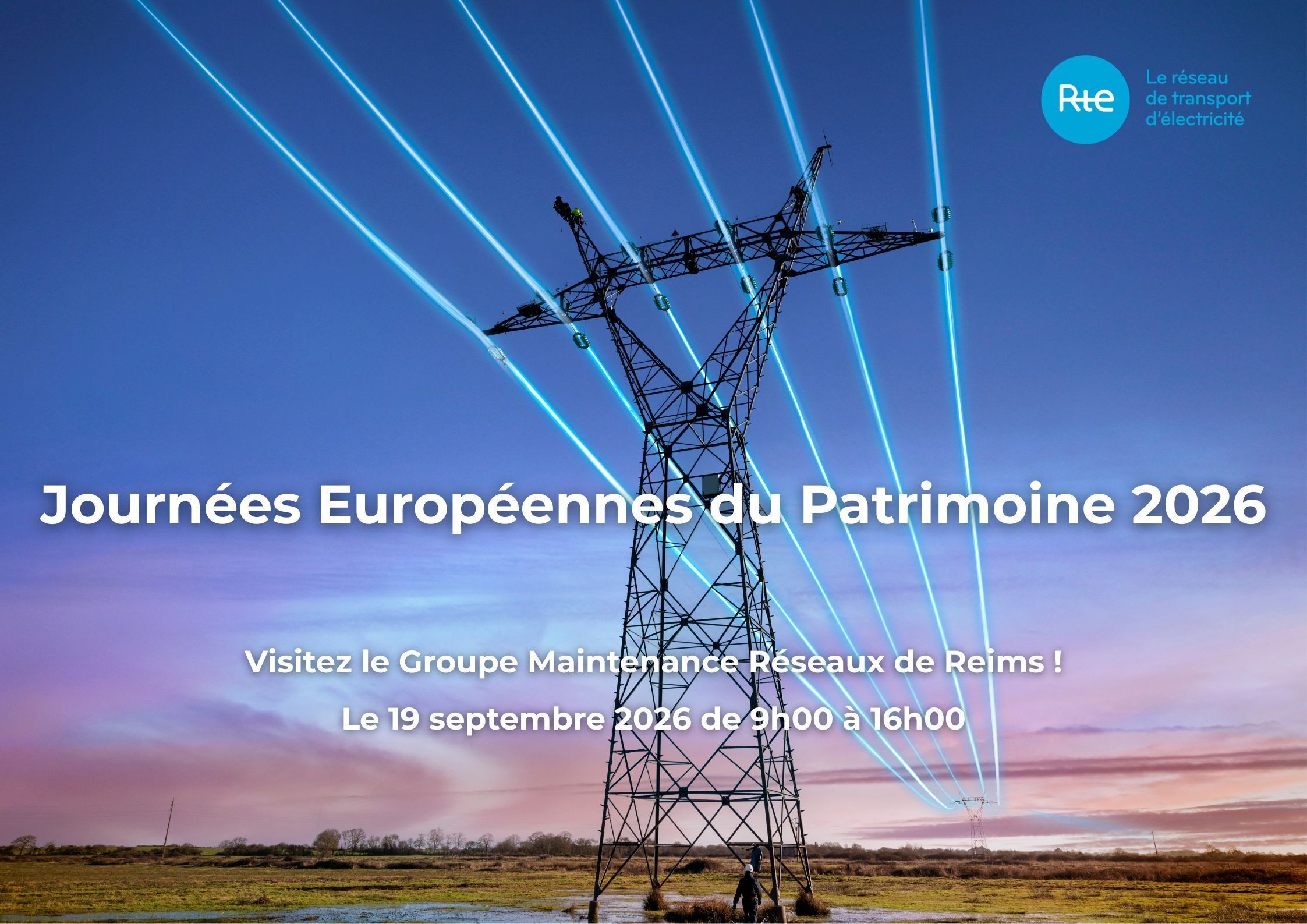
©RTECOMMUNICATION
In Reims können Sie die Türen einer Hochspannungsstation öffnen, um einen Ort zu entdecken, der normalerweise für die Öffentlichkeit nicht zugänglich ist und dennoch für das Leben des gesamten Territoriums unerlässlich ist.
Hier gibt es keine Schaufenster oder Sicherheitskasten aus der Ferne: Sie werden im Herzen der Anlagen zwischen Transformatoren, Leistungsschaltern und Trennwänden laufen, diese Anlagen, die den Hochspannungsstrom empfangen und ihn an die Verteiler und industriellen Kunden in der gesamten Region weiterleiten.
Die Techniker und Ingenieure, die diese Website täglich am Leben erhalten, begleiten Sie während des gesamten Besuchs und erzählen von ihren oft unsichtbaren, aber unverzichtbaren Berufen: Wartung der Hoch- und Höchstspannungsleitungen, Fernüberwachung dank digitaler Systeme, Einsätze vor Ort, um die Stromversorgung rund um die Uhr zu gewährleisten.
Sie werden verstehen, warum die Erhaltung dieses Netzwerks eine ebenso konkrete Herausforderung ist wie die Rettung eines Denkmals, und darum geht es bei dem Thema der Europäischen Tage des Kulturerbes 2026: "Kulturerbe in Gefahr".
Der Besuch hält auch eine Überraschung bereit: Auf dem Gelände leben Bienenstöcke, Insektenhotels und Melissensträucher zusammen mit den Hochspannungsleitungen. Eine weitere Möglichkeit, zu sehen, wie Industrie und Biodiversität gemeinsam vorankommen können.
KOSTENLOSER EINTRITT BEI ANMELDUNG
Vier Zeitfenster werden am Samstag, den 19. September 2026 angeboten
- 9h-10h30,
- 10h30-12h,
- 13h-14h30,
- 14:30-16 Uhr.
Die Besichtigung ist kostenlos, aber die Plätze sind begrenzt: schnell reservieren unter 03 26 05 53 53
Für Besucher, die an der Elektrostation Zutritt erhalten möchten, ist das Tragen von Kleidung, die die Arme und Beine bedeckt, obligatorisch. Aus Sicherheitsgründen ist der Zugang zur elektrischen Station für schwangere Frauen und Personen mit implantierten medizinischen Geräten nicht gestattet. Wir danken für Ihr Verständnis.
What if you found out what’s behind your electrical outlet?
Faced with the aging of national energy infrastructure and the acceleration of climate hazards, the preservation and modernization of the electricity transmission network is a must...
Sabato 19 settembre, 09:00, 10:30, 13:00, 14:30
Condizioni
Gratuito e su prenotazione al numero 03 26 05 53 53
Questo evento include sistemazioni accessibili
Disabilità motoria
©RTECOMMUNICATION
In Reims, push the doors of a high-voltage substation to discover a place usually inaccessible to the public and yet essential to the life of the entire territory.
Here, no remote display cabinets or safety cords: you will walk through the heart of the installations, between transformers, circuit breakers, and disconnectors, these equipment that receive high-voltage electricity and redistribute it to distributors and industrial customers throughout the region.
The technicians and engineers who run this site on a daily basis accompany you throughout the visit to tell their stories about their jobs, which are often invisible but essential: maintenance of high- and very high-voltage lines, remote monitoring using digital systems, field interventions to ensure power supply 24/7.
You will understand why preserving this network is as concrete a challenge as the safeguarding of a monument and that is what is at stake in the 2026 theme of the European Heritage Days, "Heritage in danger".
The visit also holds a surprise: on site, beehives, insect hotel and honey bushes cohabit with high-voltage lines. Another way to see how industry and biodiversity can move forward together.
FREE ENTRY UPON REGISTRATION
Four slots are proposed on Saturday, 19 September 2026
- 9-10:30,
- 10:30-12:00,
- 1:00 pm-2:30 pm,
- 2:30-4:00.
The visit is free, but places are limited: Book quickly at 03 26 05 53 53
For visitors wishing to access the substation, wearing clothing covering the arms and legs is mandatory. For safety reasons, pregnant women and people with implanted medical devices are not allowed to access the substation. Thank you for your understanding.
E se scoprissi cosa c'è dietro la tua presa elettrica?
Di fronte all'invecchiamento delle infrastrutture energetiche nazionali e all'accelerazione dei rischi climatici, la conservazione e l'ammodernamento della rete di trasmissione dell'elettricità costit
Sabato 19 settembre, 09:00, 10:30, 13:00, 14:30
Condizioni
Gratuito e su prenotazione al numero 03 26 05 53 53
Questo evento include sistemazioni accessibili
Disabilità motoria
©RTECOMMUNICATION
A Reims, spingi le porte di una stazione elettrica ad alta tensione per scoprire un luogo solitamente inaccessibile al pubblico e tuttavia essenziale per la vita dell'intero territorio.
Qui non ci sono vetrine o cavi di sicurezza a distanza: entrerete nel cuore degli impianti, tra trasformatori, interruttori e sezionatori, queste apparecchiature che ricevono l'elettricità ad alta tensione e la ridistribuiscono fino ai distributori e ai clienti industriali di tutta la regione.
I tecnici e gli ingegneri che fanno vivere questo sito quotidianamente vi accompagnano durante tutta la visita per raccontare le loro professioni, spesso invisibili ma indispensabili: manutenzione delle linee ad alta e altissima tensione, sorveglianza a distanza grazie ai sistemi digitali, interventi sul campo per garantire l'alimentazione elettrica 24/7.
Capirete perché preservare questa rete è una sfida tanto concreta quanto la salvaguardia di un monumento, ed è tutta la posta in gioco del tema 2026 delle Giornate Europee del Patrimonio, "Patrimonio in pericolo".
La visita riserva anche una sorpresa: sul sito, alveari, hotel per insetti ed arbusti melliferi convivono con le linee ad alta tensione. Un altro modo di vedere come industria e biodiversità possano progredire insieme.
INGRESSO GRATUITO CON REGISTRAZIONE
Sono disponibili quattro slot per sabato 19 settembre 2026
- 9h-10h30,
- 10h30-12h,
- 13h-14h30,
- 14h30-16h.
La visita è gratuita, ma i posti sono limitati: prenotare presto al 03 26 05 53 53
Per i visitatori che desiderano accedere alla postazione elettrica, l'uso di indumenti che coprano le braccia e le gambe è obbligatorio. Per motivi di sicurezza, l'accesso alla stazione elettrica non è consentito alle donne in gravidanza o a persone con dispositivi medici impiantati. Vi ringraziamo per la comprensione.
Et si vous découvriez ce qui se cache derrière votre prise électrique ?
Face au vieillissement des infrastructures énergétiques nationales et à l’accélération des aléas climatiques, la préservation et la modernisation du réseau de transport d’électricité constituent un à…
Sabato 19 settembre, 09:00, 10:30, 13:00, 14:30
Condizioni
Gratuito e su prenotazione al numero 03 26 05 53 53
Questo evento include sistemazioni accessibili
Disabilità motoria
©RTECOMMUNICATION
À Reims, poussez les portes d'un poste électrique haute tension pour découvrir un lieu habituellement inaccessible au public et pourtant essentiel à la vie de tout le territoire.
Ici, pas de vitrines ni de cordons de sécurité à distance : vous marcherez au cœur des installations, entre transformateurs, disjoncteurs et sectionneurs, ces équipements qui reçoivent l'électricité à haute tension et la redistribuent jusqu’aux distributeurs et clients industriels de toute la région.
Les techniciens et ingénieurs qui font vivre ce site au quotidien vous accompagnent tout au long de la visite pour raconter leurs métiers, souvent invisibles, mais indispensables : maintenance des lignes à haute et très haute tension, surveillance à distance grâce aux systèmes numériques, interventions sur le terrain pour assurer l’alimentation électrique 24h/24 7J/7.
Vous comprendrez pourquoi préserver ce réseau est un défi aussi concret que la sauvegarde d'un monument et c'est tout l'enjeu du thème 2026 des Journées Européennes du Patrimoine, « Patrimoine en danger ».
La visite réserve aussi une surprise : sur le site, ruches, hôtel à insectes et arbustes mellifères cohabitent avec les lignes à haute tension. Une autre façon de voir comment industrie et biodiversité peuvent avancer ensemble.
ENTREE GRATUITE SUR INSCRIPTION
Quatre créneaux sont proposés le samedi 19 septembre 2026
- 9h-10h30,
- 10h30-12h,
- 13h-14h30,
- 14h30-16h.
La visite est gratuite, mais les places sont limitées : réservez vite au 03 26 05 53 53
Pour les visiteurs souhaitant accéder au poste électrique, le port de vêtements couvrant les bras et les jambes est obligatoire. Par mesure de sécurité, l'accès au poste électrique n'est pas autorisé aux femmes enceintes ni aux personnes porteuses de dispositifs médicaux implantés. Nous vous remercions de votre compréhension.
¿Qué pasaría si descubriera lo que hay detrás de su toma de corriente?
Frente al envejecimiento de las infraestructuras energéticas nacionales y a la aceleración de los riesgos climáticos, la preservación y modernización de la red de transporte de electricidad constituye
Sabato 19 settembre, 09:00, 10:30, 13:00, 14:30
Condizioni
Gratuito e su prenotazione al numero 03 26 05 53 53
Questo evento include sistemazioni accessibili
Disabilità motoria
©RTECOMMUNICATION
En Reims, abre las puertas de un poste eléctrico de alta tensión para descubrir un lugar habitualmente inaccesible al público y sin embargo esencial para la vida de todo el territorio.
Aquí, no hay vitrinas ni cordones de seguridad a distancia: caminarás por el corazón de las instalaciones, entre transformadores, interruptores y seccionadores, estos equipos que reciben la electricidad en alta tensión y la redistribuyen hasta los distribuidores y clientes industriales de toda la región.
Los técnicos e ingenieros que dan vida a este sitio diariamente le acompañan durante toda la visita para relatar sus oficios, a menudo invisibles, pero indispensables: mantenimiento de las líneas de alta y muy alta tensión, vigilancia remota gracias a los sistemas digitales, intervenciones en el terreno para garantizar el suministro eléctrico las 24 horas del día los 7 días de la semana.
Comprenderá por qué preservar esta red es un desafío tan concreto como la salvaguardia de un monumento y es todo lo que está en juego en el tema 2026 de las Jornadas Europeas del Patrimonio, «Patrimonio en peligro».
La visita reserva también una sorpresa: en el sitio, colmenas, hoteles de insectos y arbustos melíferos conviven con las líneas de alta tensión. Otra forma de ver cómo la industria y la biodiversidad pueden avanzar juntas.
ENTRADA GRATUITA PREVIA INSCRIPCIÓN
Se ofrecen cuatro horarios el sábado 19 de septiembre de 2026
- 9h-10h30,
- 10h30-12h,
- 13h-14h30,
- 14h30-16h.
La visita es gratuita, pero las plazas son limitadas: reservar rápidamente al 03 26 05 53 53
Para los visitantes que deseen acceder al puesto eléctrico, es obligatorio llevar ropa que cubra los brazos y las piernas. Por razones de seguridad, no se permite el acceso al puesto eléctrico a las mujeres embarazadas ni a las personas con dispositivos médicos implantados. Gracias por su comprensión.

