Processions
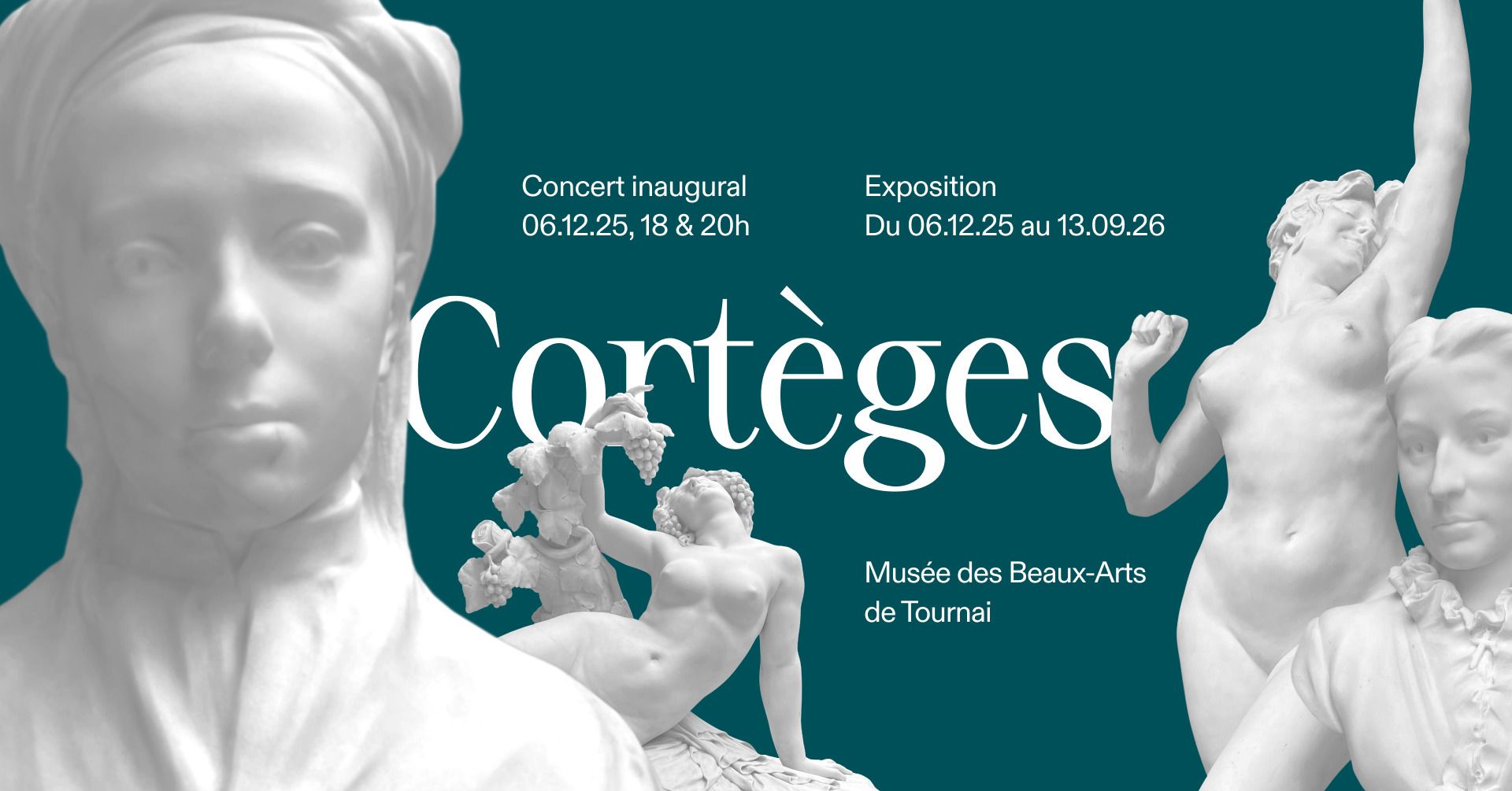
A hundred sculptures come to life in the Museum’s Atrium.
Musée des Beaux-arts Tournai
The collection of sculptures at the Museum of Fine Arts in Tournai is a valuable object of study. Yet most museums exhibit only a part of their collections, constrained by choices related to space, conservation, scientific coherence or museographic storytelling.
However, their fundamental mission of conservation rests on an opposite logic: that of considering each piece, whether it is exhibited or not, with the same care, in an egalitarian approach which aims to preserve the integrity and diversity of the heritage entrusted to the institution.
Having a space specifically dedicated to sculpture, the museum has chosen to present its entire collection of sculpted effigies, without making any distinction between them. This gesture makes sense at a time when the museum’s teams are carrying out an imperative task of collecting, documenting, and revaluing these works, which often remain in the shadows. Showing everything here becomes a way of making visible what elsewhere remains preserved but invisible.
These figures thus form, in the heart of the sculpture atrium, a disparate group of anonymous individuals, heroes or celebrities, intentionally mixed to merge into a kind of "non-exhibition" where the curators have chosen to suspend the value judgments made by art history.
Neither the color of stones or metals, nor their origin, nor the time period, nor the artists, have presided over this arrangement without a base or pedestal in a space designed to accommodate three-dimensional works.
Cortèges
Une centaine de sculptures prennent vie dans l'Atrium du Musée.
Musée des Beaux-arts Tournai
La collection de sculptures du musée des Beaux-Arts de Tournai, constitue un objet d'études précieux. Pourtant, la plupart des musées n'exposent qu'une partie de leurs collections, contraints par des choix liés à l'espace, à la conservation, à la cohérence scientifique ou à la narration muséographique.
Cependant, leur mission fondamentale de conservation repose sur une logique inverse : celle de considérer chaque pièce, qu'elle soit exposée ou non, avec le même soin, dans une démarche égalitaire qui vise à préserver l'intégrité et la diversité du patrimoine confié à l'institution.
Disposant d'un espace spécifiquement dédié à la sculpture, le musée a choisi d'y présenter l'ensemble de sa collection d'effigies sculptées, sans opérer entre elles de distinction. Ce geste prend tout son sens à l'heure où les équipes du musée mènent un travail impératif de récolement, de documentation et de revalorisation de ces œuvres, souvent restées dans l'ombre. Montrer tout ici, devient une manière de rendre visible ce qui, ailleurs, demeure conservé mais invisible.
Ces figures forment donc, au cœur de l'Atrium de sculptures, une troupe disparate d'individus anonymes, de héros ou de célébrités, intentionnellement mêlés pour se confondre dans une sorte de "non-exposition" où les conservateurs ont choisi de suspendre les jugements de valeur portés par l'histoire de l'art.
Ni la couleur des pierres ou des métaux, ni la provenance, ni l'époque, ni les artistes, n'ont présidé à cet agencement sans socle ni piédestal dans un espace pensé pour accueillir des œuvres en trois dimensions.
sculpture, beaux-arts, tournai, belgique
Processies
Honderd sculpturen komen tot leven in het Atrium van het Museum.
Musée des Beaux-arts Tournai
De collectie beeldhouwwerken van het Museum voor schone Kunsten van Tournai, is een waardevol studieobject. De meeste musea tonen echter slechts een deel van hun collecties, beperkt door keuzes met betrekking tot ruimte, behoud, wetenschappelijke samenhang of museografische vertelling.
Hun fundamentele instandhoudingsmissie is echter gebaseerd op de tegenovergestelde logica: Het feit dat elk stuk, ongeacht of het al dan niet wordt blootgesteld, met dezelfde zorgvuldigheid wordt bekeken in een egalitaire benadering die erop gericht is de integriteit en diversiteit van het erfgoed dat aan de instelling is toevertrouwd, te behouden.
Met een speciaal aan beeldhouwkunst gewijd ruimte, koos het museum ervoor om zijn hele collectie beeldhouwwerken te presenteren, zonder dat er onderscheid tussen deze beelden werd gemaakt. Dit gebaar krijgt zijn volle betekenis in een tijd waarin de museumteams een noodzakelijk werk uitvoeren van het oogsten, documenteren en herwaarderen van deze werken, die vaak in de schaduw blijven. Alles hier tonen wordt een manier om zichtbaar te maken wat elders bewaard blijft, maar onzichtbaar.
Deze figuren vormen dus, in het hart van het Atrium van sculpturen, een ongelijksoortige groep van anonieme individuen, helden of beroemdheden, opzettelijk gemengd om samen te smelten tot een soort van "niet-tentoonstelling" waar curatoren ervoor hebben gekozen om de waardeoordelen van de geschiedenis van de kunst op te schorten
Noch de kleur van de stenen of metalen, noch de herkomst, noch de tijd, noch de kunstenaars, voorgezeten deze regeling zonder voetstuk of voetstuk in een ruimte ontworpen om werken in drie dimensies te herbergen.


