Führung durch die Geburtskirche von Notre-Dame de Taluyers:
Kirche der Geburt Unserer Lieben Frau von Taluyers:
Este evento incluye adaptaciones de accesibilidad
Discapacidad motriz
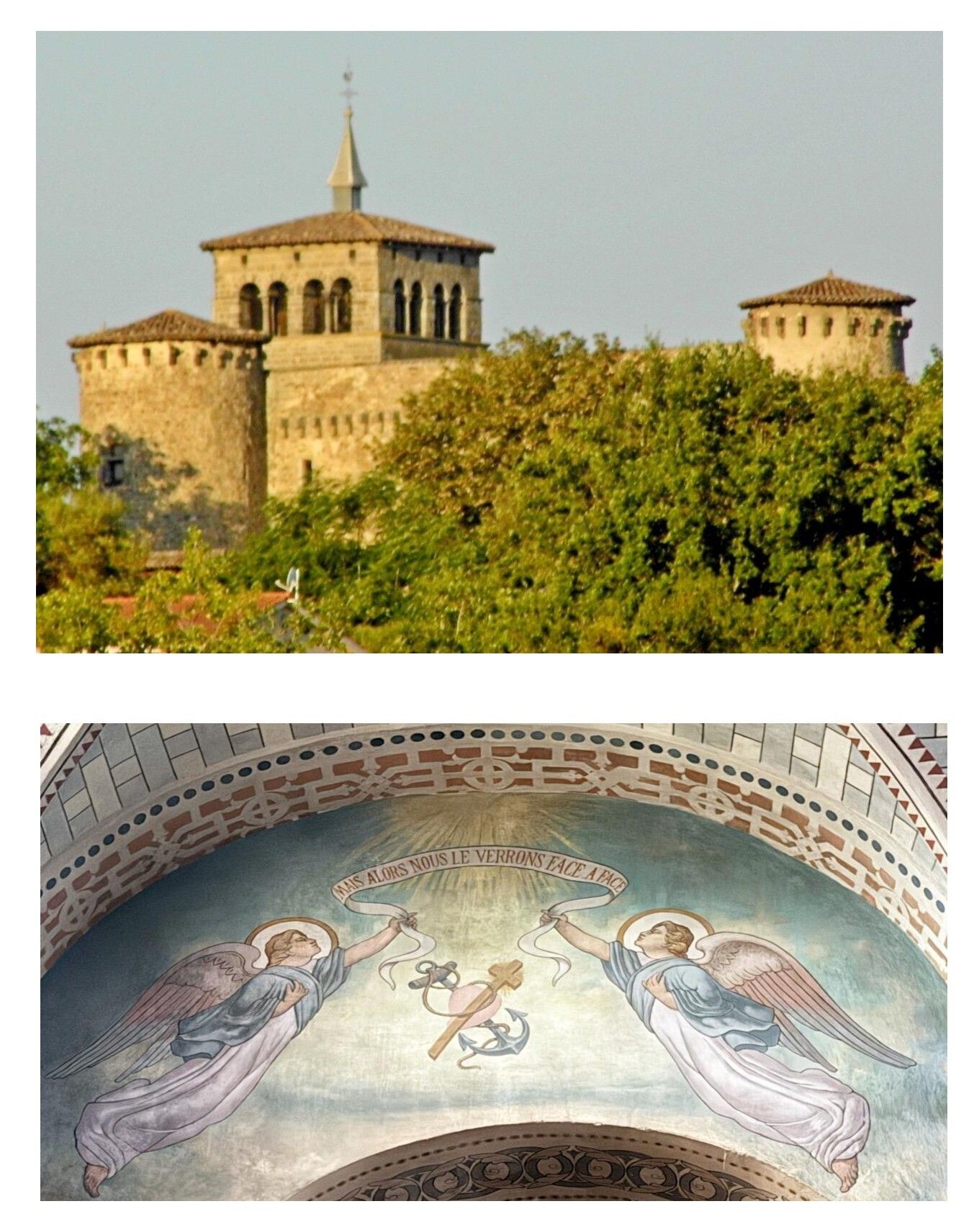
©Jean-Louis Souche
Kirche der Geburt Unserer Lieben Frau von Taluyers:
Frei durch die Kirche gehen / In Gruppen von 5 bis 10 Personen eine 30- bis 40-minütige Führung folgen.
Der starke Glockenturm unserer Kirche ist uns vertraut, er ist das Wahrzeichen unseres Dorfes.. Das romanische Chevet bildet mit der im 11. Jahrhundert errichteten befestigten Einfriedung des Priorats ein harmonisches Ganzes.
Das Priorat, der während der Revolution von 1791 als nationales Eigentum verkauft wurde, ist ein Privatbesitz, der für Demonstrationen, aber nicht für touristische oder kulturelle Besichtigungen geöffnet ist.
Die Besichtigung beginnt an der Kreuzung des Querschiffs vor einem Denkmalgeschütztes Fenster.
Diese Darstellung ist sozusagen dieGeburtsurkunde von Taluyers, gebaut um den Chater und das Priorat. Blismond von Mercoeur übergab 999 sein ländliches Gut Talusatis an seinen Bruder Odilon, den fünften Abt von Cluny, damit er dort ein Priorat gründete.
Anschließend werden die wichtigsten architektonischen Elemente vorgestellt. Zunächst eine Apsis aus dem 12. Jahrhundert mit zwei Absidien und dem Querschiff. Sie rahmen Gemälde ein, die in der Mitte des 19. Jahrhunderts neu angefertigt wurden.
Diese Gemälde sind der Reichtum der Kirche. Sie wurden 1992 und 2019 restauriert und lassen niemanden gleichgültig. Sie schockieren die einen mit ihrer Naivität und verblüffen die anderen mit ihrer Homogenität. Sie sind ein Lehrmittel der Kunstgeschichte und Theologie. Wir werden sie in diesem Jahr betonen.
Das Kirchenschiff und seine Nebengebäude Die Mitte des 18. Jahrhunderts wiedererrichteten Gebäude besitzen klassifizierte Möbel. Die wichtigsten Glasfenster aus dem 19. Jahrhundert wurden ebenfalls restauriert.
Guided tour of the Church of the Nativity of Our Lady of Taluyers:
Church of the Nativity of Our Lady of Taluyers:
Este evento incluye adaptaciones de accesibilidad
Discapacidad motriz
©Jean-Louis Souche
Church of the Nativity of Our Lady of Taluyers:
Go freely through the church / Follow a guided tour of 30 to 40 minutes in groups of 5 to 10 people.
The fort bell tower of our church is familiar to us; it is the emblem of our village.. The Romanesque chevet forms with the fortified enclosure in the 11th century of the priory a harmonious whole.
The priory, sold as national property during the revolution in 1791, is a private property open for demonstrations but not for tourist or cultural visits.
The tour begins at the transept crossing in front of a classified stained glass.
This representation is, so to speak, thebirth certificate of Taluyers, built around the chapel and the priory. Blismonde de Mercoeur handed over in 999, his rural domain of Talusatis to his brother Odilon, the fifth abbot of Cluny, so that he could found a priory there.
The main architectural elements are then presented. First, an apse from the 12th century with two apses and the transept. They frame paintings redone in the middle of the 19th century.
These paintings are the richness of the church. Restored in 1992 and 2019, they leave no one indifferent. They shock some with their naivety and amaze others with their homogeneity. They are a support for teaching art history and theology. We will insist on them this year.
The nave and its collateral Reconstructed in the middle of the 18th century, they have classified furniture. The main stained glass windows made in the 19th century have also been restored.
Visita guidata della chiesa della Natività di Notre-Dame de Taluyers:
Chiesa della Natività di Nostra Signora di Taluyers:
Este evento incluye adaptaciones de accesibilidad
Discapacidad motriz
©Jean-Louis Souche
Chiesa della Natività di Nostra Signora di Taluyers :
Percorrere liberamente la chiesa / Seguire in gruppi da 5 a 10 persone una visita guidata di 30-40 minuti.
Il forte campanile della nostra chiesa ci è familiare, è l'emblema del nostro villaggio. Il chiostro romanico forma con la cinta muraria dell'XI secolo del priorato un insieme armonioso.
Il priorato, venduto a titolo di beni nazionali durante la rivoluzione nel 1791, è una proprietà privata aperta per manifestazioni ma non per visite turistiche o culturali.
La visita inizia all'incrocio del transetto davanti a un vetrata classificata.
Questa rappresentazione è, per così dire, lacertificato di nascita di Taluyers, costruito intorno al chater e al priorato. Blismond di Mercoeur consegna nel 999 la sua tenuta rurale di Talusatis a suo fratello Odilon, quinto abate di Cluny, affinché vi fondasse un priorato.
Successivamente vengono presentati i principali elementi architettonici. Innanzitutto, un'abside del XII secolo con due absidi e il transetto. Inquadrano dipinti rifatti a metà del XIX secolo.
Questi dipinti sono la ricchezza della chiesa. Restaurate nel 1992 e nel 2019, non lasciano nessuno indifferente. Alcuni sono scioccati dalla loro ingenuità e altri si meravigliano per la loro omogeneità. Sono un supporto di insegnamento della storia dell'arte e della teologia. Insisteremo su di esse quest'anno.
La navata principale e i suoi laterali ricostruiti a metà del XVIII secolo possiedono mobili classificati. Sono state restaurate anche le principali vetrate del XIX secolo.
Visite guidée de l’église de la Nativité de Notre-Dame de Taluyers :
Eglise de la Nativité de Notre-Dame de Taluyers :
Este evento incluye adaptaciones de accesibilidad
Discapacidad motriz
©Jean-Louis Souche
Eglise de la Nativité de Notre-Dame de Taluyers :
Parcourir librement l’église / Suivre par groupes de 5 à 10 personnes une visite guidée de 30 à 40 min..
Le fort clocher de notre église nous est familier, il est l’emblème de notre village. Le chevet roman forme avec l’enceinte fortifiée au XI° siècle du prieuré un ensemble harmonieux.
Le prieuré, vendu au titre des biens nationaux lors de la révolution en 1791, est une propriété privée ouverte pour des manifestations mais pas aux visites touristiques ou culturelles.
La visite commence à la croisée du transept devant un vitrail classé.
Cette représentation est pour ainsi dire l’acte de naissance de Taluyers, construit autour du chater et du prieuré. Blismonde de Mercoeur remet en 999, son domaine rural de Talusatis à son frère Odilon cinquième abbé de Cluny afin qu’il y fonde un prieuré.
Les principaux éléments architecturaux sont ensuite présentés. D’abord, une abside du XII° siècle avec deux absidioles et le transept. Ils encadrent des peintures refaites au milieu du XIX° siècle.
Ces peintures sont la richesse de l'église. Restaurées en 1992 et en 2019, elles ne laissent personne indifférent. Elles choquent les uns par leur naïveté et émerveillent les autres par leur homogénéité. Elles sont un support d’enseignement de l’histoire de l’art et de la théologie. Nous insisterons sur elles cette année.
La nef et ses collatéraux reconstruits au milieu du XVIII° siècle possèdent un mobilier classé. Les principaux vitraux élaborés au XIX° ont eux aussi été restaurés.
Visita guiada a la iglesia de la Natividad de Nuestra Señora de Taluyers:
Iglesia de la Natividad de Nuestra Señora de Taluyers:
Este evento incluye adaptaciones de accesibilidad
Discapacidad motriz
©Jean-Louis Souche
Iglesia de la Natividad de Nuestra Señora de Taluyers :
Recorrer libremente la iglesia / Seguir en grupos de 5 a 10 personas una visita guiada de 30 a 40 minutos.
El fuerte campanario de nuestra iglesia nos es familiar, es el emblema de nuestro pueblo. La cabecera románica forma con el recinto fortificado en el siglo XI del priorato un conjunto armonioso.
El priorato, vendido a título de bienes nacionales durante la revolución en 1791, es una propiedad privada abierta para manifestaciones pero no para visitas turísticas o culturales.
La visita comienza en el cruce del transepto frente a un vitral clasificado.
Esta representación es, por así decirlo, lacertificado de nacimiento de Taluyers, construido alrededor del chater y el priorato. Blismonde de Mercoeur entrega en 999, su dominio rural de Talusatis a su hermano Odilon quinto abad de Cluny para que fundara un priorato.
Los principales elementos arquitectónicos se presentan a continuación. En primer lugar, un ábside del siglo XII con dos absidios y el transepto. Enmarcan pinturas rehechas a mediados del siglo XIX.
Estas pinturas son la riqueza de la iglesia. Restauradas en 1992 y 2019, no dejan indiferente a nadie. Algunos se sorprenden por su ingenuidad y otros se maravillan por su homogeneidad. Son un medio de enseñanza de la historia del arte y de la teología. Este año insistiremos en ellas.
La nave y sus colaterales reconstruidos a mediados del siglo XVIII poseen un mobiliario clasificado. Los principales vitrales elaborados en el siglo XIX también han sido restaurados.

