Geführte Besichtigung des Schlosses, der Kapelle und des Taubenhauses von Cercigny
Das Anwesen wird zum ersten Mal im Jahr 1303 erwähnt, verbunden mit der Familie von Rochechouart, die es bis zum 18\. Jahrhundert behalten wird. Die Burg, die teilweise während des Hundertjährigen im…
Conditions
Free. Departure of guided tours on request, depending on attendance.
©SCI Cercigny
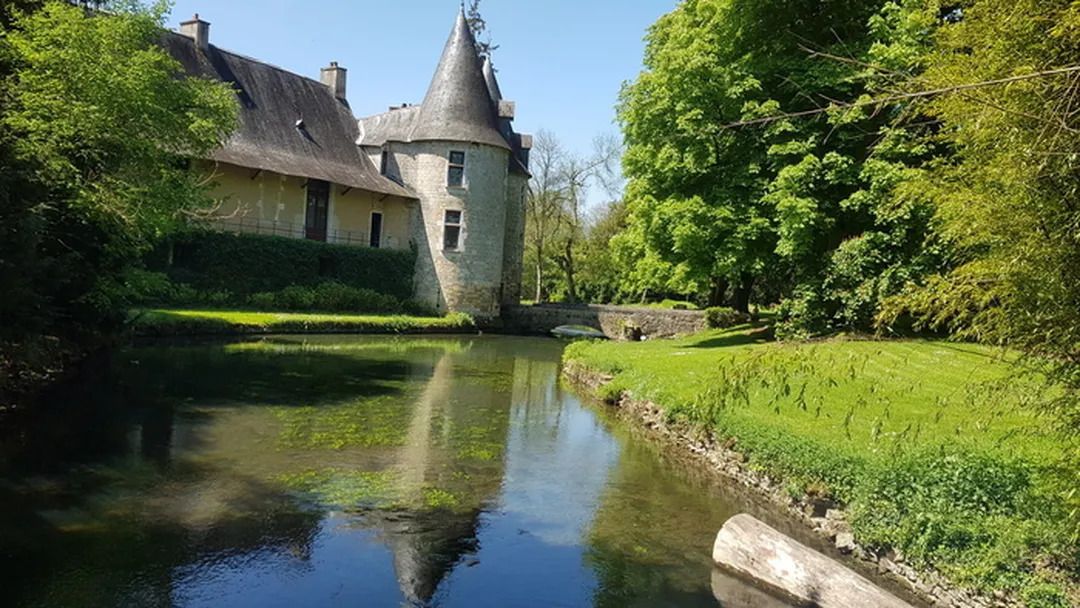
Das Anwesen wird zum ersten Mal im Jahr 1303 erwähnt, verbunden mit der Familie von Rochechouart, die es bis zum 18. Jahrhundert behalten wird. Die Burg, die teilweise während des Hundertjährigen Krieges und der Religionskriege zerstört wurde, war bis zum 17. Jahrhundert nicht mehr bewohnt, als ein Teil des Hauses wieder aufgebaut wurde. Das Gebäude besteht aus einem zentralen Gebäude (ein altes Schloß, Eingang vom Ende des 14. Jahrhunderts, umgebaut im 19. Jahrhundert) und drei rechteckigen Flügeln, die sich in einem nach Süden gekrümmten Kreisbogen aneinander befinden. Diese Flügel wurden im 19. und 20. Jahrhundert vollständig umgebaut. Die Kapelle Notre-Dame de la Consolation wurde am 28. Oktober 1678 gesegnet. Der Rundtaubenschlag gilt als der größte in Wien (3300 Stollen). Der Park ist 25 000 m2 gross.
Commented visit of the castle, the chapel and the dovecot of Cercigny
The property is mentioned for the first time in 1303, associated with the family of Rochechouart who will keep it until the 18th century. The castle, partly destroyed during the Hundred Years' War of…
Conditions
Free. Departure of guided tours on request, depending on attendance.
©SCI Cercigny
The property is mentioned for the first time in 1303, associated with the family of Rochechouart who will keep it until the 18th century. The castle, partly destroyed during the Hundred Years' War and the Wars of Religion, was no longer inhabited until the 17th century, when part of the house was rebuilt. The building is composed of a central building (former castle entrance from the end of the 14th century, redesigned in the 19th century) and three rectangular wings arranged end to end in an arc curved towards the south. These wings were completely remodeled in the 19th and 20th centuries. The chapel of Notre-Dame de la Consolation was blessed on October 28, 1678. The round dovecote is considered to be the largest in Vienne (3300 boulins). The park is 25,000 m2.
Visita guidata del castello, della cappella e del colombolo di Cercigny
La proprietà è menzionata per la prima volta nel 1303, associata alla famiglia de Rochechouart che la conserverà fino al XVIII secolo. Il castello, in parte distrutto durante la guerra dei Cent'anni…
Conditions
Free. Departure of guided tours on request, depending on attendance.
©SCI Cercigny
La proprietà è menzionata per la prima volta nel 1303, associata alla famiglia de Rochechouart che la conserverà fino al XVIII secolo. Il castello, in parte distrutto durante la guerra dei Cent'anni e le guerre di religione, non fu abitato fino al XVII secolo, epoca della ricostruzione di una parte della dimora. L'edificio è composto da un edificio centrale (antico castello d'ingresso della fine del XIV secolo, risistemato nel XIX secolo) e da tre ali rettangolari disposte in forma di arco a tutto sesto verso sud. Queste ali furono completamente rimodellate nel XIX e XX secolo. La cappella Nostra Signora della Consolazione fu benedetta il 28 ottobre 1678. Il colombolo rotondo è considerato il più grande della Vienne (3300 bulins). Il parco ha una superficie di 25'000 m2.
Visite commentée du château, de la chapelle et du pigeonnier de Cercigny
La propriété est mentionnée pour la première fois en 1303, associée à la famille de Rochechouart qui la conservera jusqu'au XVIIIe siècle. Le château, en partie détruit pendant la guerre de Cent Ans…
Conditions
Free. Departure of guided tours on request, depending on attendance.
©SCI Cercigny
Mentionnée pour la première fois en 1303, la propriété est alors associée à la famille de Rochechouart, qui la conservera jusqu’au XVIIIe siècle.
Partiellement détruit pendant la guerre de Cent Ans et les guerres de Religion, le château ne sera de nouveau habité qu’au XVIIe siècle, après la reconstruction d’une partie de la demeure.
L’édifice se compose d’un bâtiment central, correspondant à l’ancien châtelet d’entrée de la fin du XIVe siècle, réaménagé au XIXe siècle, et de trois ailes rectangulaires disposées en arc de cercle vers le sud. Ces dernières ont été entièrement remodelées aux XIXe et XXe siècles.
La chapelle Notre-Dame-de-la-Consolation a été bénie le 28 octobre 1678. Le domaine abrite également un pigeonnier rond considéré comme le plus grand de la Vienne, avec ses 3 300 boulins, ainsi qu’un parc de 25 000 m².
Visita comentada del castillo, de la capilla y del palomar de Cercigny
La propiedad se menciona por primera vez en 1303, asociada a la familia de Rochechouart que la conservará hasta el siglo XVIII. El castillo, en parte destruido durante la guerra de los Cien Años y de…
Conditions
Free. Departure of guided tours on request, depending on attendance.
©SCI Cercigny
La propiedad se menciona por primera vez en 1303, asociada a la familia de Rochechouart que la conservará hasta el siglo XVIII. El castillo, en parte destruido durante la guerra de los Cien Años y las guerras de religión, no fue habitado hasta el siglo XVII, época de la reconstrucción de una parte de la casa. El edificio está compuesto por un edificio central (antiguo castillo de entrada de finales del siglo XIV, reformado en el siglo XIX) y tres alas rectangulares dispuestas de punta a punta en arco de círculo curvado hacia el sur. Estas alas fueron completamente remodeladas en los siglos XIX y XX. La capilla de Nuestra Señora de la Consolación fue bendecida el 28 de octubre de 1678. El palomar redondo es considerado como el más grande de la Vienne (3300 bulins). El parque tiene 25.000 m2.

