Geführte Besichtigung des Schlosses von Larrazet
Die Abteiburg von Larrazet, die das Tal der Gimone beherrscht, war bis zur Französischen Revolution Eigentum der Zisterzienserabtei Belleperche.
Conditions
Price: 3.50€ per person. Free up to 18 years.
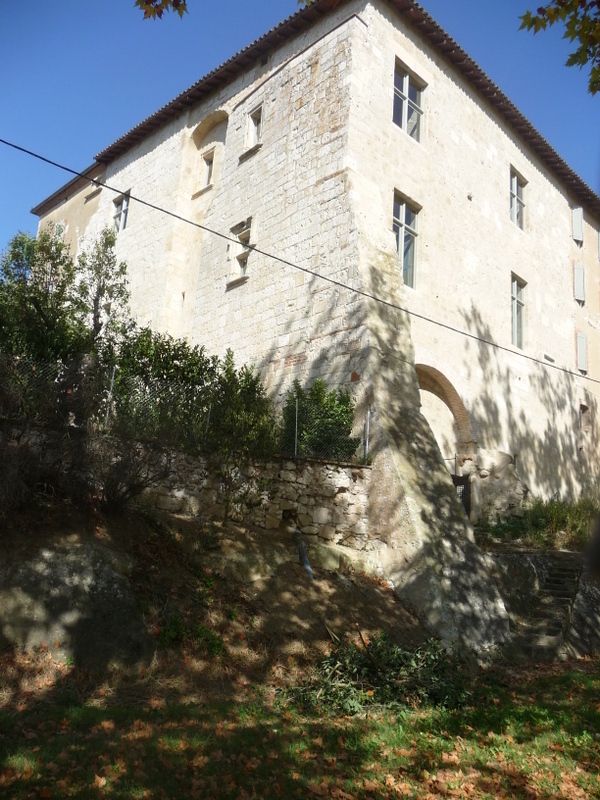
©Danielle Verallo
Die Abteiburg von Larrazet, die das Tal der Gimone beherrscht, war bis zur Französischen Revolution Eigentum der Zisterzienserabtei Belleperche.
Es wurde auf den Bauwerken eines ersten Festungshauses errichtet, das um 1267 vom Abt Guillaume Jauffre erbaut und während der Kriege des 14. Jahrhunderts teilweise zerstört wurde.
Am 20. Mai 1500 vertraute Jean III. de Cardailhac, Abt von Belleperche, durch einen "Leasingvertrag" an Jean de Massaris de Millac und Antoine de Moissac den Bau eines dreistöckigen Turms oder Turris an der heutigen Stelle an.
Im Jahr 1572, als die Hugenotten die Abtei von Belleperche plünderten, flüchteten sich die Mönche aus dem Massaker auf der Burg von Larrazet. Das Gebäude wurde während der Revolution weitgehend geplündert und zerstört. Als nationales Gut wurde es 1791 von der Familie Groc gekauft, die das Gebäude durch eine Bedachung rettete.
Dieses private Wohnhaus, das teilweise unter dem Denkmalschutz steht, wird seit 1982 mit staatlicher Unterstützung instand gehalten.
Sein architektonisches Interesse liegt vor allem in seiner Fassade im gotischen Stil, seinen Kaminen, seiner geschnitzten Innendekoration und seiner prächtigen, gewölbten Treppe. Dieser dreht sich um einen zentralen Kern nach einem neuen, aus Italien importierten Verfahren, das 1500 im kleinen Tursi-Palast in Rom verwendet wurde.
Diese Treppe ist eine der ersten Manifestationen der italienischen Treppe im Südwesten und kündigt die Anfänge der Renaissance an. Die Säle bewahren französische Decken und Kamine mit großen, modrigen Leisten auf.
Die erste Etage besteht aus großen, gewölbten Kellerräumen im Mittelfeld und einem kleinen, aus Ziegeln und Steinen gebogenen Saal, der auf Vertiefungen mit pflanzlicher Dekoration oder menschlicher Darstellung ruht.
http://www.chateaujohandecardailhac.com
05 63 20 76 50
Guided tour of the Château de Larrazet
Overlooking the valley of the Gimone, the abbey castle of Larrazet was owned by the Cistercian abbey of Belleperche until the French Revolution.
Conditions
Price: 3.50€ per person. Free up to 18 years.
©Danielle Verallo
Overlooking the valley of the Gimone, the abbey castle of Larrazet was owned by the Cistercian abbey of Belleperche until the French Revolution.
It was built on the substructions of a first fortified house built around 1267 by Abbot Guillaume Jauffre, partly destroyed during the wars of the 14th century.
On 20 May 1500, Jean III de Cardailhac, commendatory abbot of Belleperche, entrusted by a "lease besogne" to Jean de Massaris de Millac and Antoine de Moissac the construction of a tower, or turris, of three floors at the current location.
In 1572, during the sacking of the abbey of Belleperche by the Huguenots, the monks who survived the massacre took refuge at the castle of Larrazet. The building was then largely looted and destroyed during the Revolution. Having become national property, it was bought in 1791 by the Groc family, who saved the building by covering it.
This private residence, partly classified as a historical monument, has been the subject of work and maintenance with the help of the State since 1982.
Its architectural interest lies in particular in its facade of Flamboyant Gothic style, its chimneys, its interior sculpted decoration and its magnificent arched staircase. This revolves around a central core according to a new process, imported from Italy and used in 1500 at the small Tursi palace in Rome.
This staircase is one of the very first manifestations of the Italianate staircase in the Southwest, heralding the beginnings of the Renaissance. The rooms still have French-style ceilings and fireplaces with wide moulded bands.
The first level is occupied by large arched cellars and a small vaulted room of brick and stone ribs, resting on pieces with vegetal or human figuration decoration.
http://www.chateaujohandecardail.com
05 63 20 76 50
Visita commentata del castello di Larrazet
Dominando la valle del Gimone, il castello abbaziale di Larrazet fu proprietà dell'abbazia cistercense di Belleperche fino alla Rivoluzione francese.
Conditions
Price: 3.50€ per person. Free up to 18 years.
©Danielle Verallo
Dominando la valle del Gimone, il castello abbaziale di Larrazet fu proprietà dell'abbazia cistercense di Belleperche fino alla Rivoluzione francese.
Fu costruito sulle strutture di una prima casa forte costruita verso il 1267 dall'abate Guillaume Jauffre, in parte distrutta durante le guerre del XIV secolo.
Il 20 maggio 1500, Giovanni III di Cardailhac, abate commendatario di Belleperche, affida con un "bail à besogne" a Jean de Massaris de Millac e Antoine de Moissac la costruzione di una torre, o turris, di tre piani nell'attuale posizione.
Nel 1572, durante il saccheggio dell'abbazia di Belleperche da parte degli ugonotti, i monaci sopravvissuti al massacro si rifugiarono al castello di Larrazet. L'edificio fu in gran parte saccheggiato e distrutto durante la Rivoluzione. Divenuto bene nazionale, fu acquistato nel 1791 dalla famiglia Groc, che salvò l'edificio coprendolo.
Questa residenza privata, in parte classificata come monumento storico, è oggetto di lavori e manutenzione con l'aiuto dello Stato dal 1982.
Il suo interesse architettonico risiede in particolare nella sua facciata in stile gotico fiammeggiante, nei suoi camini, nella decorazione interna scolpita e nella magnifica scala a volta. Questo ruota attorno a un nucleo centrale secondo un nuovo procedimento, importato dall'Italia e utilizzato nel 1500 presso il piccolo palazzo Tursi a Roma.
Questa scalinata costituisce una delle prime manifestazioni della scala all'italiana nel sud-ovest, annunciando i primi passi del Rinascimento. Le sale conservano soffitti alla francese e camini con larghe fasce modellate.
Il primo livello è occupato da grandi cantine arcuate a tutto sesto e da una piccola sala arcuata di ogive in mattoni e pietre, poggiante su cupoloni decorati con piante o con figure umane.
http://www.chateaujohandecardailhac.com
05 63 20 76 50
Visite commentée du château de Larrazet
Dominant la vallée de la Gimone, le château abbatial de Larrazet fut propriété de l’abbaye cistercienne de Belleperche jusqu’à la Révolution française.
Conditions
Price: 3.50€ per person. Free up to 18 years.
©Danielle Verallo
Dominant la vallée de la Gimone, le château abbatial de Larrazet fut propriété de l’abbaye cistercienne de Belleperche jusqu’à la Révolution française.
Il a été construit sur les substructions d’une première maison forte édifiée vers 1267 par l’abbé Guillaume Jauffre, en partie détruite pendant les guerres du XIVe siècle.
Le 20 mai 1500, Jean III de Cardailhac, abbé commendataire de Belleperche, confie par un « bail à besogne » à Jean de Massaris de Millac et Antoine de Moissac la construction d’une tour, ou turris, de trois étages à l’emplacement actuel.
En 1572, lors du saccage de l’abbaye de Belleperche par les huguenots, les moines rescapés du massacre se réfugient au château de Larrazet. L’édifice est ensuite en grande partie pillé et détruit pendant la Révolution. Devenu bien national, il est acheté en 1791 par la famille Groc, qui sauve le bâtiment en le recouvrant.
Cette demeure privée, en partie classée au titre des Monuments historiques, fait l’objet de travaux et d’entretien avec l’aide de l’État depuis 1982.
Son intérêt architectural réside notamment dans sa façade de style gothique flamboyant, ses cheminées, sa décoration sculptée intérieure et son magnifique escalier voûté d’ogives. Celui-ci tourne autour d’un noyau central selon un procédé nouveau, importé d’Italie et utilisé en 1500 au petit palais Tursi, à Rome.
Cet escalier constitue l’une des toutes premières manifestations de l’escalier à l’italienne dans le Sud-Ouest, annonçant les prémices de la Renaissance. Les salles conservent des plafonds à la française et des cheminées à larges bandeaux moulurés.
Le premier niveau est occupé par de grandes caves voûtées en plein cintre et par une petite salle voûtée d’ogives en briques et pierres, reposant sur des culots au décor végétal ou à figuration humaine.
http://www.chateaujohandecardailhac.com
05 63 20 76 50
Visita comentada del castillo de Larrazet
Dominando el valle del Gimone, el castillo abacial de Larrazet fue propiedad de la abadía cisterciense de Belleperche hasta la Revolución francesa.
Conditions
Price: 3.50€ per person. Free up to 18 years.
©Danielle Verallo
Dominando el valle del Gimone, el castillo abacial de Larrazet fue propiedad de la abadía cisterciense de Belleperche hasta la Revolución francesa.
Fue construido sobre las estructuras de una primera casa fuerte construida hacia 1267 por el abad Guillaume Jauffre, en parte destruida durante las guerras del siglo XIV.
El 20 de mayo de 1500, Juan III de Cardailhac, abad comandario de Belleperche, confió mediante un «arrendamiento a la obra» a Jean de Massaris de Millac y Antoine de Moissac la construcción de una torre, o turris, de tres pisos en el emplazamiento actual.
En 1572, durante la destrucción de la abadía de Belleperche por los hugonotes, los monjes sobrevivientes de la masacre se refugiaron en el castillo de Larrazet. El edificio fue saqueado y destruido durante la Revolución. Convertido en bien nacional, fue comprado en 1791 por la familia Groc, que salvó el edificio cubriéndolo.
Esta residencia privada, en parte clasificada como monumento histórico, ha sido objeto de trabajos y mantenimiento con la ayuda del Estado desde 1982.
Su interés arquitectónico reside en particular en su fachada de estilo gótico flamígero, sus chimeneas, su decoración interior esculpida y su magnífica escalera abovedada. Éste gira alrededor de un núcleo central según un procedimiento nuevo, importado de Italia y utilizado en 1500 en el pequeño palacio Tursi, en Roma.
Esta escalera constituye una de las primeras manifestaciones de la escalera italiana en el suroeste, anunciando los comienzos del Renacimiento. Las salas conservan techos a la francesa y chimeneas con grandes bandas moldeadas.
El primer nivel está ocupado por grandes bodegas abovedadas en medio y por una pequeña sala abovedada de ojivas de ladrillo y piedra, que descansa sobre cubos con decoración vegetal o con figuración humana.
http://www.chateaujohandecardailhac.com
05 63 20 76 50

