Tala Jajieh's IATDMCT/SFPT talk
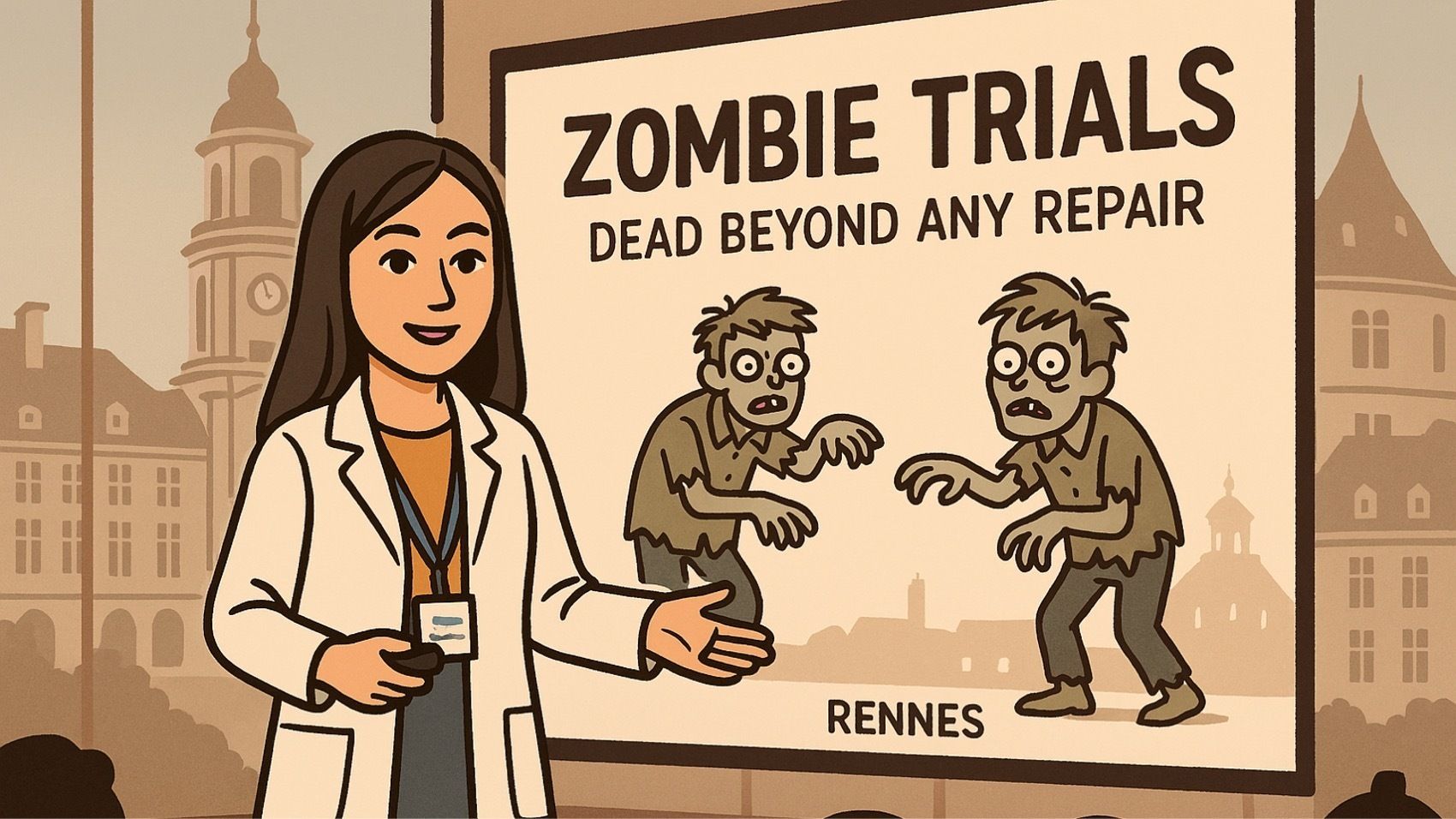
Anatomy of 237 zombie trials threatening evidence-based medicine: 94% significant results from fraudulent studies. At the 2026 SFPT Congress in Rennes, Tala Jajieh will present her findings.
Montag 28 September, 17:00
Microsoft Designer
Clinical decisions and guidelines rely on evidence derived from randomized controlled trials (RCTs). However, scientific literature is increasingly contaminated by ‘zombie trials’ containing fabricated data, which compromise evidence syntheses1 and mislead conclusions about treatment efficacy. Identifying ‘zombie trials’ is a step in preventing their dissemination, and understanding their characteristics informs prevention strategies while safeguarding the integrity of evidence-based medicine.
Based on the cohort of retracted human RCTs from the Retraction Watch database identified by Xu et al.2, we updated and extended the dataset to include all retracted ‘zombie trials’ from inception through December 11, 2025. ‘Zombie trials’ were defined as those with fabricated, fictive, or imaginary data. Retraction reasons were analyzed across PubMed, Retraction Watch Database, and PubPeer using an R-based text-mining procedure to match retraction reasons with the ‘zombie’ definition. We performed both automated and manual extraction of variables to characterize these trials.
These 237 retracted zombies involved 66 first authors: ‘recidivists’ (n=12, 18.2%,179 ‘zombies’) and ‘non-recidivists’ (n=54, 81.8%, 57 ‘zombies’).
Retracted ‘zombie trials’ are disproportionately published by authors with a history of similar studies. This pattern may reflect the intensive scrutiny authors attract. Still, it suggests that reviewing an author’s publication record is crucial for detecting potential fraud and preventing contamination of the evidence base.
Zombie trials, Fraud und Clinical trials