ONE MILLIMETER OF BLACK DIRT, AND A VEIL OF DEAD COWS
Fotoausstellung von Vincent Jendly
18 September - 8 November
Conditions
Preis — Eintritt frei CHF 0
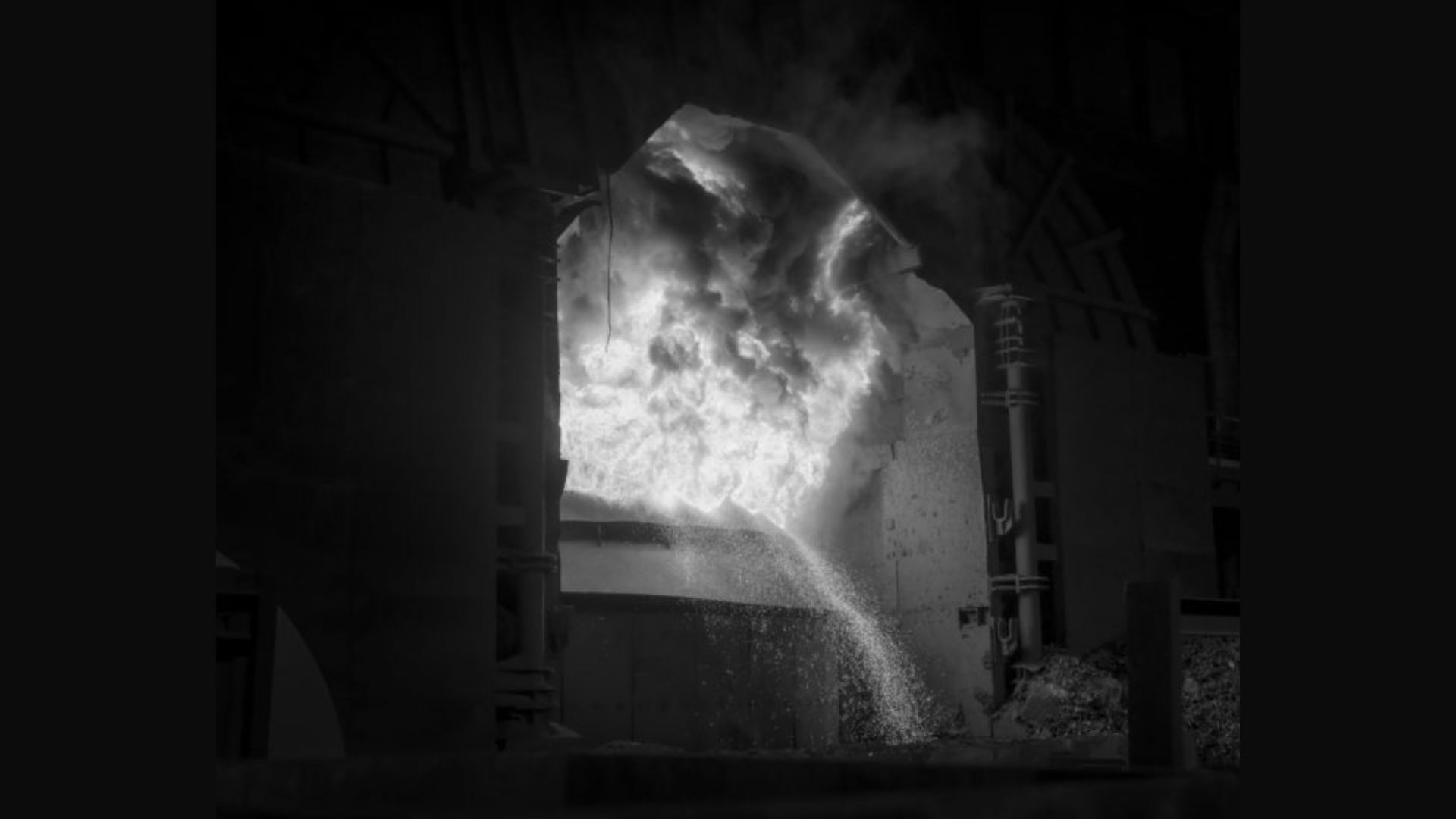
©Vincent Jendly, série ONE MILLIMETER OF BLACK DIRT, AND A VEIL OF DEAD COWS
Als ich den Hafen von Dünkirchen entdeckte, die Füße im Kohleschlamm, hatte ich den Eindruck, eine düstere Gestalt der Vergangenheit zu betrachten, die aus der Zeit der industriellen Revolution heraufgestiegen war. Vor mir lag eine Landschaft, bedeckt mit schwarzer Melasse und schwarzem Staub, rau und schmutzig, bis zum Äußersten verändert – eine düstere und spektakuläre Verkörperung des Anthropozäns, dieses „Zeitalters des Menschen“, eine jener Visionen, die einen bevorstehenden Zusammenbruch andeuten und fast apokalyptische Züge tragen. Eine hypothetische Perspektive, aber dennoch: Das Ausmaß der Spuren an diesem gigantischen Ort ließ mich den Stempel meiner Mitmenschen in globalem Maßstab wahrnehmen. Und tatsächlich ist es so: Die Auswirkungen unserer Aktivitäten sind so groß, dass der Mensch zu einer geologischen Kraft wird. Wir schaffen gerade neue Arten von Sedimenten für die Zukunft, wie zum Beispiel das Plastiglomerat, eine Gesteinsschicht, die größtenteils aus Mikroplastik bestehen und sich über den gesamten Globus erstrecken wird.
Eine weitere Neuheit für die Paläontologen der Zukunft: Aufgrund des Aussterbens der wildlebenden Megafauna und unseres Einflusses auf die Arten im Allgemeinen bestehen bereits 93 % der Biomasse der Landwirbeltiere aus domestizierten Arten, allen voran Kühe, die unseren maßlosen Appetit auf Fleisch stillen. Es ist sogar wahrscheinlich, dass die Kuh in drei Jahrhunderten das größte Tier der Erde sein wird – eine fast unglaubliche Prognose. Wird das bei den Ausgrabungen der Zukunft alles sein, was von uns übrig bleibt? Kuhfossilien und ein Millimeter schwarze Partikel?
Vincent Jendly wurde 1969 in Freiburg (Schweiz) geboren. Seit 1994 lebt und arbeitet er in Lausanne. Seit 2009 widmet er sich ganz der professionellen Fotografie. Nachdem sie bereits in Dünkirchen gezeigt wurde, wird seine neueste Serie nun erstmals in der Schweiz bei FOCALE ausgestellt.
ONE MILLIMETER OF BLACK DIRT, AND A VEIL OF DEAD COWS
Photography exhibition by Vincent Jendly
18 September - 8 November
Conditions
Preis — Eintritt frei CHF 0
©Vincent Jendly, série ONE MILLIMETER OF BLACK DIRT, AND A VEIL OF DEAD COWS
As I explored the port of Dunkirk, my feet sinking into the coal sludge, I felt as though I were gazing upon a sombre figure from the past, emerging from the era of the Industrial Revolution. Before me lay a landscape covered in black molasses and dust, brutal and grimy, transformed beyond recognition – a dark and spectacular embodiment of the Anthropocene, this ‘age of man’, one of those visions that suggest an imminent collapse, with an almost apocalyptic air about it. A hypothetical prospect, yet one nonetheless: the sheer scale of the marks on this vast site made me perceive the imprint of my fellow human beings on a global scale. Indeed, this is precisely the case: the impact of our activities is such that humankind is becoming a geological force. We are in the process of creating new types of sediment, such as plastiglomerate – a rock layer that will consist largely of microplastics, spread across the entire globe.
Another novelty for the palaeontologists of the future: due to the extinction of wild megafauna and our impact on species in general, 93 per cent of the biomass of terrestrial vertebrates already consists of domesticated species, led by cattle, which satisfy our unreasonable appetite for meat. It is even likely that, within three centuries, the cow will become the largest animal on Earth – an almost unbelievable prediction. In future archaeological excavations, is this what will remain of us? Cow fossils and a millimetre of black particles?
Vincent Jendly was born in Fribourg (Switzerland) in 1969. He has lived and worked in Lausanne since 1994. He has devoted himself entirely to professional photography since 2009. Having previously been shown in Dunkirk, his latest series will be exhibited for the first time in Switzerland, at FOCALE.
ONE MILLIMETER OF BLACK DIRT, AND A VEIL OF DEAD COWS
Exposition photographique de Vincent Jendly
18 September - 8 November
Conditions
Preis — Eintritt frei CHF 0
©Vincent Jendly, série ONE MILLIMETER OF BLACK DIRT, AND A VEIL OF DEAD COWS
En découvrant le port de Dunkerque, les pieds dans la boue de charbon, j’ai eu l’impression de fixer une sombre figure du passé, surgie du temps de la révolution industrielle. J’avais devant moi un paysage recouvert de mélasse et de poussière noires, brutal et crasseux, transformé à l’extrême, une incarnation sombre et spectaculaire de l’anthropocène, cette « ère de l’humain », une de ces visions qui suggèrent un effondrement imminent, avec des allures presque apocalyptiques. Une perspective hypothétique mais tout de même: l’ampleur des marques sur ce lieu gigantesque me faisait percevoir l’estampille de mes congénères à une échelle terrestre. D’ailleurs, c’est effectivement le cas : l’impact de nos activités est tel que l’homme devient une force géologique. Nous sommes en train de créer de nouveaux types de sédiments à venir comme le plastiglomérat, une strate de roches qui sera composée en grande partie de microplastiques, répartie sur tout le globe.
Autre nouveauté pour les paléontologues du futur : à cause de la disparition de la mégafaune sauvage et de notre impact sur les espèces en général, 93% de la biomasse des vertébrés terrestres sont déjà constitués d’espèces domestiques, vaches en tête, qui couvrent nos appétits déraisonnables de viande. Il est même probable que d’ici trois siècles la vache devienne le plus grand animal sur Terre, prévision presque incroyable. Dans les fouilles du futur, est-ce ce qui va rester de nous ? Des fossiles de vache et un millimètre de particules noires ?
Vincent Jendly est né à Fribourg (Suisse) en 1969. Depuis 1994, il vit et travaille à Lausanne. Il se consacre entièrement à la photographie de manière professionnelle dès 2009. Après avoir été montrée à Dunkerque, sa dernière série sera exposée pour la première fois en suisse, à FOCALE.


