Workshop: Entdeckung des Filzes
Die Entdeckung der Filzkunst
Conditions
Kostenlos. Gruppen sind auf 50 Personen begrenzt.
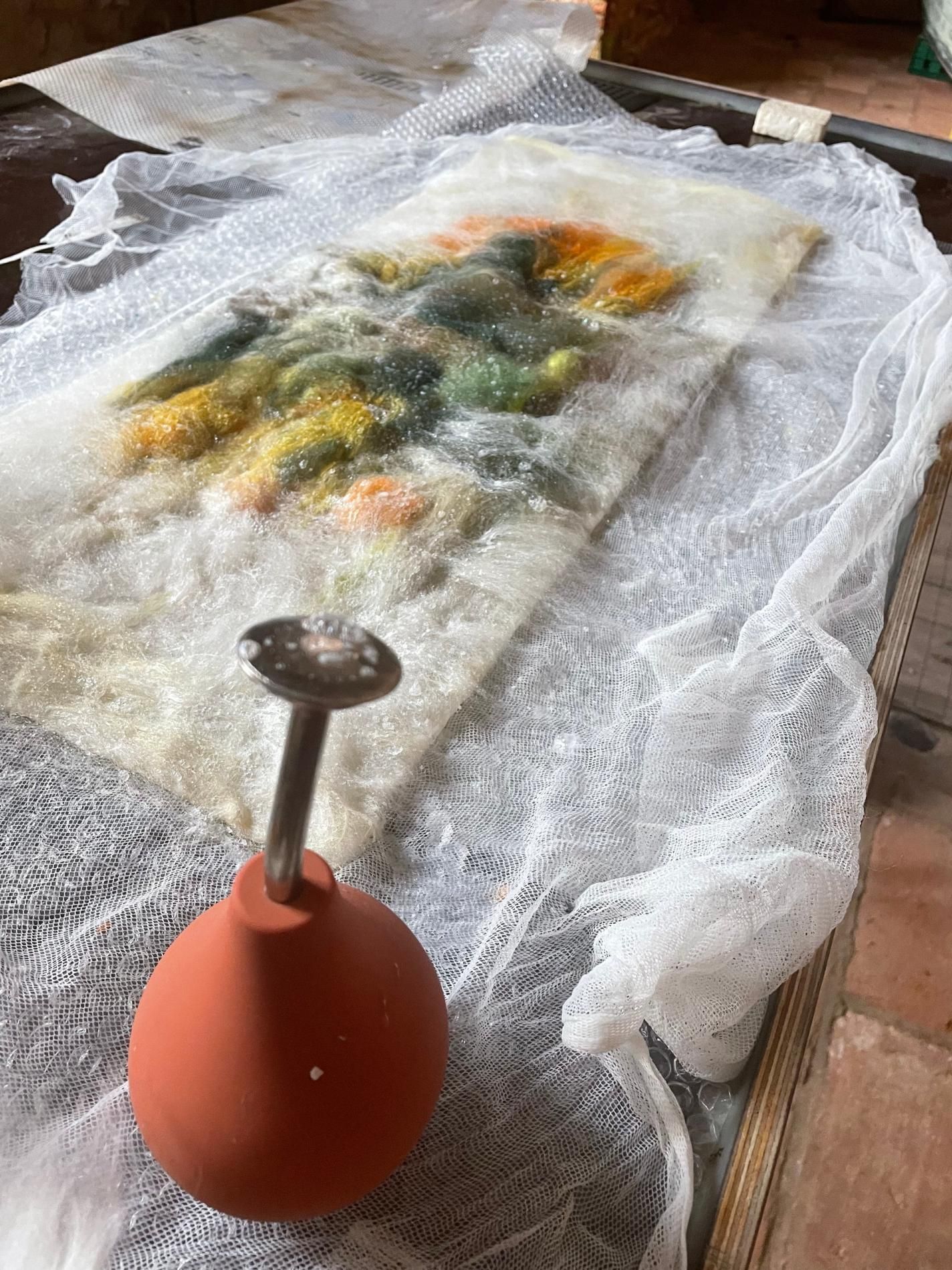
©Laurence Schneider
Die Entdeckung der Filzkunst
Mit Laurence Schneider - Atelier zwischen Himmel und Wolle
Ein antikes Know-how zwischen Geschichte, Material und Kreativität
Anlässlich der Europäischen Tage des Kulturerbes 2026 entdecken Sie ein ebenso altes wie faszinierendes Handwerk: die Kunst des Wollfilzes.
Wussten Sie, dass die Filterung zu den ältesten Textiltechniken der Menschheit gehört? Historiker gehen von 8.500 bis 6.000 v. Chr. aus, als die frühe Domestizierung des Schafs begann. Schon lange vor der Weberei hatten die nomadischen Völker Zentralasiens die unglaublichen Eigenschaften dieses Materials entdeckt.
Handwerker-Filz ist ein Vliesstoff, der in der Regel aus 100 % natürlichen Wollfasern hergestellt wird. Sein Geheimnis? Eine erstaunliche Arbeit der Umwandlung der Faser durch heißes Wasser, Seife, Reibung und Fouling.
Kommen Sie und erleben Sie diese lebendige Materie
Diese Tage des Kulturerbes werden die Gelegenheit bieten, den Lauf der Zeit zu betrachten, die über Generationen hinweg übertragenen Gesten zu verstehen und vor allem selbst die Möglichkeiten zu entdecken, die durch feuchte Wolle geboten werden.
Über seine Geschichte hinaus ist der Filz ein überraschend zeitgenössisches Material: natürlich, langlebig, warm und förderlich für das Schaffen.
Berühren, beobachten, experimentieren und entdecken, wie mit ein paar Wollfasern, Wasser, Seife und präzisen Gesten ein Material in den Händen zum Leben erweckt wird.
Eine Einladung, ein lebendiges Erbe zu entdecken, das aus Materialien, Gesten und Know-how besteht.
Workshop: discovering felt
Discovering the art of felt
Conditions
Kostenlos. Gruppen sind auf 50 Personen begrenzt.
©Laurence Schneider
Discovering the art of felt
With Laurence Schneider - Atelier Entre Ciel et Laine
An ancestral know-how between history, material and creativity
On the occasion of the European Heritage Days 2026, come and discover a craft as ancient as fascinating: the art of wool felt.
Did you know that felting is among the oldest textile techniques of humanity? Historians place its origins between 8500 and 6000 BC, at the beginning of the domestication of sheep. Long before weaving, the nomadic peoples of Central Asia had already discovered the incredible qualities of this material.
Artisanal felt is a non-woven textile, usually made from 100% natural wool fibers. His secret? An astonishing work of transformation of the fiber by hot water, soap, rubbing and crushing.
Come experiment with this living matter
These Heritage Days will be an opportunity to go back in time, to understand the gestures passed down over generations and above all to discover for yourself the possibilities offered by felted wool.
Beyond its history, felt is a surprisingly contemporary material: natural, durable, warm and conducive to creation.
Come touch, observe, experiment and discover how, with some wool fibers, water, soap and precise gestures, a material comes to life in the hands.
An invitation to discover a living heritage, made of material, gestures and know-how.
Workshop: scoperta del feltro
Alla scoperta dell'arte del feltro
Conditions
Kostenlos. Gruppen sind auf 50 Personen begrenzt.
©Laurence Schneider
Alla scoperta dell'arte del feltro
Con Laurence Schneider - Atelier Entre Ciel et Laine
Un know-how ancestrale tra storia, materia e creatività
In occasione delle Giornate europee del patrimonio 2026, venite a scoprire un artigianato tanto antico quanto affascinante: l'arte del feltro di lana.
Lo sapevate che il feltraggio è una delle più antiche tecniche tessili dell'umanità? Gli storici ne collocano le origini tra l'8.500 e il 6.000 a.C., all'inizio della domesticazione delle pecore. Molto prima della tessitura, i popoli nomadi dell'Asia centrale avevano già scoperto le incredibili qualità di questo materiale.
Il feltro artigianale è un tessuto non tessuto, generalmente realizzato con fibre di lana naturali al 100%. Il suo segreto? Uno straordinario lavoro di trasformazione della fibra con acqua calda, sapone, strofinamento e fouling.
Venite a sperimentare questa materia viva
Queste giornate del patrimonio saranno l'occasione per fare un viaggio indietro nel tempo, comprendere i gesti tramandati di generazione in generazione e soprattutto scoprire di persona le possibilità offerte dalla lana feltrata.
Al di là della sua storia, il feltro è un materiale sorprendentemente contemporaneo: naturale, durevole, caldo e favorevole alla creazione.
Venite a toccare, osservare, sperimentare e scoprire come, con poche fibre di lana, acqua, sapone e gesti precisi, una materia prende vita tra le mani.
Un invito a scoprire un patrimonio vivo, fatto di materia, gesti e know-how.
Atelier : découverte du feutre
À la découverte de l’art du feutre
Conditions
Kostenlos. Gruppen sind auf 50 Personen begrenzt.
©Laurence Schneider
À la découverte de l’art du feutre
Avec Laurence Schneider - Atelier Entre Ciel et Laine
Un savoir-faire ancestral entre histoire, matière et créativité
À l’occasion des Journées européennes du patrimoine 2026, venez découvrir un artisanat aussi ancien que fascinant : l’art du feutre de laine.
Saviez-vous que le feutrage compte parmi les plus anciennes techniques textiles de l’humanité ? Les historiens en situent les origines entre 8500 et 6000 avant J.-C., aux débuts de la domestication du mouton. Bien avant le tissage, les peuples nomades d’Asie centrale avaient déjà découvert les incroyables qualités de cette matière.
Le feutre artisanal est un textile non tissé, généralement fabriqué à partir de fibres de laine 100 % naturelles. Son secret ? Un étonnant travail de transformation de la fibre par l’eau chaude, le savon, le frottement et le foulage.
Venez expérimenter cette matière vivante
Ces Journées du patrimoine seront l’occasion de remonter le fil du temps, de comprendre les gestes transmis au fil des générations et surtout de découvrir par vous-même les possibilités offertes par la laine feutrée.
Au-delà de son histoire, le feutre est une matière étonnamment contemporaine : naturelle, durable, chaleureuse et propice à la création.
Venez toucher, observer, expérimenter et découvrir comment, avec quelques fibres de laine, de l’eau, du savon et des gestes précis, une matière prend vie entre les mains.
Une invitation à découvrir un patrimoine vivant, fait de matière, de gestes et de savoir-faire.
Taller: descubrimiento del fieltro
Descubriendo el arte del fieltro
Conditions
Kostenlos. Gruppen sind auf 50 Personen begrenzt.
©Laurence Schneider
Descubriendo el arte del fieltro
Con Laurence Schneider - Taller entre el cielo y la lana
Un saber hacer ancestral entre historia, materia y creatividad
Con motivo de las Jornadas Europeas del Patrimonio 2026, venga a descubrir una artesanía tan antigua como fascinante: el arte del fieltro de lana.
¿Sabías que el felpado es una de las técnicas textiles más antiguas de la humanidad? Los historiadores sitúan sus orígenes entre el 8.500 y el 6.000 a. C., en los inicios de la domesticación del ovino. Mucho antes del tejido, los pueblos nómadas de Asia central ya habían descubierto las increíbles cualidades de este material.
El fieltro artesanal es un textil no tejido, generalmente fabricado a partir de fibras de lana 100% naturales. Su secreto? Un sorprendente trabajo de transformación de la fibra por el agua caliente, el jabón, el frotamiento y el fouling.
Ven a experimentar esta materia viva
Estas Jornadas del patrimonio serán la ocasión de remontarse en el tiempo, de comprender los gestos transmitidos a lo largo de las generaciones y sobre todo de descubrir por sí mismos las posibilidades que ofrece la lana feltrada.
Más allá de su historia, el fieltro es un material sorprendentemente contemporáneo: natural, duradero, cálido y propicio a la creación.
Ven a tocar, observar, experimentar y descubrir cómo, con unas pocas fibras de lana, agua, jabón y gestos precisos, una materia cobra vida en las manos.
Una invitación a descubrir un patrimonio vivo, hecho de materiales, gestos y saber hacer.


