Obst- und Obstbau im alten Savoyen, die Wirtschaft des Obstgartens
Vortrag von Yannick Grand, Professor für Geschichte und Geographie
Samstag 19 September, 16:00
Conditions
Anmeldung unter 04 50 64 64 18
This event includes accessibility accommodations
Motorische beeinträchtigung
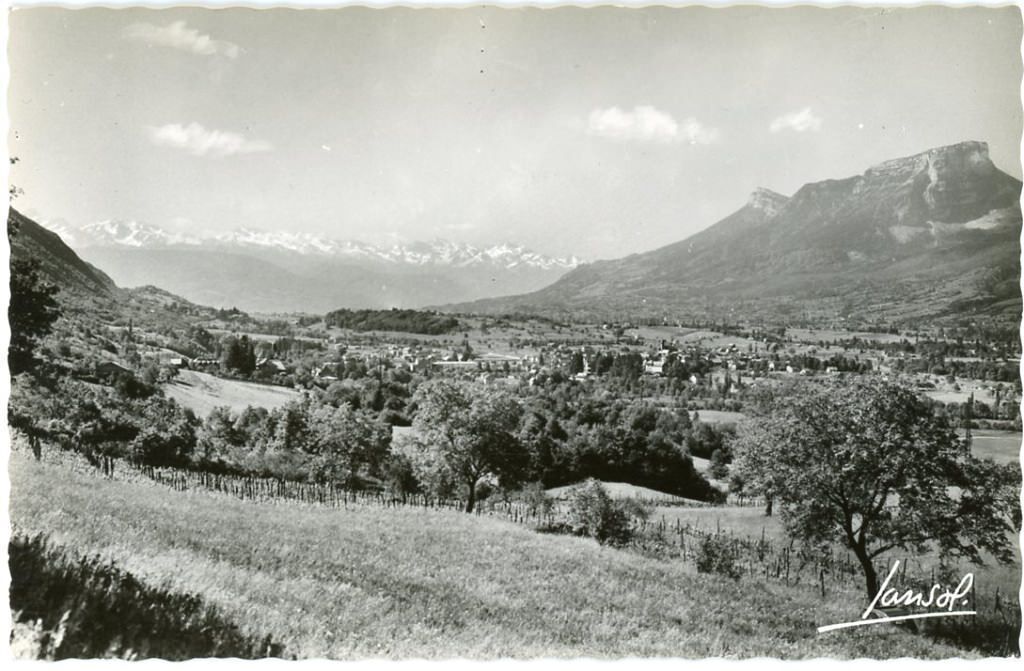
©Musée de Rumilly
Vortrag von Yannick Grand, Professor für Geschichte und Geographie
Aus den unterschiedlichsten Quellen (Krankenhausrechnungen, Verlustanalysen, napoleonische Statistiken usw.) wird schnell klar, dass Savoyen schon immer ein baumbewachsenes Land war. Sie war 1926 sogar mit der Normandie vergleichbar, was den Export von Messerfrüchten anging. Die Rolle des Obstbaums in immer kleineren Regionen führte zu einer ganzen häuslichen, ja sogar protoindustriellen Wirtschaft. Aber in der Zeit des Slow Food sind die, die man als lokale Produkte feiert, vielleicht nicht wirklich aus Savoyen stammen: Man kann ihren Werdegang und ihre Eingewöhnung nachverfolgen.
Fruits and arboriculture in ancient Savoy, the economy of the orchard
Lecture by Yannick Grand, professor of History-Geography
Samstag 19 September, 16:00
Conditions
Anmeldung unter 04 50 64 64 18
This event includes accessibility accommodations
Motorische beeinträchtigung
©Musée de Rumilly
Lecture by Yannick Grand, professor of History-Geography
With the most diverse sources (hospital accounts, loss inventories, Napoleonic statistics, etc.) we quickly realize that Savoy has always been an arboreal land. It was even equal to Normandy in 1926, in the exports of fruit with knives. The place of the fruit tree, in ever more reduced terroirs, led to a whole domestic economy, even proto-industrial. But at the time of slow food, those that are celebrated as local products, may not really be from Savoy: we can trace their journey and acclimatization.
Frutta e arboricoltura nella Savoia antica, l'economia del frutteto
Conferenza di Yannick Grand, professore di storia e geografia
Samstag 19 September, 16:00
Conditions
Anmeldung unter 04 50 64 64 18
This event includes accessibility accommodations
Motorische beeinträchtigung
©Musée de Rumilly
Conferenza di Yannick Grand, professore di storia e geografia
Con le fonti più diverse (conti ospedalieri, inventari delle perdite, statistiche napoleoniche, ecc.) si capisce presto che la Savoia è sempre stata una terra arboricola. Lo fu anche, a parità di con la Normandia nel 1926, nelle esportazioni di frutta da taglio. Il ruolo dell'albero da frutto, in terre sempre più ridotte, comportava tutta un'economia domestica, se non proto-industriale. Ma nell'era dello slow food, quelli che si celebrano come i prodotti locali, forse non sono davvero originari della Savoia: si può ripercorrere il loro percorso e la loro acclimatazione.
Fruits et arboriculture dans la Savoie ancienne, l’économie de verger
Conférence par Yannick Grand, professeur d’Histoire-Géographie
Samstag 19 September, 16:00
Conditions
Anmeldung unter 04 50 64 64 18
This event includes accessibility accommodations
Motorische beeinträchtigung
©Musée de Rumilly
Conférence par Yannick Grand, professeur d’Histoire-Géographie
Avec les sources les plus diverses (comptes hospitaliers, inventaires de pertes, statistiques napoléoniennes, etc.) on se rend vite compte que la Savoie a toujours été une terre arboricole. Elle le fut même à l'égal de la Normandie en 1926, dans les exportations de fruits à couteaux. La place de l'arbre fruitier, dans des terroirs toujours plus réduits, entraînait toute une économie domestique, voire proto-industrielle. Mais à l'heure du slow food, ceux qu'on célèbre comme les produits du terroir, ne sont peut-être pas vraiment originaires des Savoie: on peut retracer leur parcours et leur acclimatation.
Frutas y arboricultura en la antigua Saboya, la economía de los huertos
Conferencia de Yannick Grand, profesor de historia y geografía
Samstag 19 September, 16:00
Conditions
Anmeldung unter 04 50 64 64 18
This event includes accessibility accommodations
Motorische beeinträchtigung
©Musée de Rumilly
Conferencia de Yannick Grand, profesor de historia y geografía
Con las fuentes más diversas (cuentas hospitalarias, inventarios de pérdidas, estadísticas napoleónicas, etc.) uno se da cuenta rápidamente de que Saboya siempre ha sido una tierra arbórea. Lo fue incluso a la par de Normandía en 1926, en las exportaciones de frutas a cuchillo. El lugar del árbol frutal, en tierras cada vez más reducidas, implicaba toda una economía doméstica, incluso protoindustrial. Pero en la época del slow food, los que se celebran como los productos de terroir, tal vez no sean realmente originarios de Saboya: se puede rastrear su recorrido y su aclimatación.

