Siehe Tahiti. Erste Fotografien 1859-1870
Ausstellung Siehe Tahiti. Erste Fotografien 1859-1870
29 September 2026 - 31 Januar 2027
Conditions
Voller Preis: 14 € Reduzierter Preis: 11 € Spezifischer Preis: kostenlos
This event includes accessibility accommodations
Motorische beeinträchtigung
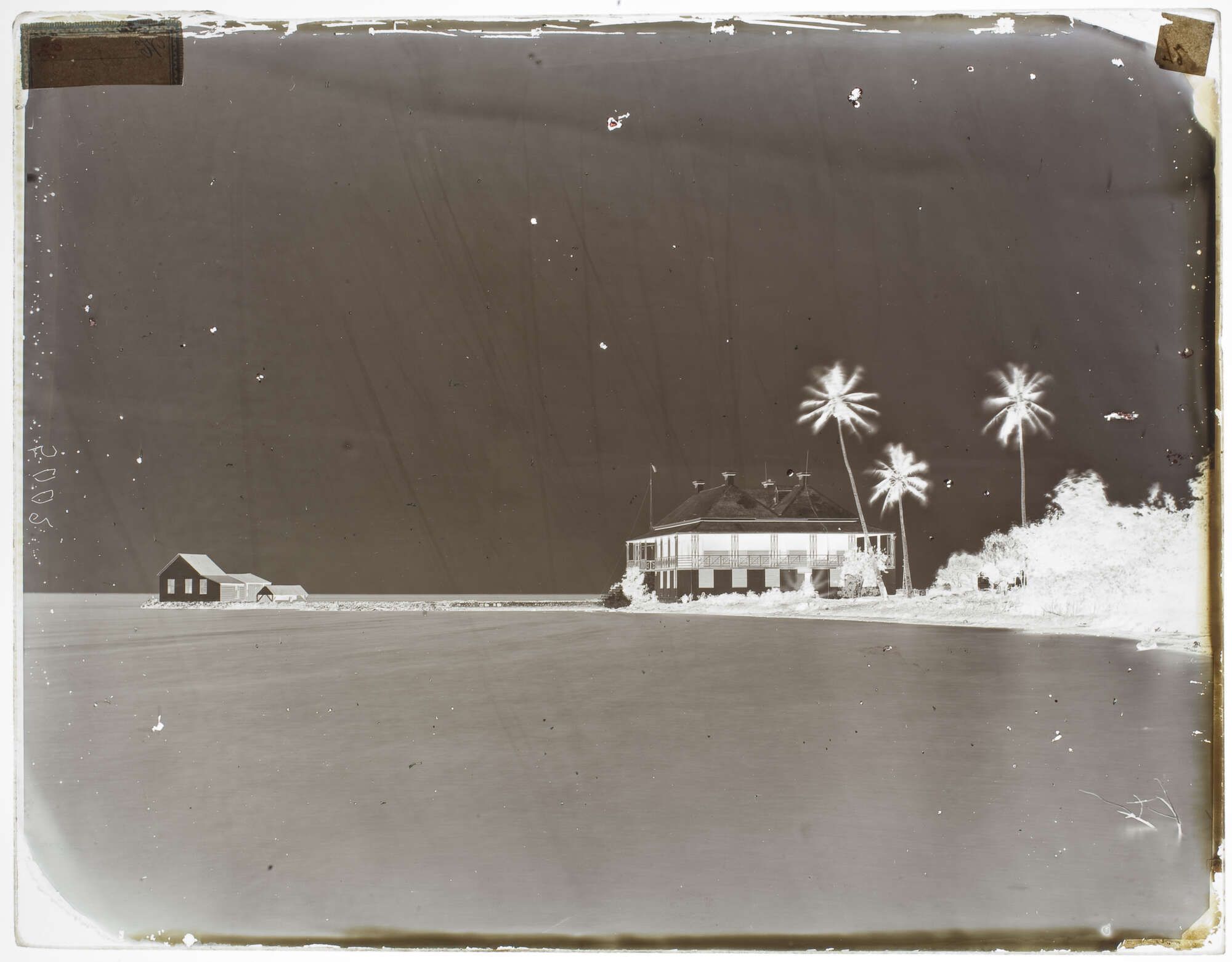
© Paul-Emile Miot (1827 – 1900), Habitation d'Atimaono, Tahiti, Mataiea, 1869-1870. Musée du quai Branly - Jacques Chirac
Ausstellung Siehe Tahiti. Erste Fotografien 1859-1870
Vom 29. September 2026 bis zum 31. Januar 2027
Das Museum erwarb im Jahr 2023 eine außergewöhnliche Sammlung von Fotografien, die als erste in Französisch-Polynesien zwischen 1859 und 1870 von zwei Marineoffizieren aufgenommen wurden.
Alle von Gustave Viaud zwischen 1859 und 1862 aufgenommenen Fotografien bestehen aus Negativbildern auf Papier, die manchmal mit dem Druck auf Salzpapier versehen sind. Es wurde in den 1990er Jahren von der Familie Loti-Viaud erworben. Diese Bilder, die seitdem vom selben Sammler aufbewahrt werden, wurden nie ausgestellt. Gustave Viaud ist der ältere Bruder von Julien Viaud, bekannt als Pierre Loti. Gustave Viaud ist eine Schlüsselfigur in der Leidenschaft des Schriftstellers für die Exotik. Er ist vor allem ein wenig bekannter Schauspieler aus den Anfängen der Fotografie. Marinechirurg, der im Juni 1859 nach Tahiti versetzt wurde, beschaffte er sich schnell fotografisches Material, um diese neue Darstellungsweise zu üben. Er verwendet das Negativ auf Papier, wie es in denselben Jahren auch Pierre Trémaux im Sudan, Auguste Bartholdi und John Beasley Greene in Ägypten oder Désiré Charnay in Mexiko getan haben. Seine Bilder, im Wesentlichen Landschaften, zeigen kontrollierte Kompositionen und spielen manchmal mit den Bewegungen der Pflanzen im Wind. Er schuf auch ein außergewöhnliches Porträt von Teriimaevarua II., der Königin von Bora Bora.
Paul-Emile Miot, ein Seemann, der seit den 1850er Jahren als ausgezeichneter Fotograf bekannt ist, übt seine Talente an verschiedenen Orten der Welt aus. 10 Jahre nach Viaud kam er 1869 und 1870 zu zwei Aufenthalten in Tahiti und den Marquesas. Dort fertigte er zahlreiche Porträts und Landschaften an, indem er Glasnegative im Kollodion verwendete. Seine Bilder charakterisieren eine maritime Perspektive, insbesondere die Küsten. Aber Miot fotografiert auch die polynesische Gesellschaft und insbesondere die königliche Familie. Seine Bilder tragen die Handschrift eines erfahrenen Fotografen, aber auch ein Auge, das man schnell als modern bezeichnen kann, mit einem ausgeprägten Sinn für Komposition.
Innerhalb eines Jahrzehnts bieten diese beiden Bildgruppen ein beeindruckendes Material auf einem Gebiet, das später weitgehend fotografiert wird.
Die von den Kuratoren der Ausstellung vorgeschlagene Vorliebe besteht darin, sich weitgehend auf diese Negative zu verlassen, um ihre grafischen Qualitäten hervorzuheben, während sie sich erlauben, Vergrößerungen und Transformationen in Positive einzusetzen, aber auch alte Abzüge darzustellen.
See Tahiti. First photographs 1859-1870
Exhibition See Tahiti. First photographs 1859-1870
29 September 2026 - 31 Januar 2027
Conditions
Voller Preis: 14 € Reduzierter Preis: 11 € Spezifischer Preis: kostenlos
This event includes accessibility accommodations
Motorische beeinträchtigung
© Paul-Emile Miot (1827 – 1900), Habitation d'Atimaono, Tahiti, Mataiea, 1869-1870. Musée du quai Branly - Jacques Chirac
Exhibition See Tahiti. First photographs 1859-1870
From September 29, 2026, to January 31, 2027
In 2023, the museum acquired an exceptional set of photographs that are the very first to be taken in French Polynesia, between 1859 and 1870, by two naval officers.
All the photographs taken by Gustave Viaud between 1859 and 1862 are made up of negatives on paper, sometimes accompanied by their prints on salted paper. It was acquired from the Loti-Viaud family in the 1990s. Kept since by the same collector, these images have never been exhibited. Gustave Viaud is the elder brother of Julien Viaud, known as Pierre Loti. Gustave Viaud is a key character in the writer’s passion for exoticism. He is above all a little-known actor in the early days of photography. Marine surgeon assigned to Tahiti in June 1859, he quickly procured photographic equipment in order to practice this new mode of representation. He uses the negative on paper, as did in the same years Pierre Trémaux in Sudan, Auguste Bartholdi and John Beasley Greene in Egypt or Désiré Charnay in Mexico. His images, mainly landscapes, show controlled compositions, sometimes playing with the movements of plants in the wind. He also made an exceptional portrait of Teriimaevarua II, queen of Bora Bora.
Paul-Emile Miot, a sailor recognized in the 1850s as an excellent photographer, exercised his talents in different parts of the world. 10 years after Viaud he passed through Tahiti and the Marquesas during two stays in 1869 and 1870. He made many portraits and landscapes using glass negatives on collodion. His images characterize a marine point of view, showing in particular the coasts. But Miot also photographed Polynesian society and especially the royal family. His images bear the mark of a seasoned photographer but also an eye that can quickly be described as modern, with a sense of composition.
In a decade these two sets of images offer a striking material on a territory that will be widely photographed thereafter.
The approach proposed by the exhibition’s curators is to rely heavily on these negatives to highlight their graphic qualities, while allowing themselves to resort to enlargements and transformations into positive ones, but also by exhibiting old prints.
Vedi Tahiti. Prime fotografie 1859-1870
Esposizione Vedere Tahiti. Prime fotografie 1859-1870
29 September 2026 - 31 Januar 2027
Conditions
Voller Preis: 14 € Reduzierter Preis: 11 € Spezifischer Preis: kostenlos
This event includes accessibility accommodations
Motorische beeinträchtigung
© Paul-Emile Miot (1827 – 1900), Habitation d'Atimaono, Tahiti, Mataiea, 1869-1870. Musée du quai Branly - Jacques Chirac
Esposizione Vedi Tahiti. Prime fotografie 1859-1870
Dal 29 settembre 2026 al 31 gennaio 2027
Il museo ha acquisito nel 2023 un eccezionale insieme di fotografie che sono le prime realizzate nella Polinesia francese, tra il 1859 e il 1870, da due ufficiali della marina.
L'insieme delle fotografie scattate da Gustave Viaud tra il 1859 e il 1862 è formato da negativi su carta, talvolta accompagnati dalla loro stampa su carta salata. È stato acquistato dalla famiglia Loti-Viaud negli anni '90. Conservate da allora dallo stesso collezionista, queste immagini non sono mai state esposte. Gustave Viaud è il fratello maggiore di Julien Viaud, conosciuto come Pierre Loti. Gustave Viaud è un personaggio chiave nella passione dello scrittore per l'esotismo. È soprattutto un attore poco conosciuto degli inizi della fotografia. Chirurgo di marina assegnato a Tahiti nel giugno 1859, si procura rapidamente del materiale fotografico per esercitarsi in questo nuovo modo di rappresentazione. Usa il negativo su carta, come hanno potuto fare negli stessi anni Pierre Trémaux in Sudan, Auguste Bartholdi e John Beasley Greene in Egitto o Désiré Charnay in Messico. Le sue immagini, essenzialmente paesaggi, mostrano composizioni controllate, a volte giocando con i movimenti delle piante nel vento. Realizza anche un eccezionale ritratto di Teriimaevarua II, regina di Bora Bora.
Paul-Emile Miot, marinaio riconosciuto fin dagli anni 1850 come un eccellente fotografo, esercita i suoi talenti in diversi luoghi del mondo. 10 anni dopo Viaud passò per Tahiti e le Marchesi durante due soggiorni nel 1869 e 1870. Vi realizza numerosi ritratti e paesaggi utilizzando i negativi su vetro al collodio. Le sue immagini caratterizzano un punto di vista marino, mostrando in particolare le coste. Ma Miot fotografa anche la società polinesiana e in particolare la famiglia reale. Le sue immagini portano il marchio di un fotografo esperto ma anche di un occhio che si può rapidamente definire moderno, con un senso della composizione affermato.
In un decennio questi due insiemi di immagini offrono un materiale sorprendente su un territorio che sarà ampiamente fotografato in seguito.
L'orientamento proposto dai commissari della mostra è quello di affidarsi ampiamente a questi negativi per mettere in evidenza le loro qualità grafiche, autorizzandosi a ricorrere ad ingrandimenti e trasformazioni in positivi, ma esponendo anche vecchie stampe.
Voir Tahiti. Premières photographies 1859-1870
Exposition Voir Tahiti. Premières photographies 1859-1870
29 September 2026 - 31 Januar 2027
Conditions
Voller Preis: 14 € Reduzierter Preis: 11 € Spezifischer Preis: kostenlos
This event includes accessibility accommodations
Motorische beeinträchtigung
© Paul-Emile Miot (1827 – 1900), Habitation d'Atimaono, Tahiti, Mataiea, 1869-1870. Musée du quai Branly - Jacques Chirac
Exposition Voir Tahiti. Premières photographies 1859-1870
Du 29 septembre 2026 au 31 janvier 2027
Le musée a acquis en 2023 un ensemble exceptionnel de photographies qui sont les toutes premières réalisées en Polynésie française, entre 1859 et 1870, par deux officiers de marine.
L’ensemble des photographies prises par Gustave Viaud entre 1859 et 1862 est formé de négatifs sur papier parfois accompagnés de leur tirage sur papier salé. Il a été acquis auprès de la famille Loti-Viaud dans les années 1990. Conservées depuis par le même collectionneur, ces images n’ont jamais été exposées. Gustave Viaud est le frère aîné de Julien Viaud, connu sous le nom de Pierre Loti. Gustave Viaud est un personnage clef dans la passion de l’écrivain pour l’exotisme. Il est surtout un acteur méconnu des débuts de la photographie. Chirurgien de marine affecté à Tahiti en juin 1859, il se procure rapidement du matériel photographique afin de s’exercer à ce nouveau mode de représentation. Il utilise le négatif sur papier, comme ont pu le faire dans les mêmes années Pierre Trémaux au Soudan, Auguste Bartholdi et John Beasley Greene en Egypte ou Désiré Charnay au Mexique. Ses images, essentiellement des paysages, montrent des compositions maîtrisées, jouant parfois avec les mouvements des végétaux dans le vent. Il réalise également un exceptionnel portrait de Teriimaevarua II, reine de Bora Bora.
Paul-Emile Miot, marin reconnu dès les années 1850 comme un excellent photographe, exerce ses talents dans différents lieux du monde. 10 ans après Viaud il passe par Tahiti et les Marquises lors de deux séjours en 1869 et 1870. Il y réalise de nombreux portraits et paysages en utilisant les négatifs sur verre au collodion. Ses images caractérisent un point de vue marin, montrant notamment les côtes. Mais Miot photographie également la société polynésienne et notamment la famille royale. Ses images portent la marque d’un photographe aguerri mais aussi d’un œil que l’on peut qualifier rapidement de moderne, avec un sens de la composition affirmé.
En une décennie ces deux ensembles d’images offrent un matériau saisissant sur un territoire qui sera largement photographié par la suite.
Le parti pris proposé par les commissaires de l’exposition est de s’appuyer largement sur ces négatifs pour mettre en avant leurs qualités graphiques, tout en s’autorisant à recourir à des agrandissements et des transformations en positifs, mais en exposant également des tirages anciens.
Ver Tahití. Primeras fotografías 1859-1870
Exposición Ver Tahití. Primeras fotografías 1859-1870
29 September 2026 - 31 Januar 2027
Conditions
Voller Preis: 14 € Reduzierter Preis: 11 € Spezifischer Preis: kostenlos
This event includes accessibility accommodations
Motorische beeinträchtigung
© Paul-Emile Miot (1827 – 1900), Habitation d'Atimaono, Tahiti, Mataiea, 1869-1870. Musée du quai Branly - Jacques Chirac
Exposición Ver Tahití. Primeras fotografías 1859-1870
Del 29 de septiembre de 2026 al 31 de enero de 2027
El museo adquirió en 2023 un conjunto excepcional de fotografías que son las primeras realizadas en la Polinesia Francesa, entre 1859 y 1870, por dos oficiales de marina.
El conjunto de fotografías tomadas por Gustave Viaud entre 1859 y 1862 está formado por negativos sobre papel, a veces acompañados de su impresión en papel salado. Fue adquirido de la familia Loti-Viaud en los años 1990. Conservadas desde entonces por el mismo coleccionista, estas imágenes nunca han sido expuestas. Gustave Viaud es el hermano mayor de Julien Viaud, conocido como Pierre Loti. Gustave Viaud es un personaje clave en la pasión del escritor por el exotismo. Es sobre todo un actor poco conocido desde los inicios de la fotografía. Cirujano de marina destinado a Tahití en junio de 1859, se provee rápidamente de material fotográfico para practicar este nuevo modo de representación. Utiliza el negativo sobre papel, como pudieron hacerlo en los mismos años Pierre Trémaux en Sudán, Auguste Bartholdi y John Beasley Greene en Egipto o Désiré Charnay en México. Sus imágenes, esencialmente paisajes, muestran composiciones controladas, jugando a veces con los movimientos de las plantas en el viento. También realiza un excepcional retrato de Teriimaevarua II, reina de Bora Bora.
Paul-Emile Miot, marino reconocido desde los años 1850 como un excelente fotógrafo, ejerce sus talentos en diferentes lugares del mundo. 10 años después de Viaud pasó por Tahití y las Marquesas durante dos estancias en 1869 y 1870. Realiza allí numerosos retratos y paisajes utilizando los negativos sobre vidrio al colodión. Sus imágenes caracterizan un punto de vista marino, mostrando en particular las costas. Pero Miot también fotografía la sociedad polinesia y en particular la familia real. Sus imágenes llevan la marca de un fotógrafo experimentado pero también de un ojo que se puede calificar rápidamente como moderno, con un sentido de la composición afirmado.
En una década, estos dos conjuntos de imágenes ofrecen un material impactante sobre un territorio que será ampliamente fotografiado posteriormente.
El punto de vista propuesto por los comisarios de la exposición es apoyarse en gran medida en estos negativos para resaltar sus cualidades gráficas, permitiéndose al mismo tiempo recurrir a ampliaciones y transformaciones en positivos, pero también exponiendo impresiones antiguas.


