Ausstellung von subjektiven Fotografien
Vor 75 Jahren eröffnete das Kunsthandwerkzentrum Saarbrücken am 12\. Juli 1951 die Ausstellung subjektive fotografie. Basierend auf den im Vorfeld durchgeführten Untersuchungen...
7 November 2026 - 14 Februar 2027
This event includes accessibility accommodations
Geistige Behinderung
Schwerhörig
Psychische behinderung
Motorische beeinträchtigung
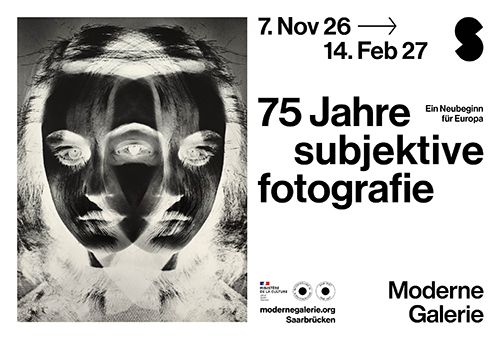
Otto Steinert, Maske einer Tänzerin, 1952, Saarlandmuseum – Moderne Galerie, Fotografische Sammlung, Saarbrücken. © Nachlass Otto Steinert, Museum Folkwang Essen, 2025. Foto: Raphael Maaß
Vor 75 Jahren eröffnete das Kunsthandwerkzentrum Saarbrücken am 12. Juli 1951 die Ausstellung subjektive fotografie. Auf der Grundlage von Recherchen, die das Kollektiv fotoform im Vorfeld durchgeführt hat, entwirft der Leiter der Fotoabteilung - Otto Steinert - eine zeitgemäße Ausstellung. Auch heute noch wird die subjektive Fotografie mit der fotografischen Avantgarde der 1950er Jahre gleichgesetzt. Steinerts Ausstellungen sind von Anfang an international und gelten als das Wahrzeichen, ja sogar der künstlerische Ausdruck des Saarlandes, das nach dem Pariser Abkommen vor der Volksabstimmung über seinen Status zu einem "europäischen Staat" wird. Weder vorher noch nachher hat das Saarland einen derart entscheidenden und nachhaltigen Einfluss auf die Kunst- und Fotogeschichte gehabt. Die Ausstellung subjektive fotografie sowie die Lehre Otto Steinerts in Saarbrücken wie auch in Essen haben wesentlich dazu beigetragen, dass die Fotografie nicht nur in Deutschland zu einem eigenständigen künstlerischen Genre geworden ist.
Mit nicht weniger als 725 Werken zählt die Ausstellung subjektive fotografie aus dem Jahr 1951 nicht nur zu den wichtigsten Ausstellungen in der Geschichte der Fotografie, sondern wird auch von zwei weiteren begleitet: subjektive fotografie 2, eröffnet 1954 und subjektive fotografie 3 1958 - Jahr, in dem das Saarland, das bereits politisch an die Bundesrepublik Deutschland angegliedert war, nun wirtschaftlich angebunden wird. Von 1951 bis 1955, dem Eröffnungsjahr von Edward Steichens The Family of Man, die 503 Werke umfasst, zählt die subjektive fotografie zu den bekanntesten Ausstellungen der Welt. Darüber hinaus macht sie die freie Form zu ihrem Credo, daher die von Otto Steinert bekundete Vorliebe für experimentelle Techniken wie das Fotogramm, die Pseudo-Solarisierung, den Negativdruck und das Photomontage. Die Schwingung des fotografischen Mediums zwischen zwei Polen: dem Dokument und der Kunst ist so alt wie das Medium selbst. Im Gefolge des Zweiten Weltkriegs und des Sturzes der NS-Herrschaft wurde die Tatsache, dass die Fotografie ihre Zugehörigkeit zur Kunst beanspruchte, als Befreiung von Machtmissbrauch und als Rehabilitierung der verfolgten fotografischen Avantgarde wahrgenommen. Die erste sujektive fotografie-Ausstellung würdigt die großen avantgardistischen Bewegungen der Zwischenkriegszeit. Steinert präsentiert dort eine beeindruckende Anzahl von Werken ihrer Anführer, darunter auch ehemalige Bauhaus-Lehrer wie László Moholy-Nagy und Herbert Bayer, die in den USA leben, oder den Surrealisten Man Ray, der die Staaten endgültig verlässt.United und kehrt zu dieser Zeit nach Europa zurück.
The exhibition of
Seventy-five years ago, the Saarbrücken Center for Skilled Crafts opened the “Subjective Photography” exhibition (La photographie subjective) on July 12, 1951\. Based on prior research...
7 November 2026 - 14 Februar 2027
This event includes accessibility accommodations
Geistige Behinderung
Schwerhörig
Psychische behinderung
Motorische beeinträchtigung
Otto Steinert, Maske einer Tänzerin, 1952, Saarlandmuseum – Moderne Galerie, Fotografische Sammlung, Saarbrücken. © Nachlass Otto Steinert, Museum Folkwang Essen, 2025. Foto: Raphael Maaß
Seventy-five years ago, the Saarbrücken Center for Skilled Crafts opened the “Subjective Photography” exhibition (La photographie subjective) on July 12, 1951. On the basis of research carried out in advance by the fotoform collective, the director of the photography department – Otto Steinert – is putting together an exhibition that will be a landmark. Even today, the subjective fotografie is assimilated to the photographic avant-garde of the 1950s. Steinert’s exhibitions are immediately of international stature and considered the jewel, even the artistic expression of the Saar which, according to the Paris agreements preceding the referendum on its status, becomes a "European state". Neither before nor after, the Saar has managed to exert such a decisive and lasting impact on the history of art and photography. The participative photography exhibition, as well as Otto Steinert’s teaching in Saarbrücken and Essen, have amply contributed to making photography an artistic genre in its own right – and not only in Germany.
Bringing together no fewer than 725 works, the “ables] fotografie exhibition, dating from 1951, is not only one of the leading exhibitions in the history of photography, but is also followed by two others: “Ables] fotografie 2, inaugurated in 1954 and normales de penser fotografie 3 in 1958 – the year when the Saar, already politically attached to the Federal Republic of Germany, will henceforth be economically so. From 1951 to 1955, the opening date of Edward Steichen’s The Family of Man, which brings together 503 works, the subjected photograph exhibition was among the most renowned in the world. In addition, it makes the free form its credo, hence the predilection displayed by Otto Steinert for experimental techniques, such as photogram, pseudo-solarization, negative printing and photomontage. The oscillation of the photographic medium between two poles: document and art is as old as the medium itself. However, in the aftermath of World War II and the fall of the Nazi regime, the fact that photography claimed its belonging to art was seen as a liberation from abuses of power and a rehabilitation of the persecuted photographic avant-garde. The first exhibition sujeunlike image celebrates the great avant-garde movements of the interwar period. Steinert presents an impressive number of works by their leaders, including former teachers at the Bauhaus, such as László Moholy-Nagy and Herbert Bayer, who settled in the United States, or the surrealist Man Ray, who is leaving the States for good.United and returned to Europe at that time.
Esposizione di fotografia soggettiva
75 anni fa, il Centro dei mestieri d'arte di Saarbrücken inaugurava la mostra subjektive fotografia (La fotografia soggettiva) il 12 luglio 1951\. Sulla base delle ricerche effettuate in precedenza...
7 November 2026 - 14 Februar 2027
This event includes accessibility accommodations
Geistige Behinderung
Schwerhörig
Psychische behinderung
Motorische beeinträchtigung
Otto Steinert, Maske einer Tänzerin, 1952, Saarlandmuseum – Moderne Galerie, Fotografische Sammlung, Saarbrücken. © Nachlass Otto Steinert, Museum Folkwang Essen, 2025. Foto: Raphael Maaß
75 anni fa, il Centro dei mestieri d'arte di Saarbrücken inaugurava la mostra subjektive fotografia (La fotografia soggettiva) il 12 luglio 1951. Sulla base delle ricerche effettuate a monte dal collettivo fotoform, il direttore del dipartimento di fotografia - Otto Steinert - progetta una mostra destinata a diventare storica. Ancora oggi, la fotografia soggettiva è assimilata all'avanguardia fotografica degli anni '50. Le esposizioni di Steinert sono da subito di portata internazionale e considerate il fiore all'occhiello, se non l'espressione artistica della Saar che, secondo gli accordi di Parigi precedenti al referendum sul suo status, diventa uno "stato europeo". Né prima né dopo, la Saar è riuscita a esercitare un impatto così decisivo e duraturo sulla storia dell'arte e della fotografia. L'esposizione subjektive fotografie e gli insegnamenti di Otto Steinert sia a Saarbrücken che ad Essen hanno contribuito in modo significativo a fare della fotografia un genere artistico a pieno titolo, non solo in Germania.
Con la sua collezione di 725 opere, l'esposizione subjektive fotografie del 1951 non è solo una delle principali esposizioni della storia della fotografia, ma anche seguita da altre due: subjektive fotografie 2, inaugurata nel 1954 e subjektive fotografie 3 nel 1958 - anno in cui la Saar, già politicamente annessa alla Repubblica federale di Germania, lo sarà ora economicamente. Dal 1951 al 1955, data di apertura di The Family of Man di Edward Steichen, che raccoglie 503 opere, la mostra subjektive fotografia è tra le più note al mondo. Inoltre, fa della forma libera il suo credo, da cui la predilezione mostrata da Otto Steinert per le tecniche sperimentali, come il fotogramma, la pseudo-solarizzazione, la stampa negativa e il fotomontaggio. L'oscillazione del mezzo fotografico tra due poli: il documento e l'arte è antica quanto il mezzo stesso. Tuttavia, all'indomani della seconda guerra mondiale e della caduta del regime nazista, il fatto che la fotografia rivendichi la sua appartenenza all'arte è percepito come una liberazione dagli abusi di potere e una riabilitazione dell'avanguardia fotografica perseguitata. La prima esposizione sujektive fotografia mette in risalto i grandi movimenti d'avanguardia dell'interguerra. Steinert vi presenta un numero impressionante di opere dei loro leader, e in particolare degli ex insegnanti del Bauhaus, come László Moholy-Nagy e Herbert Bayer, che si sono stabiliti negli Stati Uniti, o del surrealista Man Ray che lascia definitivamente gli Stati-Uniti e torna in Europa in questo periodo.
Exposition de subjektive fotografie
Il y a 75 ans, le Centre des Métiers d’Art de Sarrebruck inaugurait l’exposition subjektive fotografie (La photographie subjective) le 12 juillet 1951. Sur la base des recherches effectuées en amont…
7 November 2026 - 14 Februar 2027
This event includes accessibility accommodations
Geistige Behinderung
Schwerhörig
Psychische behinderung
Motorische beeinträchtigung
Otto Steinert, Maske einer Tänzerin, 1952, Saarlandmuseum – Moderne Galerie, Fotografische Sammlung, Saarbrücken. © Nachlass Otto Steinert, Museum Folkwang Essen, 2025. Foto: Raphael Maaß
Il y a 75 ans, le Centre des Métiers d’Art de Sarrebruck inaugurait l’exposition subjektive fotografie (La photographie subjective) le 12 juillet 1951. Sur la base des recherches effectuées en amont par le collectif fotoform, le directeur du département de photographie – Otto Steinert – conçoit une exposition appelée à faire date. Encore aujourd’hui, la subjective fotografie est assimilée à l’avant-garde photographique des années 1950. Les expositions de Steinert sont d’emblée d’envergure internationale et considérées comme le fleuron, voire même l’expression artistique de la Sarre qui, selon les accords de Paris précédant le référendum sur son statut, devient un « État européen ». Ni avant ni après, la Sarre n’a réussi à exercer un impact aussi décisif et durable sur l’histoire de l’art et de la photographie. L’exposition subjektive fotografie ainsi que l’enseignement d’Otto Steinert à Sarrebruck comme à Essen ont amplement contribué à faire de la photographie un genre artistique à part entière et ce, pas seulement en Allemagne.
Réunissant pas moins de 725 œuvres, l’exposition subjektive fotografie, datée de 1951, figure non seulement parmi les expositions phares dans l’histoire de la photographie, mais est aussi suivie de deux autres : subjektive fotografie 2, inaugurée en 1954 et subjektive fotografie 3 en 1958 – année où la Sarre, déjà rattachée politiquement à la République Fédérale d’Allemagne, va l’être désormais économiquement. De 1951 à 1955, date d’ouverture de The Family of Man d’Edward Steichen, qui rassemble 503 œuvres, l’exposition subjektive fotografie compte parmi les plus notoires au monde. De plus, elle fait de la forme libre son credo, d’où la prédilection affichée par Otto Steinert pour les techniques expérimentales, telles que le photogramme, la pseudo-solarisation, le tirage négatif et le photomontage. L’oscillation du médium photographique entre deux pôles : le document et l’art est aussi ancienne que le médium lui-même. Cependant, au lendemain de la Deuxième Guerre mondiale et de la chute du régime nazi, le fait que la photographie revendique son appartenance à l’art est perçu comme une libération des abus de pouvoir et une réhabilitation de l’avant-garde photographique persécutée. La première exposition sujektive fotografie met à l’honneur les grands mouvements avant-gardistes de l’entre-deux-guerres. Steinert y présente un nombre impressionnant d’œuvres de leurs chefs de file, et notamment des anciens enseignants au Bauhaus, comme László Moholy-Nagy et Herbert Bayer, installés aux États-Unis, ou bien du surréaliste Man Ray qui quitte définitivement les États-Unis et revient en Europe à cette époque.
Exposición de fotografía subjetiva
Hace 75 años, el Centro de Oficios Artísticos de Saarbrücken inauguró la exposición subjektive fotografia (La fotografía subjetiva) el 12 de julio de 1951\. Sobre la base de las investigaciones realiz
7 November 2026 - 14 Februar 2027
This event includes accessibility accommodations
Geistige Behinderung
Schwerhörig
Psychische behinderung
Motorische beeinträchtigung
Otto Steinert, Maske einer Tänzerin, 1952, Saarlandmuseum – Moderne Galerie, Fotografische Sammlung, Saarbrücken. © Nachlass Otto Steinert, Museum Folkwang Essen, 2025. Foto: Raphael Maaß
Hace 75 años, el Centro de Oficios Artísticos de Saarbrücken inauguró la exposición subjektive fotografia (La fotografía subjetiva) el 12 de julio de 1951. Sobre la base de las investigaciones realizadas previamente por el colectivo fotoform, el director del departamento de fotografía -Otto Steinert- diseña una exposición que ha llegado a ser histórica. Aún hoy, la fotografía subjetiva se asimila a la vanguardia fotográfica de los años 1950. Las exposiciones de Steinert son desde el principio de alcance internacional y consideradas como la joya, o incluso la expresión artística del Sarre que, según los acuerdos de París previos al referéndum sobre su estatuto, se convierte en un "Estado europeo". Ni antes ni después, el Sarre logró ejercer un impacto tan decisivo y duradero en la historia del arte y de la fotografía. La exposición subjektive fotografie y la enseñanza de Otto Steinert en Saarbrücken y en Essen han contribuido ampliamente a hacer de la fotografía un género artístico por derecho propio, no sólo en Alemania.
Con no menos de 725 obras, la exposición subjektive fotografia, datada en 1951, figura no solo entre las exposiciones más destacadas en la historia de la fotografía, sino que también es seguida por otras dos: subjektive fotografie 2, inaugurada en 1954 y subjektive fotografie 3 en 1958 -año en que el Sarre, ya políticamente vinculado a la República Federal de Alemania, lo será ahora económicamente. De 1951 a 1955, fecha de apertura de The Family of Man de Edward Steichen, que reúne 503 obras, la exposición subjektive fotografia es una de las más conocidas del mundo. Además, hace de la forma libre su credo, de ahí la predilección mostrada por Otto Steinert para las técnicas experimentales, como el fotograma, la pseudo-solarización, el tirado negativo y el fotomontaje. La oscilación del medio fotográfico entre dos polos: el documento y el arte es tan antigua como el medio mismo. Sin embargo, tras la Segunda Guerra Mundial y la caída del régimen nazi, el hecho de que la fotografía reivindique su pertenencia al arte se percibe como una liberación de los abusos de poder y una rehabilitación de la vanguardia fotográfica perseguida. La primera exposición sujektive fotografia pone de relieve los grandes movimientos vanguardistas del período de entreguerras. Steinert presenta un número impresionante de obras de sus dirigentes, y en particular de antiguos profesores de la Bauhaus, como László Moholy-Nagy y Herbert Bayer, que se instalaron en los Estados Unidos, o del surrealista Man Ray, que abandona definitivamente los Estados.Unidos y vuelve a Europa en esta época.


