C'ÉTAIT NOTRE TERRE
Performance from November 20 to 25 at the Comédie de Genève. Célie Pauthe adapts Mathieu Belezi’s novel about a French settler family in Algeria during the war of independence.
DR
The Montaigne estate, somewhere in northern Algeria. Six hundred and fifty-three hectares transformed into farmland where eucalyptus, vines, oats and wheat are cultivated. This land has long been ruled by the Saint-André family—or rather, ever since they settled there in the mid-nineteenth century, like so many other families participating in the French colonial settlement project in Algeria.
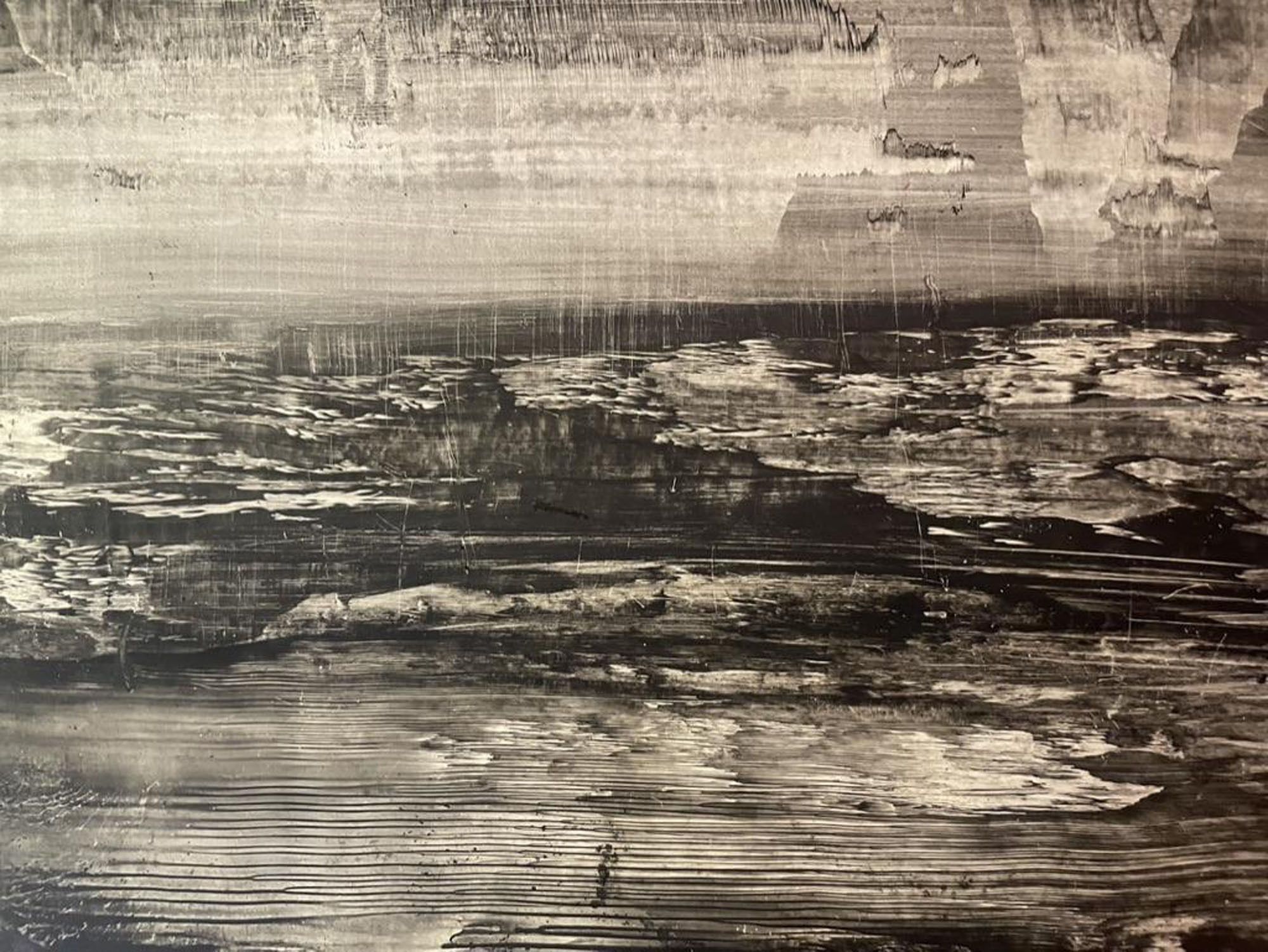
In a choral narrative, the voices of six members of this family intertwine, each recounting in their own way the collapse of their world during the Algerian War of Independence. Bringing together five actors on a stage inhabited by the paintings of Kabyle artist Kamel Khélif, Célie Pauthe gives voice to this chorus of characters whose violent contradictions expose the madness of the colonial system—French, but not exclusively so—along with its self-destructive rage and pathological nostalgia.
For the first time, the director brings to the stage the burning, baroque and relentless language of novelist Mathieu Belezi, adapting the first of the four novels he devoted to the French colonisation of Algeria. Through this story, weaving together the voices of the dead and the living, Célie Pauthe invites us to “look History straight in the eye”, borrowing the words of German playwright Heiner Müller, and to reopen the unfinished history of colonisation, whose destructive logics continue to shape our present.
C'ÉTAIT NOTRE TERRE
Spectacle du 20 au 25 novembre à la Comédie de Genève. Célie Pauthe adapte le roman de Mathieu Belezi sur une famille de colons français en Algérie, au moment de la guerre d’indépendance.
DR
Le domaine de Montaigne, quelque part dans le nord de l'Algérie. 653 hectares transformés en exploitation agricole, où poussent eucalyptus, vignes, avoine et blé. Sur cette terre règnent depuis toujours les Saint-André – ou, plus exactement, depuis qu'au milieu du XIXe siècle ils s'y sont établis, comme tant d'autres familles accomplissant le projet français d'une colonie de peuplement en Algérie.
Dans un récit choral, les voix de six membres de cette famille s'entremêlent pour dire, chacune à sa façon, le moment de l'effondrement de leur monde – la guerre d'indépendance algérienne. Réunissant cinq acteurs et actrices sur une scène habitée par la peinture de l'artiste kabyle Kamel Khélif, Célie Pauthe donne à entendre le chœur de ces personnages qui, par leurs violentes contradictions, exposent toute la folie du système colonial – français, mais pas seulement –, sa rage autodestructrice, sa nostalgie maladive.
La metteuse en scène porte sur scène, pour la première fois, la langue brûlante, baroque et implacable du romancier Mathieu Belezi, en adaptant le premier des quatre romans qu'il consacre à la colonisation de l'Algérie par la France. Avec ce récit qui tresse la voix des morts à celle des vivants, Célie Pauthe nous invite à « regarder l'Histoire dans le blanc des yeux », comme le disait le dramaturge allemand Heiner Müller – et rouvrir une histoire, celle de la colonisation, qui n'en a pas fini de finir, ni de répandre ses logiques délétères sur notre présent.


