Rückkehr ins 12\. Jahrhundert
Porte Saint-Mathurin in Bourg le Roi, südlicher Eingang des befestigten Dorfes
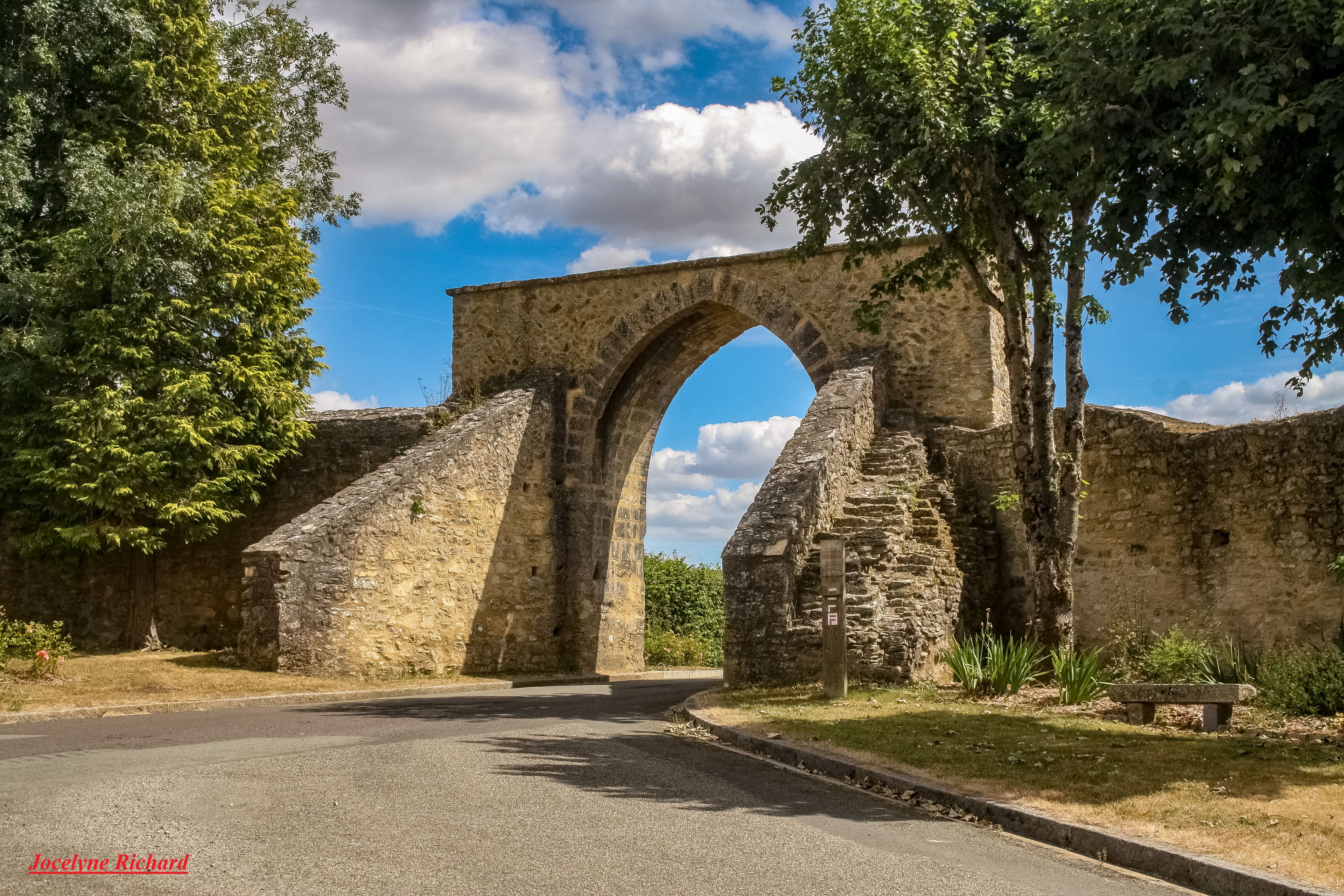
©Jocelyne Richard
Porte Saint-Mathurin in Bourg le Roi, südlicher Eingang des befestigten Dorfes
Entdeckung von Bourg le Roi durch seine Geschichte und sein Erbe
Die erste urkundliche Erwähnung des Ortes erfolgte 1154. Es handelt sich um ein Gebiet des Kathedralkapitels von Le Mans, das Anfang des 12. Jahrhunderts zu existieren scheint, auch wenn einige aus dem Hochmittelalter stammende Striche auf dem Friedhof entdeckt wurden. Sowohl Dorf als auch Gemeinde, diese ehemalige Kantonshauptstadt ist vollständig in eine Stadtmauer eingeschlossen, von der im Norden und Süden bedeutende Überreste erhalten sind. Der befestigte Charakter beruht auch auf den beiden mittelalterlichen Toren der Stadt. Das Wohngebiet besteht hauptsächlich aus renovierten alten Häusern inmitten von Gärten mit Bäumen. Die gesamte Stätte wurde in das zusätzliche Verzeichnis der historischen Denkmäler aufgenommen.
Bourg-le-Roi liegt im Norden der Sarthe und ist eine der kleinsten Gemeinden Frankreichs. Nur 182 Häuser, ja, aber eine glorreiche Vergangenheit. Bourg-le-Roi wurde von Heinrich II. Plantagenêt, dem König von England und einem großen Teil der Aquitaine und der Normandie, als Beobachtungsplatz ausgewählt. Der Weiler befand sich auf einer Verbindungsstraße zwischen Le Mans und Alençon, wichtigen wirtschaftlichen Zentren. Im 12. Jahrhundert wurden daher Befestigungen errichtet.
Back to the 12th century
Porte Saint-Mathurin in Bourg le Roi, southern entrance to the fortified village
©Jocelyne Richard
Porte Saint-Mathurin in Bourg le Roi, southern entrance to the fortified village
discovery of Bourg le Roi through its history and heritage
The village is first mentioned in texts in 1154. It is an area of the cathedral chapter of Le Mans that seems to exist at the beginning of the 12th century, even if some sherds dating back to the early Middle Ages have been discovered in the cemetery. Both village and town, this former chief town of canton is fully included in a wall of which there are important remains to the north and south. The fortified character also stems from the two medieval gates of the city. The habitat is mainly composed of old renovated houses, in the middle of wooded gardens. The entire site was listed on the supplementary inventory of Historical Monuments.
Spread over barely thirty-six hectares, Bourg-le-Roi, in the north of the Sarthe, is one of the smallest communes of France. Only 182 houses, certainly, but a glorious past. Bourg-le-Roi was chosen by Henri II Plantagenêt, king of England and of a large part of Aquitaine and Normandy, as place of observation. The hamlet was indeed located on a thoroughfare between Le Mans and Alençon, important economic centers. In the 12th century, fortifications were thus erected.
Ritorno al XII secolo
Porta Saint-Mathurin a Bourg le Roi, ingresso sud del villaggio fortificato
©Jocelyne Richard
Porta Saint-Mathurin a Bourg le Roi, ingresso sud del villaggio fortificato
scoperta di Bourg le Roi attraverso la sua storia e il suo patrimonio
Il villaggio è menzionato per la prima volta nei testi nel 1154. Si tratta di un'area del capitolo della cattedrale di Le Mans che sembra esistere all'inizio del XII secolo, anche se alcuni tessoni risalenti all'alto medioevo sono stati scoperti nel cimitero. Al tempo stesso villaggio e comune, questo ex capoluogo di cantone è interamente compreso in una cinta muraria di cui restano importanti vestigia a nord e a sud. Il carattere fortificato deriva anche dalle due porte medievali della città. L'habitat è composto soprattutto da vecchie case ristrutturate, in mezzo a giardini alberati. L'intero sito è stato inserito nell'inventario supplementare dei monumenti storici.
Esteso su una superficie di appena trentasei ettari, Bourg-le-Roi, nel nord della Sarthe, è uno dei comuni più piccoli della Francia. Solo 182 case, certo, ma un passato glorioso. Bourg-le-Roi fu scelto da Enrico II Plantagenêt, re d'Inghilterra e di gran parte dell'Aquitania e della Normandia, come luogo di osservazione. La frazione si trovava infatti su una via di passaggio tra Le Mans e Alençon, importanti centri economici. Nel XII secolo furono erette delle fortificazioni.
Retour au XII ème siècle
Porte Saint-Mathurin à Bourg le Roi, entrée sud du village fortifié
©Jocelyne Richard
Porte Saint-Mathurin à Bourg le Roi, entrée sud du village fortifié
découverte de Bourg le Roi à travers son Histoire et son patrimoine
Le village est mentionné pour la première fois dans les textes en 1154. C'est un domaine du chapitre cathédral du Mans qui semble exister au début du XIIe siècle, même si quelques tessons remontant au haut Moyen-âge ont été découverts dans le cimetière. À la fois village et commune, cet ancien chef-lieu de canton est intégralement compris dans une enceinte de murailles dont il reste d'importants vestiges au nord et au sud. Le caractère fortifié tient également aux deux portes médiévales de la ville. L'habitat est surtout composé de maisons anciennes rénovées, au milieu de jardins arborés. L'ensemble du site a été inscrit à l'inventaire supplémentaire des Monuments Historiques.
Étendu sur à peine trente-six hectares, Bourg-le-Roi, dans le nord de la Sarthe, est l'une des plus petites communes de France. Seulement 182 maisons, certes, mais un passé glorieux. Bourg-le-Roi fut choisi par Henri II Plantagenêt, roi d'Angleterre et d'une grande partie de l'Aquitaine et de la Normandie, comme place d'observation. Le hameau se situait en effet sur une voie de passage entre Le Mans et Alençon, centres économiques importants. Au XIIe siècle, des fortifications furent donc érigées.
Regreso al siglo XII
Puerta de Saint-Mathurin en Bourg le Roi, entrada sur del pueblo fortificado
©Jocelyne Richard
Puerta de Saint-Mathurin en Bourg le Roi, entrada sur del pueblo fortificado
descubrimiento de Bourg le Roi a través de su historia y su patrimonio
El pueblo es mencionado por primera vez en los textos en 1154. Se trata de un dominio del capítulo catedralicio de Le Mans que parece existir a principios del siglo XII, aunque algunos fragmentos que datan de la alta Edad Media han sido descubiertos en el cementerio. A la vez pueblo y comuna, esta antigua cabecera cantonal está íntegramente comprendida en un recinto amurallado del que quedan importantes vestigios al norte y al sur. El carácter fortificado se debe también a las dos puertas medievales de la ciudad. La vivienda se compone principalmente de casas antiguas renovadas, en medio de jardines arbolados. El conjunto del sitio ha sido inscrito en el inventario suplementario de los monumentos históricos.
Con una extensión de apenas treinta y seis hectáreas, Bourg-le-Roi, en el norte de la Sarthe, es uno de los municipios más pequeños de Francia. Sólo 182 casas, sí, pero un pasado glorioso. Bourg-le-Roi fue elegido por Enrique II Plantagenêt, rey de Inglaterra y de gran parte de Aquitania y Normandía, como lugar de observación. La aldea se situaba en una vía de paso entre Le Mans y Alençon, importantes centros económicos. En el siglo XII, se erigieron fortificaciones.

