Entdeckung einer romanischen Kirche
### Die Kirche, die vermutlich im dritten Viertel des 12. Jahrhunderts erbaut wurde, ist eine der ersten und bedeutendsten im Vologne-Tal, ebenso wie das Dorf, das sie umgibt, da es bereits vor der…
©Raphdvoj / Wikimedia Commons
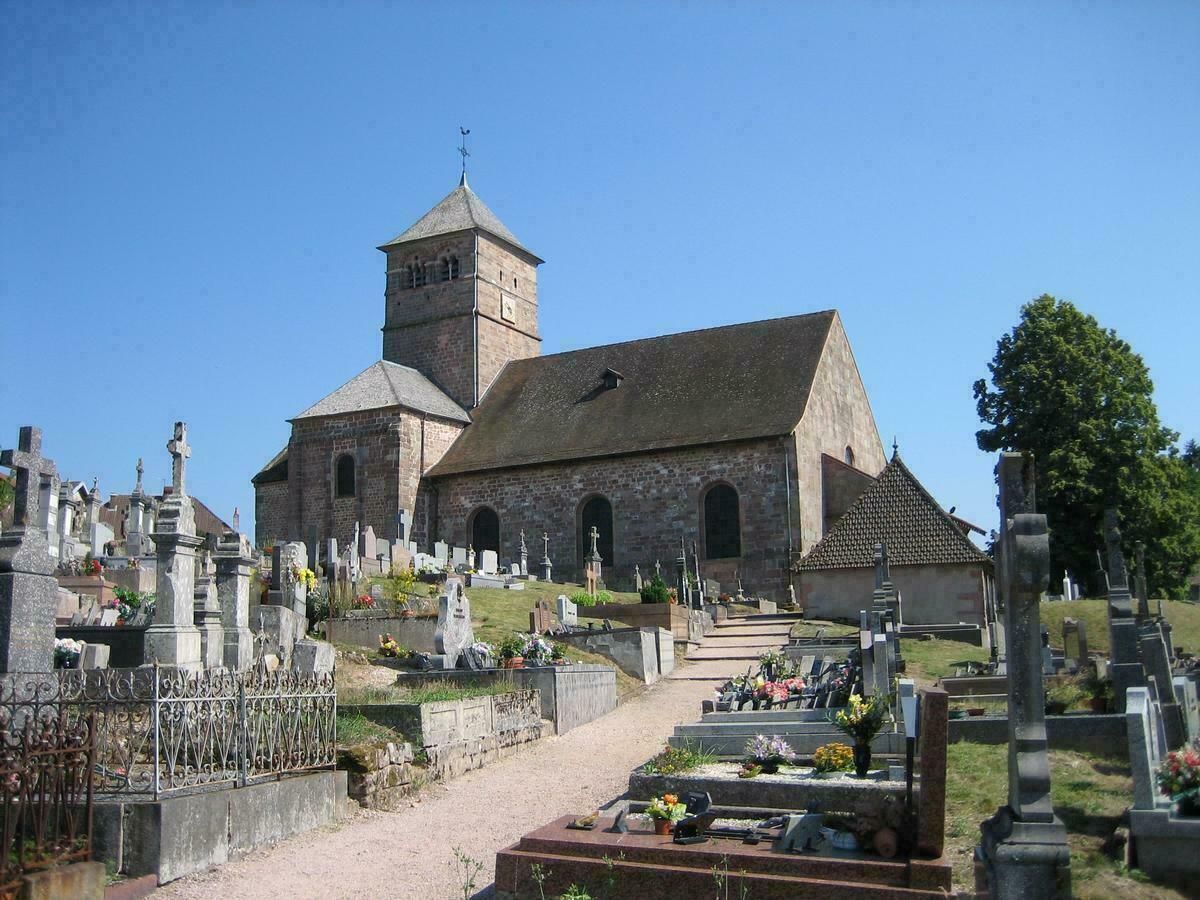
Die Kirche, die vermutlich im dritten Viertel des 12. Jahrhunderts erbaut wurde, ist eine der ersten und bedeutendsten im Vologne-Tal, ebenso wie das Dorf, das sie umgibt, da es bereits vor der Stadt Bruyères existierte.
Die Kirche Mariä Himmelfahrt in Champ-le-Duc ist ein Bauwerk im romanischen Stil, das an der Stelle einer angeblichen Villa aus dem 9. Jahrhundert errichtet wurde, deren Gründung Kaiser Karl dem Großen selbst zugeschrieben wird, der angeblich regelmäßig in der Umgebung auf die Jagd ging. Die Kirche wurde mehrfach restauriert, im 18. Jahrhundert, nach dem Zweiten Weltkrieg sowie Ende des 20. Jahrhunderts nach einem Brand. Das Bauwerk steht seit dem 7. März 1908 unter Denkmalschutz.
Die Kirche beherbergt eine bemerkenswerte Ausstattung, die unter Denkmalschutz steht und hauptsächlich aus dem 18. Jahrhundert stammt, insbesondere die Orgel, die Nicolas Dupont zugeschrieben wird und 1781 erbaut wurde, sowie den Grabaltar, den Tabernakel und das Taufbecken.
Discovery of a Romanesque church
### Probably built in the third quarter of the 12th century, the church is one of the earliest and most important in the Vologne Valley, as is the village surrounding it, since it predates the town a…
©Raphdvoj / Wikimedia Commons
Probably built in the third quarter of the 12th century, the church is one of the earliest and most important in the Vologne Valley, as is the village surrounding it, since it predates the town of Bruyères.
The Church of the Assumption of Our Lady of Champ-le-Duc is a Romanesque-style building constructed on the site of a supposed 9th-century villa, the foundation of which is attributed to Emperor Charlemagne himself, who is said to have frequently come to hunt in the surrounding area. The church has undergone several restorations: in the 18th century, after World War II, and again in the late 20th century following a fire. The building has been listed as a historic monument since March 7, 1908.
The church houses remarkable furnishings, protected as historic monuments and dating primarily from the 18th century, notably the organ—attributed to Nicolas Dupont and built in 1781—the tomb altar, the tabernacle, and the baptismal font.
Scopri una chiesa romanica
Costruita probabilmente nel terzo quarto del XII secolo, la chiesa è una delle prime e più importanti della valle della Vologne, proprio come il villaggio che la circonda, poiché era già presente di …
©Raphdvoj / Wikimedia Commons
Costruita probabilmente nel terzo quarto del XII secolo, la chiesa è una delle prime e più importanti della valle della Vologne, proprio come il villaggio che la circonda, poiché era già presente prima della città di Bruyères.
La chiesa dell’Assunzione di Notre-Dame de Champ-le-Duc è un edificio in stile romanico costruito sul sito di una presunta villa del IX secolo, la cui fondazione è attribuita allo stesso imperatore Carlo Magno, che era solito recarsi nei dintorni per cacciare. La chiesa ha subito diversi restauri, nel XVIII secolo, poi dopo la Seconda Guerra Mondiale e infine alla fine del XX secolo a seguito di un incendio. L’edificio è classificato come monumento storico dal 7 marzo 1908.
La chiesa custodisce un notevole arredo, protetto in quanto monumento storico e risalente principalmente al XVIII secolo, in particolare l’organo, attribuito a Nicolas Dupont e costruito nel 1781, l’altare a tomba, il tabernacolo e il fonte battesimale.
Visitez librement une église romane
Construite vraisemblablement dans le troisième quart du XIIe siècle, l'église est une des premières et la plus importante de la vallée de la Vologne, tout comme le village qui l'entoure, puisqu'il à …
©Raphdvoj / Wikimedia Commons
Descubre una iglesia románica
Construida probablemente en el tercer cuarto del siglo XII, la iglesia es una de las primeras y más importantes del valle del Vologne, al igual que el pueblo que la rodea, ya que era anterior a la de…
©Raphdvoj / Wikimedia Commons
Construida probablemente en el tercer cuarto del siglo XII, la iglesia es una de las primeras y más importantes del valle del Vologne, al igual que el pueblo que la rodea, ya que era anterior a la ciudad de Bruyères.
La iglesia de la Asunción de Nuestra Señora de Champ-le-Duc es un edificio de estilo románico construido en el emplazamiento de una supuesta villa del siglo IX, cuya fundación se atribuye al propio emperador Carlomagno, quien solía venir a cazar por los alrededores. La iglesia ha sido objeto de varias restauraciones: en el siglo XVIII, tras la Segunda Guerra Mundial y también a finales del siglo XX, a raíz de un incendio. El edificio está catalogado como monumento histórico desde el 7 de marzo de 1908.
La iglesia alberga un notable mobiliario, protegido como monumento histórico y que data principalmente del siglo XVIII, en particular el órgano, atribuido a Nicolas Dupont y construido en 1781, el altar-tumba, el tabernáculo y la pila bautismal.

