Mosaik - Was durch die Körper geht I Bouchra Ouizguen lädt Yassmine Benchrifa, Josué Mugisha und Jaber Ramezan zum Herbstfestival ein
### Bouchra Ouizguen lädt drei Künstler aus Burundi, dem Iran und Marokko zu seinem Porträt ein. Sie und sie nähern sich dem zeitgenössischen Tanz an seinen Rändern, indem sie die Körper und die...
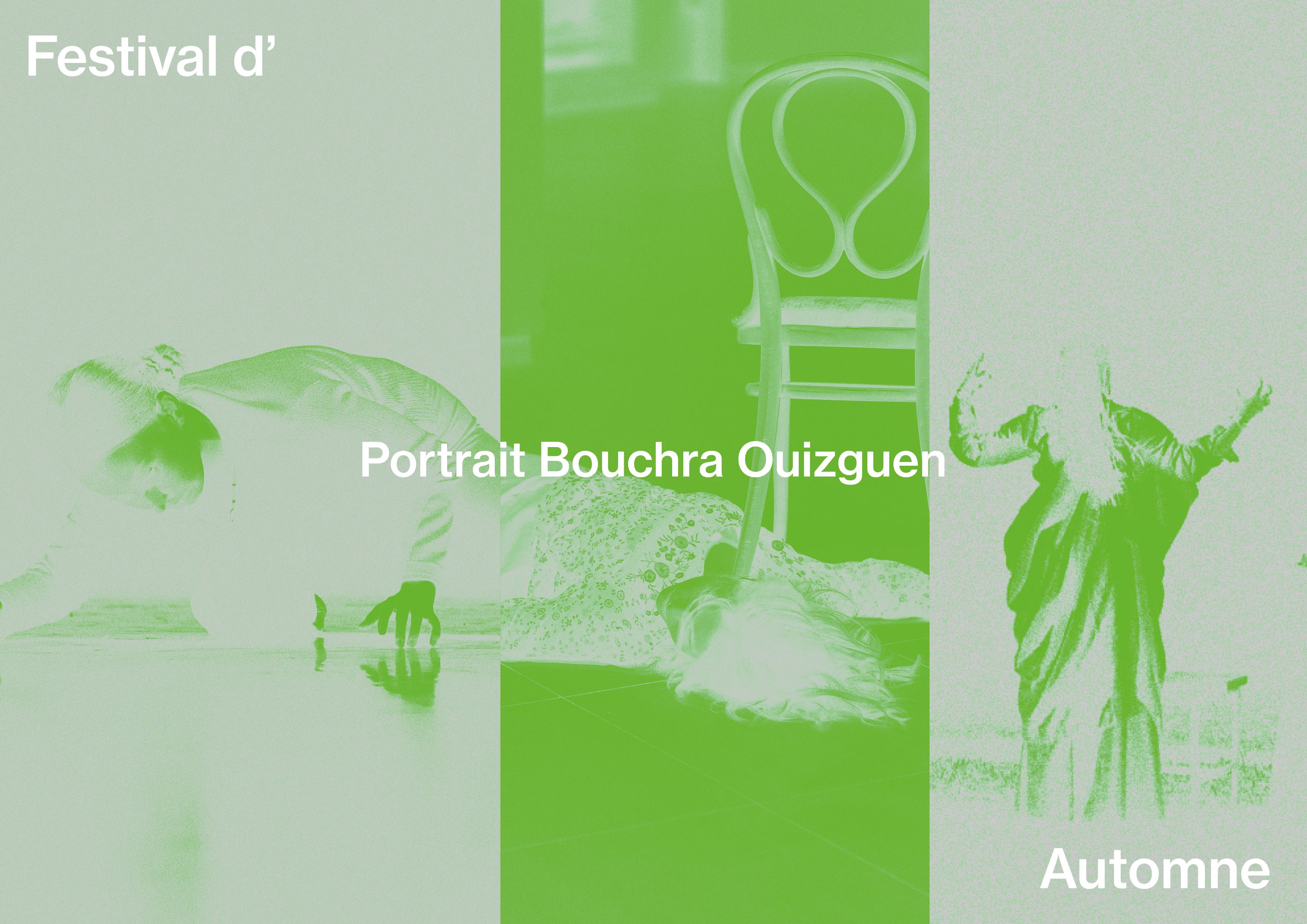
© Bouchra Ouizguen
Bouchra Ouizguen lädt drei Künstler aus Burundi, dem Iran und Marokko zu seinem Porträt ein. Sie und sie nähern sich dem zeitgenössischen Tanz an seinen Rändern, indem sie in dieser Plattform mit dem Titel Mosaïque_-Ce qui traverse les corps (Das, was durch die _Körper Als Spiegelbild seines Solosolo Qunfudh, das gleichzeitig auf der MC93 präsentiert wurde, erforschen diese drei Stücke die Kräfte, die zwischen Spannungen, Subversionen und Metamorphosen die Körper durchdringen und einschränken, während sie zugleich die Solidaritäten aufzeigen, die sie verbinden.
Yassmine Benchrifa erforscht die Übergänge im Leben und die Veränderungen, die eine Identität formen. Die marokkanische Künstlerin entdeckt den Hip-Hop im Alter von 12 Jahren, fasziniert von der Ausdruckskraft und der rohen Energie dieser urbanen Kultur. Später trat sie der Nafass bei, der ersten zeitgenössischen Tanzschule in Marokko. Dieses erste Solo, Gewinner des Taklif-Wettbewerbs in Marrakesch, ist von seiner Karriere inspiriert. In einer empfindlichen und instinktiven Schrift lässt sie die aufeinanderfolgenden Zustände eines Körpers erkennen, der im kontinuierlichen Fluss eines Lebens gefangen ist, wo alles Übergang ist.
-am 24. um 17:30 Uhr und am 25. Oktober um 16:30 Uhr
Josué Mugisha stellt sich vor, dass Künstler die laufende Aufführung unterbrechen, um "den Sinn" zu fordern. In der Abwesenheit des Autors sprechen sie das Publikum durch den Tanz, die Poesie und das Imaginäre an. Im politischen Kontext Burundis, wo die Stimme gedämpft und das "Tamburiner" zensiert wird, schafft der Choreograf und Regisseur nach Der erste politische Tanz, eine Sekunde, als Metapher für "die Trommel töten", ein Symbol der Macht. Unter einem Regen poetischer Bilder sabotieren die Interpreten die Aufführung, um sie zu einem Terrain der Ungehorsamkeit zu machen.
-vom 22. bis 23. Oktober um 21 Uhr
In Die Stühle von Jaber Ramezan bewegen sich die Interpreten in einer instabilen Architektur aus Stühlen, ohne jemals den Boden zu berühren. Jede Bewegung ist eine Verhandlung mit den Körpern und den Stühlen, mit der Schwerkraft. Durch extreme gegenseitige Aufmerksamkeit wird das Gleichgewicht zu einer Praxis der Pflege. Nach Boundaries of Bodies setzt der iranische Künstler die seit fünfzehn Jahren geleistete Arbeit an der Schnittstelle von Theater, Tanz und Kino fort.
—am 24. um 16:30 und am 25. Oktober um 15:30
Mosaïque—Ce qui traverse les corps I Bouchra Ouizguen invites Yassmine Benchrifa, Josué Mugisha, Jaber Ramezan to the Autumn Festival
### Bouchra Ouizguen invites three artists from Burundi, Iran and Morocco to take part in his Portrait. They and she approach contemporary dance through its borders, moving the bodies and what...
© Bouchra Ouizguen
Bouchra Ouizguen invites three artists from Burundi, Iran and Morocco to take part in his Portrait. They and she approach contemporary dance through its borders, moving bodies and lyrics as much as looks, in this platform entitled Mosaïque—What crosses bodies. Mirroring his solo Qunfudh, presented at the same time at MC93, these three pieces probe the forces that cross and constrain bodies, between tensions, subversions and metamorphoses, while revealing the solidarities that connect them.
Yassmine Benchrifa explores the transitions in life and the transformations that shape an identity. The Moroccan artist discovers hip-hop at 12, captivated by the expressiveness and raw energy of this urban culture. Later, she joined Nafass, the first contemporary dance school in Morocco. This first solo, winner of the Taklif competition in Marrakech, is inspired by his career. In a sensitive and instinctive writing, it shows the successive states of a body caught in the continuous flow of a life, where everything is transition.
—the 24th at 5:30 p.m. and on October 25th at 4:30 p.m.
Josué Mugisha imagines artists interrupting the current performance to claim "the meaning". In the absence of the author, they address the public through dance, poetry, and imagination. In the political context of Burundi, where speech is muzzled and the "tambourine" censored, the choreographer and director creates, after The first political dance, a second, as a metaphor for "killing the drum," a symbol of power. Under a rain of poetic images, the performers sabotage the performance to make it a field of insubordination.
—from October 22 to 23 at 9 p.m.
In The Chairs by Jaber Ramezan, the performers evolve within an unstable architecture of chairs, without ever touching the floor. Each movement is a negotiation with bodies and chairs, with gravity. Through extreme mutual attention, balance becomes a healing practice. After Boundaries of Bodies, the Iranian artist continues the work carried out for fifteen years, at the crossroads of theater, dance and cinema.
—on the 24th at 4:30 p.m. and on the 25th of October at 3:30 p.m.
Mosaico-Ciò che attraversa i corpi I Bouchra Ouizguen invita Yassmine Benchrifa, Josué Mugisha, Jaber Ramezan al Festival d'Autunno
### Bouchra Ouizguen invita tre artisti, provenienti dal Burundi, dall'Iran e dal Marocco, all'interno del suo Ritratto. Loro e lei si avvicinano alla danza contemporanea dai suoi margini, spostando i
© Bouchra Ouizguen
Bouchra Ouizguen invita tre artisti, provenienti dal Burundi, dall'Iran e dal Marocco, all'interno del suo Ritratto. Loro e lei affrontano la danza contemporanea dai suoi margini, spostando i corpi e le parole tanto quanto gli sguardi, in questa piattaforma intitolata Mosaice_-Ciò che attraversa _i corpi. Nello specchio del suo assolo Qunfudh, presentato allo stesso momento alla MC93, questi tre pezzi sondano le forze che attraversano e costringono i corpi, tra tensioni, sovversione e metamorfosi, rivelando al contempo le solidarità che li collegano.
Yassmine Benchrifa esplora le transizioni che scandiscono una vita e le trasformazioni che plasmano un'identità. L'artista marocchina scopre l'hip-hop a 12 anni, affascinata dall'espressività e dall'energia grezza di questa cultura urbana. In seguito, entra a far parte della Nafass, la prima scuola di danza contemporanea del Marocco. Questo primo assolo, vincitore del concorso Taklif a Marrakech, si ispira al suo percorso. In una scrittura sensibile e istintiva, mostra gli stati successivi di un corpo preso nel flusso continuo di una vita, dove tutto è transizione.
-il 24 alle 17:30 e il 25 ottobre alle 16:30
Josué Mugisha immagina artisti che interrompono la rappresentazione in corso per reclamare "il senso". In assenza dell'autore, si rivolgono al pubblico attraverso la danza, la poesia e l'immaginario. Nel contesto politico del Burundi, dove la parola è imbavagliata e il "tamburello" censurato, il coreografo e regista crea, dopo La prima danza politica, un secondo, come metafora per "uccidere il tamburo", simbolo del potere. Sotto una pioggia di immagini poetiche, gli interpreti sabotano la rappresentazione per farne un terreno d'insubordinazione.
-dal 22 al 23 ottobre alle ore 21
In The Chairs di Jaber Ramezan, gli interpreti si muovono all'interno di un'architettura instabile di sedie, senza mai toccare il pavimento. Ogni movimento è una negoziazione con i corpi e le sedie, con la gravità. Attraverso un'attenzione reciproca estrema, l'equilibrio diventa una pratica di cura. Dopo Boundaries of Bodies, l'artista iraniano prosegue il lavoro svolto da quindici anni, al crocevia del teatro, della danza e del cinema.
—il 24 alle 16:30 e il 25 ottobre alle 15:30
Mosaïque—Ce qui traverse les corps I Bouchra Ouizguen invite Yassmine Benchrifa, Josué Mugisha, Jaber Ramezan au Festival d'Automne
### Bouchra Ouizguen convie trois artistes, venus du Burundi, d’Iran et du Maroc, au sein de son Portrait. Ils et elle abordent la danse contemporaine par ses lisières, déplaçant les corps et les que…
© Bouchra Ouizguen
Bouchra Ouizguen convie trois artistes, venus du Burundi, d’Iran et du Maroc, au sein de son Portrait. Ils et elle abordent la danse contemporaine par ses lisières, déplaçant les corps et les paroles autant que les regards, dans cette plateforme intitulée Mosaïque—Ce qui traverse les corps. En miroir de son solo Qunfudh, présenté au même moment à la MC93, ces trois pièces sondent les forces qui traversent et contraignent les corps, entre tensions, subversions et métamorphoses, tout en révélant les solidarités qui les relient.
Yassmine Benchrifa explore les transitions qui jalonnent une vie et les transformations qui façonnent une identité. L’artiste marocaine découvre le hip-hop à 12 ans, captivée par l’expressivité et l’énergie brute de cette culture urbaine. Plus tard, elle intègre Nafass, la première école de danse contemporaine du Maroc. Ce premier solo, lauréat du concours Taklif à Marrakech, s’inspire de son parcours. Dans une écriture sensible et instinctive, elle donne à voir les états successifs d’un corps pris dans le flux continu d’une vie, où tout est transition.
—le 24 à 17h30 et le 25 octobre à 16h30
Josué Mugisha lui, imagine des artistes interrompre la représentation en cours pour réclamer « le sens ». En l’absencede l’auteur, ils s’adressent au public par la danse, par la poésie, par l’imaginaire. Dans le contexte politique du Burundi, où la parole est muselée et le « tambourinaire » censuré, le chorégraphe et metteur en scène crée, après La première danse politique, une seconde, comme métaphore pour « tuer le tambour », symbole du pouvoir. Sous une pluie d’images poétiques, les interprètes sabotent la représentation pour en faire un terrain d’insubordination.
—du 22 au 23 octobre à 21h
Dans The Chairs de Jaber Ramezan, les interprètes évoluent au sein d’une architecture instable de chaises, sans jamais toucher le sol. Chaque mouvement est une négociation avec les corps et les chaises, avec la gravité. À travers une attention mutuelle extrême, l’équilibre devient une pratique de soin. Après Boundaries of Bodies, l’artiste iranien poursuit le travail mené depuis quinze ans, à la croisée du théâtre, de la danse et du cinéma.
—le 24 à 16h30 et le 25 octobre à 15h30
Mosaico-Lo que atraviesa los cuerpos I Bouchra Ouizguen invita a Yassmine Benchrifa, Josué Mugisha, Jaber Ramezan al Festival de Otoño
### Bouchra Ouizguen invita a tres artistas de Burundi, Irán y Marruecos en su Retrato. Ellos y ella abordan la danza contemporánea por sus bordes, desplazando los cuerpos y los que...
© Bouchra Ouizguen
Bouchra Ouizguen invita a tres artistas de Burundi, Irán y Marruecos en su Retrato. Ellos y ella abordan la danza contemporánea por sus bordes, desplazando los cuerpos y las palabras tanto como las miradas, en esta plataforma titulada Mosaik_-_Lo que atraviesa los cuerpos. Como reflejo de su solo Qunfudh, presentado al mismo tiempo en la MC93, estas tres piezas sondean las fuerzas que atraviesan y contraen los cuerpos, entre tensiones, subversiones y metamorfosis, revelando al mismo tiempo las solidaridades que los unen.
Yassmine Benchrifa explora las transiciones que marcan una vida y las transformaciones que dan forma a una identidad. La artista marroquí descubre el hip-hop a los 12 años, cautivada por la expresividad y la energía bruta de esta cultura urbana. Más tarde, se incorporó a Nafass, la primera escuela de danza contemporánea de Marruecos. Este primer solo, ganador del concurso Taklif en Marrakech, se inspira en su trayectoria. En una escritura sensible e instintiva, muestra los estados sucesivos de un cuerpo atrapado en el flujo continuo de una vida, donde todo es transición.
-el 24 a las 17:30 y el 25 de octubre a las 16:30
Josué Mugisha imagina a artistas interrumpiendo la representación en curso para reclamar «el sentido». En la ausencia del autor, se dirigen al público a través de la danza, la poesía y el imaginario. En el contexto político de Burundi, donde la palabra está silenciada y el "tamborinar" censurado, el coreógrafo y director crea, después La primera danza política, un segundo, como metáfora para "matar el tambor", símbolo del poder. Bajo una lluvia de imágenes poéticas, los intérpretes sabotean la representación para convertirla en un terreno de insubordinación.
-del 22 al 23 de octubre a las 21 h
En The Chairs de Jaber Ramezan, los intérpretes evolucionan en una arquitectura inestable de sillas, sin tocar nunca el suelo. Cada movimiento es una negociación con cuerpos y sillas, con la gravedad. A través de una atención mutua extrema, el equilibrio se convierte en una práctica de cuidado. Después de Boundaries of Bodies, el artista iraní continúa el trabajo llevado a cabo durante quince años, en la encrucijada del teatro, la danza y el cine.
—el 24 a las 16:30 y el 25 de octubre a las 15:30


