Besichtigung der Sammlung von Keramiken von François Laurin
Entdecken Sie das Keramikwerk von François Laurin (1826-1901) und seine berühmte "Schlicker", die in seinem Atelier in Bourg-la-Reine entwickelt wurde.
Aménagements à l'accessibilité
Dalc'het en o c'heflusk
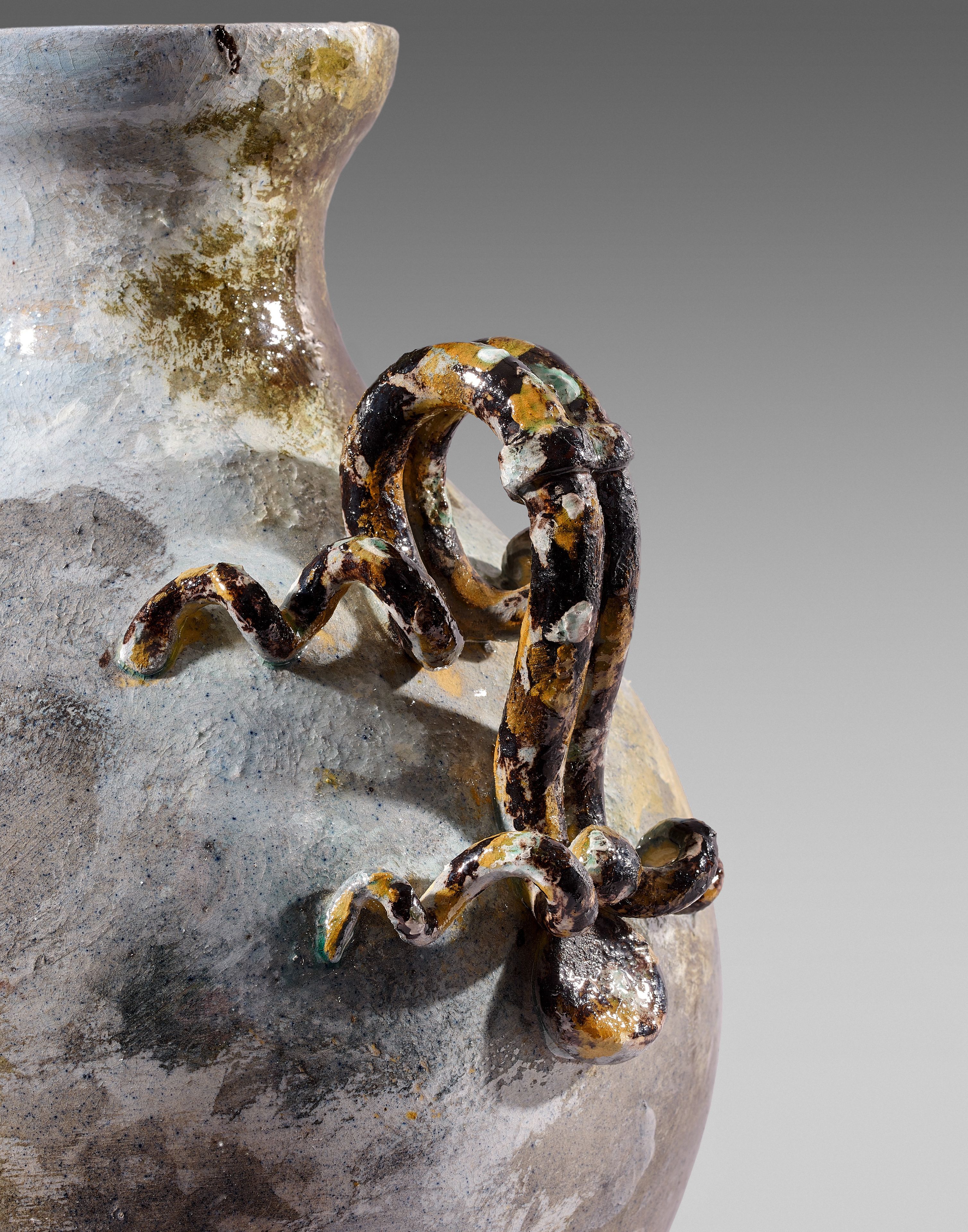
© Ville de Bourg-la-Reine
Entdecken Sie das Keramikwerk von François Laurin (1826-1901) und seine berühmte "Schlicker", die in seinem Atelier in Bourg-la-Reine entwickelt wurde.
Faïencier wurde 1826 in Bourg-la-Reine geboren und ist der Enkel des Keramikkünstlers François Guillaume Mony, Nachfolger von Poussin in seiner Fayence-Werkstatt La Madeleine, die sich an der 39 avenue du Général Leclerc befindet. In diesem Atelier, das seinem Großvater gehörte, belebte er zusammen mit Émile Lessore 1856 die künstlerischen Fayencen wieder auf und machte diese Manufaktur zum Treffpunkt der angesagten Künstler. Er produziert dort Fayencen, die von alten Modellen und Majoliken inspiriert sind, Vasen und Geschirr, die am großen Feuer dekoriert wurden.
Im Jahr 1871 entwickelten sie zusammen mit Ernest Chaplet, der sich ihm anschloss, eine neue Technik namens "Schlicker" auf Terrakotta, die es ermöglicht, auf roher Paste wie auf Leinwand zu malen. Ein Verfahren, das die Manufaktur von Sèvres bereits entwickelt hatte, um Porzellan zu dekorieren und das sie daher an Fayence anpassen. Das Schlicker, eine fließende Paste, die sie verwenden, um vor dem Brennen Teile einer Keramik (Griffe, Düsen...) miteinander zu verkleben, ermöglicht ihnen sehr aufwendige naturalistische Dekorationen und Reliefs auf impressionistisch inspirierten Keramiken.
Laurin wird diese Erfindung auf zahlreichen internationalen Ausstellungen präsentieren und im letzten Viertel des 19. Jahrhunderts einen großen Erfolg haben. Parallel dazu nahm er als Gemeinderat und dann als stellvertretender Bürgermeister von 1847 bis 1896 sehr aktiv am Leben seiner Gemeinde teil.
Visit of the Collection of ceramics by François Laurin
Find the ceramic work of François Laurin (1826-1901) and his famous technique of "barbotine" developed in his workshop in Bourg-la-Reine.
Aménagements à l'accessibilité
Dalc'het en o c'heflusk
© Ville de Bourg-la-Reine
Find the ceramic work of François Laurin (1826-1901) and his famous technique of "barbotine" developed in his workshop in Bourg-la-Reine.
Faïencier born in Bourg-la-Reine in 1826, he is the grandson of the ceramist François Guillaume Mony, successor to Poussin in his pottery at La Madeleine, located at 39 avenue du Général Leclerc. It was in this workshop belonging to his grandfather, that he relaunched with Émile Lessore, in 1856, the artistic earthenware, making this factory the appointment of fashionable artists. He produces earthenware inspired by ancient models and majolica, vases and dishes decorated on raw at the big fire.
In 1871, alongside Ernest Chaplet who joined him, they developed a new technique called 'barbotine' on terracotta which allows painting on raw clay like on a canvas. A process that the Manufacture de Sèvres had already developed to decorate porcelain and which they therefore adapt to earthenware. The slip, a fluid paste that they use for gluing together parts of a ceramic before firing (handles, nozzles...), allows them very elaborate naturalistic decorations in relief on ceramics of impressionist inspiration.
Laurin will highlight this invention in numerous international exhibitions and will know a great success in the last quarter of the XIXe century. At the same time, he participated very actively in the life of his Commune as a municipal councillor and then as deputy mayor, from 1847 to 1896.
Visita alla Collezione delle ceramiche di François Laurin
Ritrovate l'opera ceramica di François Laurin (1826-1901) e la sua famosa tecnica della "barbotina" messa a punto nel suo atelier a Bourg-la-Reine.
Aménagements à l'accessibilité
Dalc'het en o c'heflusk
© Ville de Bourg-la-Reine
Ritrovate l'opera ceramica di François Laurin (1826-1901) e la sua famosa tecnica della "barbotina" messa a punto nel suo atelier a Bourg-la-Reine.
Faïencier nato a Bourg-la-Reine nel 1826, è il nipote del ceramista François Guillaume Mony, successore di Poussin nella sua fabbrica di maioliche della Madeleine, situata al 39 avenue du Général Leclerc. In questo atelier di proprietà del nonno, nel 1856 rilancia con Émile Lessore le fabbriche artistiche di maiolica, facendo di questa manifattura l'appuntamento degli artisti di moda. Produce maioliche ispirate a modelli e maioliche antiche, vasi e piatti decorati su crudo al fuoco.
Nel 1871, insieme a Ernest Chaplet che lo ha raggiunto, mettono a punto una nuova tecnica detta "barbotina" su terracotta che permette di dipingere sulla pasta cruda come su una tela. Un processo che la Manifattura di Sèvres aveva già sviluppato per decorare la porcellana e che adattano quindi alla maiolica. La barbotine, pasta fluida che usano per l'incollaggio tra loro di parti di una ceramica prima della cottura (manici, beccucci...), permette loro di creare decori naturalistici molto elaborati e in rilievo su ceramiche di ispirazione impressionista.
Laurin presenterà questa invenzione in numerose esposizioni internazionali e avrà un grande successo nell'ultimo quarto del XIX secolo. Parallelamente, partecipa molto attivamente alla vita del suo comune in qualità di consigliere comunale e poi di sindaco aggiunto, dal 1847 al 1896.
Visita a la Colección de cerámicas de François Laurin
Descubra la obra cerámica de François Laurin (1826-1901) y su famosa técnica de la "barbotine" desarrollada en su taller en Bourg-la-Reine.
Aménagements à l'accessibilité
Dalc'het en o c'heflusk
© Ville de Bourg-la-Reine
Descubra la obra cerámica de François Laurin (1826-1901) y su famosa técnica de la "barbotine" desarrollada en su taller en Bourg-la-Reine.
Fabricante de cerámica nacido en Bourg-la-Reine en 1826, es el nieto del ceramista François Guillaume Mony, sucesor de Poussin en su fábrica de cerámica de La Madeleine, situada en 39 avenue du Général Leclerc. En este taller de su abuelo, él y Émile Lessore reactivaron en 1856 las fábricas de cerámica, haciendo de esta fábrica la cita de los artistas de moda. Produce azulejos inspirados en modelos y mayólicas antiguas, jarrones y platos decorados sobre crudo a fuego.
En 1871, junto con Ernest Chaplet que se le unió, desarrollaron una nueva técnica llamada "barbotina" sobre terracota que permite pintar sobre la pasta cruda como sobre un lienzo. Un proceso que la Manufactura de Sèvres ya había desarrollado para decorar la porcelana y que adaptan por tanto a la loza. La barbotina, pasta fluida que utilizan para el pegado entre sí de partes de una cerámica antes de la cocción (asas, boquillas...), les permite decoraciones naturalistas muy elaboradas y en relieve sobre cerámicas de inspiración impresionista.
Laurin pondrá en evidencia este invento en numerosas exposiciones internacionales y conocerá un gran éxito en el último cuarto del siglo XIX. Paralelamente, participa muy activamente en la vida de su Comuna como Consejero municipal y luego como Alcalde adjunto, de 1847 a 1896.

