Kommentierte Führung durch die Apotheke
Die alte Apotheke der Jesuiten von Lyon wurde 1765 in das im 18\. Jahrhundert von Pierre- Antoine Caristia erbaute Hospiz installiert. Sie wird Sie mit seiner künstlerisch geschnitzten und der Im …
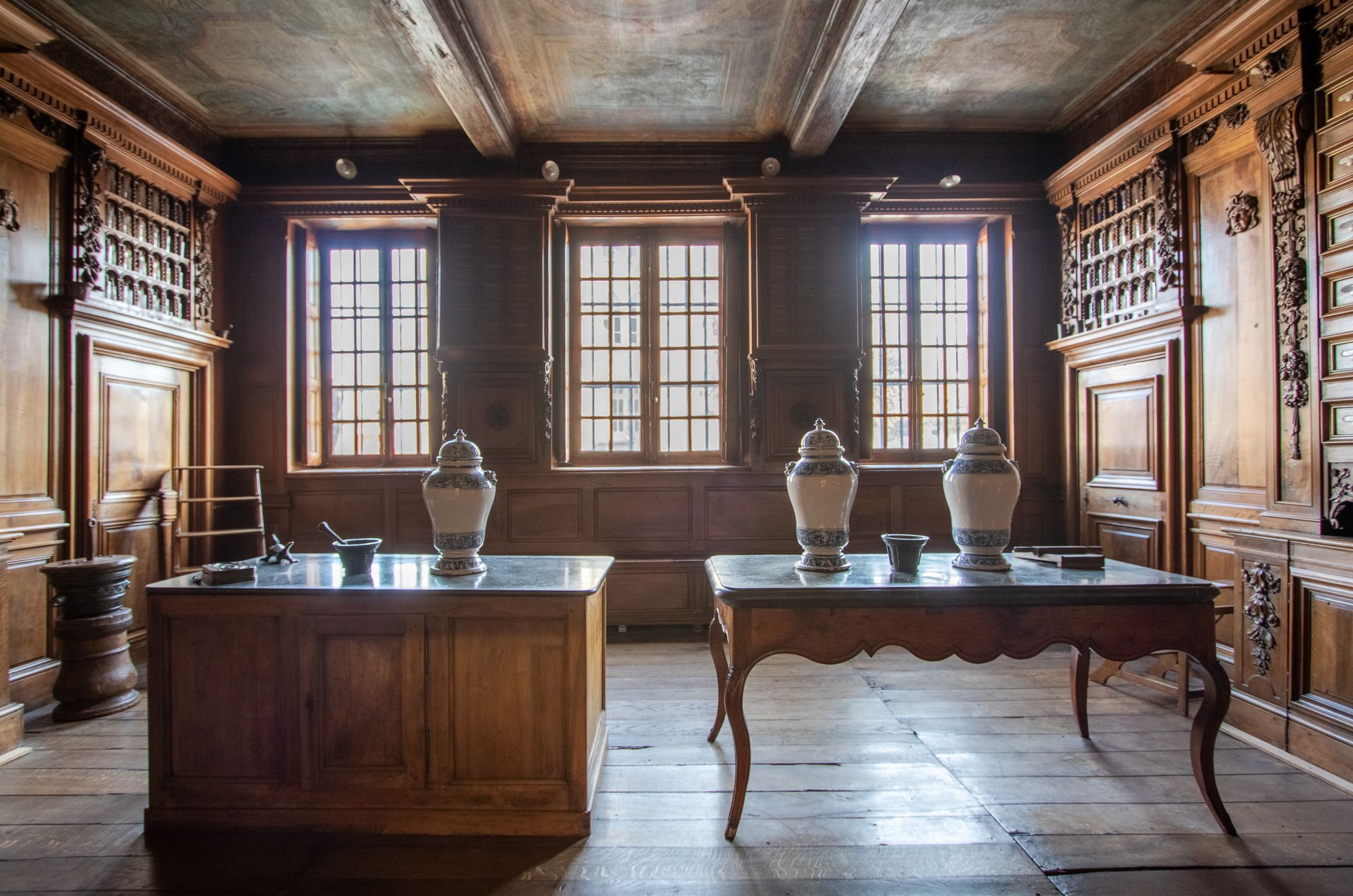
© M-Art Photographie
Die alte Apotheke der Jesuiten von Lyon wurde 1765 in das im 18. Jahrhundert von Pierre- Antoine Caristia erbaute Hospiz installiert. Sie wird Sie mit seiner künstlerisch geschnitzten Holzverkleidung und der bemalten Leinwanddecke verführen.
Im Erdgeschoss des ehemaligen Hospizes gelegen, diente es von 1765 bis 1942 als Apotheke für die Einwohner von Montluel. Dieses Hospiz wurde von dem Unternehmer Pierre Caristia 1741 bis 1744 gebaut, dann durch einen Brand zerstört, im Jahr 1748 wieder aufgebaut und mit der finanziellen Unterstützung des Herrn von Montluel in Betrieb genommen. Die Apotheke war von November 1765 bis 1942 in Betrieb, das ehemalige Hospiz bis 1976. Neben der Sammlung von Fayence aus dem 18. Jahrhundert wird das Mobiliar durch seinen Reichtum Ihre Aufmerksamkeit auf sich ziehen, mit einer Pietà in einer muschelförmigen Nische, Bronzemedaillen, Töpfchen aus Fayence und Porzellan und einem Wildtisch...
Die Apotheke wurde 1966 in das Verzeichnis der historischen Denkmäler aufgenommen.
Am 11. Januar 1961 wurden mehrere andere Möbelelemente klassifiziert: Verkleidungslambrisse und Decken (Holztäfelungen und bemalte Decken aus dem 17. Jahrhundert); Apothekentöpfe aus 1766 in Fayence, Kunstbronze von 1749 vom Bronzier Ducray. Am 11. Oktober 2005 wurde eine weitere Reihe von Möbelelementen eingereiht: Ein 1765 in Auftrag gegebener Wildtisch, der vom Schreiner François Page hergestellt wurde, ein Bronzemedailler aus dem Jahr 1663.
Guided tour of the Apothecary
The former pharmacy of the Jesuits of Lyon was installed in 1765 in the hospice built in the 18th century by Pierre-Antoine Caristia. It will seduce you with its artistically carved woodwork and on …
© M-Art Photographie
The former pharmacy of the Jesuits of Lyon was installed in 1765 in the hospice built in the 18th century by Pierre-Antoine Caristia. It will seduce you with its artistically carved woodwork and painted canvas ceiling.
Located on the ground floor of the old hospice, it serves as a pharmacy for the inhabitants of Montluel from 1765 to 1942. This hospice was built by the contractor Pierre Caristia from 1741 to 1744, then destroyed by a fire, rebuilt and put into service in 1748 with the financial support of the lord of Montluel. The apothecary operated from November 1765 to 1942 and the old hospice until 1976. In addition to the collection of earthenware from the 18th century, the furniture will catch your attention with its richness, including a pietà housed in a shell-shaped niche, bronze mortars, earthenware and porcelain pots and a game table...
The Apothecary was listed in the Inventory of Historical Monuments in 1966.
Several other furniture elements were classified on January 11, 1961: Paneling of coating and ceiling (woodwork and painted ceiling of the 17th century); pharmacy pots from 1766 in earthenware, art bronze from 1749 made by the bronzier Ducray. On October 11, 2005, another series of furniture items is classified: A game table ordered in 1765 and made by the cabinetmaker François Page, a bronze mortar and pestle dated 1663.
Visita commentata dell'Apothicairerie
L'antica farmacia dei Gesuiti di Lione è stata installata nel 1765 nell'ospizio costruito nel XVIII secolo da Pierre-Antoine Caristia. Vi sedurrà con i suoi pannelli di legno artisticamente scolpiti …
© M-Art Photographie
L'antica farmacia dei Gesuiti di Lione è stata installata nel 1765 nell'ospizio costruito nel XVIII secolo da Pierre-Antoine Caristia. Vi sedurrà con i suoi pannelli di legno artisticamente scolpiti e il soffitto in tela dipinta.
Situata al piano terra dell'ex ospizio, è stata la farmacia degli abitanti di Montluel dal 1765 al 1942. Questo ospizio fu costruito dall'imprenditore Pierre Caristia dal 1741 al 1744, poi distrutto da un incendio, ricostruito e messo in servizio nel 1748 con il sostegno finanziario del signore di Montluel. L'apothicairerie ha funzionato dal novembre 1765 al 1942 e l'ex ospizio fino al 1976. Oltre alla collezione di maioliche del XVIII secolo, il mobilio attirerà la vostra attenzione per la sua ricchezza, con in particolare una pietà riparata in una nicchia a forma di conchiglia, dei mortai in bronzo, delle pentole in maiolica e porcellana e un tavolo da selvaggina...
La Farmacia è stata inserita nell'Inventario dei Monumenti Storici nel 1966.
Diversi altri elementi di mobili sono stati classificati l'11 gennaio 1961: Lambreria di rivestimento e soffitto (boiserie e soffitto dipinto del XVII secolo); vasi da farmacia del 1766 in maiolica, bronzo d'arte del 1749 realizzato dal bronziere Ducray. L'11 ottobre 2005, un'altra serie di elementi d'arredo è classificata: Un tavolo da gioco commissionato nel 1765 e fabbricato dall'ebanista François Page, un mortaio e pestello in bronzo datato 1663.
Visite commentée de l'Apothicairerie
L’ancienne pharmacie des Jésuites de Lyon a été installée en 1765 dans l’hospice construit au XVIIIème siècle par Pierre- Antoine Caristia. Elle vous séduira par ses boiseries artistiquement et son …
© M-Art Photographie
Située au rez-de-chaussée de l’ancien hospice, elle sert de pharmacie pour les habitants de Montluel de 1765 à 1942.
Visita comentada de la Farmacia
La antigua farmacia de los jesuitas de Lyon fue instalada en 1765 en el hospicio construido en el siglo XVIII por Pierre- Antoine Caristia. Le seducirá por su madera artísticamente tallada y su techo…
© M-Art Photographie
La antigua farmacia de los jesuitas de Lyon fue instalada en 1765 en el hospicio construido en el siglo XVIII por Pierre- Antoine Caristia. Le seducirá por su madera artísticamente tallada y su techo de lienzo pintado.
Situada en la planta baja del antiguo hospicio, sirvió de farmacia para los habitantes de Montluel desde 1765 hasta 1942. Este hospicio fue construido por el empresario Pierre Caristia de 1741 a 1744, luego destruido por un incendio, reconstruido y puesto en servicio en 1748 con el apoyo financiero del señor de Montluel. La farmacia funcionó desde noviembre de 1765 hasta 1942 y el antiguo hospicio hasta 1976. Además de la colección de loza del siglo XVIII, el mobiliario llamará su atención por su riqueza, con una piedad protegida en un nicho en forma de concha, morteros de bronce, ollas de loza y porcelana y una mesa de caza...
La Boticaria fue clasificada en el Inventario de los Monumentos Históricos en 1966.
Varios otros elementos de mobiliario fueron clasificados el 11 de enero de 1961: Lambris de revestimiento y techo (boiseries y techo pintado del siglo XVII); ollas a farmacia de 1766 en loza, bronce de arte de 1749 realizado por el bronceador Ducray. El 11 de octubre de 2005, se clasifica otra serie de elementos de mobiliario: Una mesa para caza encargada en 1765 y fabricada por el ebanista François Page, un mortero y mortero de bronce fechado en 1663.

