Kommentierter Besuch: Grundsteinbauten, den Kindern erklärt
Der Rat für Architektur, Städtebau und Umwelt des Départements Gers möchte die Qualität der Rohbauwerke in Astarac und im Département Gers fördern, insbesondere bei jungen Menschen.
Vendredi 18 septembre, 09h00
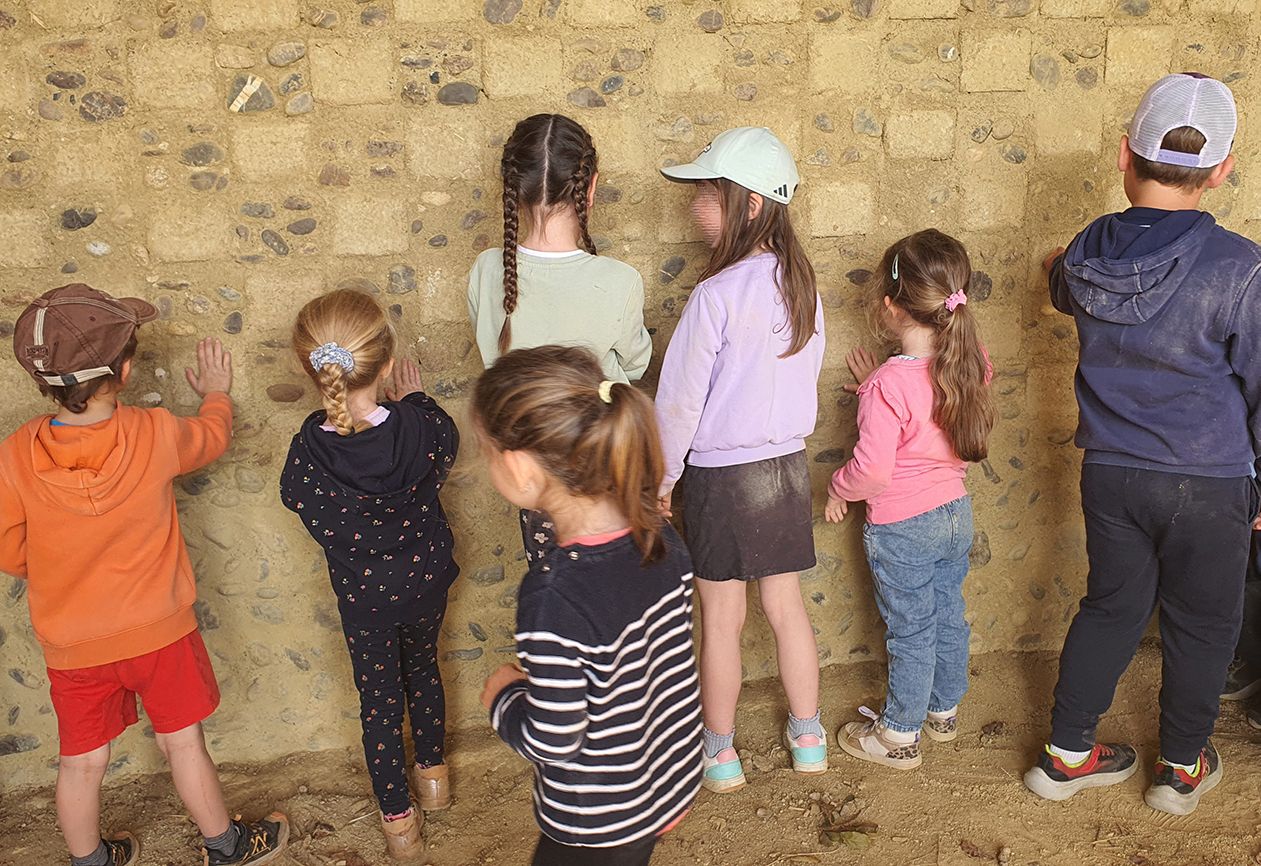
©Caue32
Der Rat für Architektur, Städtebau und Umwelt des Départements Gers möchte die Qualität der Rohbauwerke in Astarac und im Département Gers fördern, insbesondere bei jungen Menschen.
Alte Gebäude können eine Quelle der Inspiration für die Zukunft des Baugewerbes sein. Die qualitative Sanierung dieser traditionellen Häuser ist eine doppelte Herausforderung: der Schutz des Kulturerbes und die Anpassung an den Klimawandel.
Da die Ressourcen knapp und teuer waren, mussten die Gebäude der Vergangenheit Kriterien erfüllen, die heute den Prinzipien des Bioklimatismus entsprechen: ausgerichtet auf die Rückgewinnung von Sonneneinstrahlung und den Schutz vor Regen und vorherrschenden Winden. genügend Licht hereinlassen, ohne es im Sommer der Überhitzung und im Winter der Kälte auszusetzen.
Ihre Konzeption war also eng mit den Merkmalen des Ortes verbunden, in dem sie eingetragen sind: die Topographie, die Orientierung... und die Geologie. Die Materialien wurden aus dem Boden gezogen!
Im Süden des Gers wurde aus roher Erde gebaut, eine originelle Architektur durch ihr Aussehen, ihren Abdruck in der Landschaft und die Vielfalt der verwendeten Bausysteme.
Ein außergewöhnliches Erbe! Es gibt fünf traditionelle Bausysteme aus Roherde: die Bauge, das Pisé, der Adobe, der Torchis und der Damier, ganz zu schweigen von Mörsern und Putzen, die oft ebenfalls aus Erde bestehen.
In diesem Zusammenhang hat der CAUE 32 an der Schule von Saint-Michel zwei Interventionen im Rahmen der Aktion "Augen auf" vorgeschlagen, ausgehend von der Ausstellung: Zurück zur Erde, gebaut von früher, bauen heute!
Guided tour: raw earth constructions explained to the children
The Council of Architecture, Urban Planning and the Environment of Gers wishes to promote the qualities of raw earth buildings in Astarac and in Gers, especially among young audiences.
Vendredi 18 septembre, 09h00
©Caue32
The Council of Architecture, Urban Planning and the Environment of Gers wishes to promote the qualities of raw earth buildings in Astarac and in Gers, especially among young audiences.
Old buildings can be a source of inspiration for the future of the construction industry. The qualitative rehabilitation of these traditional houses addresses a dual challenge: safeguarding heritage and adapting to climate change.
Since resources are scarce and expensive, buildings in the past had to meet criteria that today resemble the principles of bioclimatism: oriented so as to recover solar inputs and protect against rain and prevailing winds, let in enough light without exposing it to overheating in summer and cold in winter.
Their design was therefore closely linked to the characteristics of the site in which they are inscribed: topography, orientation... and geology. The materials were pulled from the ground!
In the south of the Gers, an original architecture was built in raw earth by its appearance, its imprint on the landscape, and the diversity of construction systems used.
An exceptional heritage! There are five traditional construction systems in raw earth: bauge, pisé, adobe, cob and checkerboard, not to mention mortars and plasters, often also made of earth.
In this context, the CAUE 32 proposed to the school of Saint-Michel two interventions as part of the action "Raise your eyes", from the exhibition: Back to the land, built in the past, building today!
Visita commentata: costruzioni di terra cruda spiegate ai bambini
Il Consiglio di architettura, urbanistica e dell'ambiente del Gers vuole promuovere le qualità delle costruzioni in terra cruda, ad Astarac e nel Gers, in particolare presso i giovani.
Vendredi 18 septembre, 09h00
©Caue32
Il Consiglio di architettura, urbanistica e dell'ambiente del Gers vuole promuovere le qualità delle costruzioni in terra cruda, ad Astarac e nel Gers, in particolare presso i giovani.
L'edilizia antica può essere una fonte di ispirazione per il futuro del settore edile. Il recupero qualitativo di queste case tradizionali risponde a una doppia sfida: la salvaguardia del patrimonio e l'adattamento ai cambiamenti climatici.
Essendo le risorse scarse e costose, gli edifici di un tempo dovevano rispondere a criteri che oggi si avvicinano ai principi del bioclimatismo: orientati a recuperare l'apporto solare e a proteggersi dalla pioggia e dai venti dominanti, lasciare entrare abbastanza luce senza esporla al surriscaldamento in estate e al freddo in inverno.
La loro concezione era quindi intimamente legata alle caratteristiche del sito in cui sono iscritte: la topografia, l'orientamento... e la geologia. I materiali sono stati estratti dal terreno!
Nel sud del Gers, si costruiva in terra cruda, un'architettura originale per il suo aspetto, per la sua impronta sul paesaggio, per la diversità dei sistemi costruttivi utilizzati.
Un patrimonio eccezionale! Vi si trovano cinque sistemi costruttivi tradizionali in terra cruda: il bauge, il pisé, l'adobe, il torchis e il damier, per non parlare dei mortai e degli stucchi, spesso anch'essi in terra.
In questo contesto, il CAUE 32 ha proposto alla scuola di Saint-Michel due interventi nell'ambito dell'azione "Alzate gli occhi", a partire dalla mostra: Ritorno alla terra, costruito un tempo, costruire oggi!
Visite commentée : constructions de terre crue expliquée aux enfants
Le Conseil d’architecture, d’urbanisme et de l’environnement du Gers souhaite promouvoir les qualités du bâti en terre crue, en Astarac et dans le Gers, notamment auprès de jeunes publics.
Vendredi 18 septembre, 09h00
©Caue32
Le Conseil d’architecture, d’urbanisme et de l’environnement du Gers souhaite promouvoir les qualités du bâti en terre crue, en Astarac et dans le Gers, notamment auprès de jeunes publics.
Le bâti ancien peut être une source d’inspiration pour l’avenir du milieu de la construction. La réhabilitation qualitative de ces maisons traditionnelles répond à un double enjeu : la sauvegarde du patrimoine et l’adaptation aux changements climatiques.
Les ressources étant rares et coûteuses, les bâtiments d’autrefois devaient répondre à des critères se rapprochant aujourd’hui des principes du bioclimatisme : orienté de façon à récupérer les apports solaires et à se protéger de la pluie et des vents dominants, laisser rentrer suffisamment de lumière sans l’exposer aux surchauffes en été et au froid en hiver.
Leur conception était donc intimement liée aux caractéristiques du site dans lequel elles sont inscrites : la topographie, l’orientation… et la géologie. Les matériaux étaient tirés du sol !
Dans le sud du Gers, on bâtissait en terre crue, une architecture originale par son aspect, par son empreinte dans le paysage, par la diversité des systèmes constructifs utilisés.
Un patrimoine exceptionnel ! On y trouve cinq systèmes constructifs traditionnels en terre crue : la bauge, le pisé, l’adobe, le torchis et le damier, sans parler des mortiers et des enduits, souvent en terre eux aussi.
Dans ce contexte, le CAUE 32 a proposé à l’école de Saint-Michel deux interventions dans le cadre de l’action « Levez les yeux », à partir de l’exposition : Retour à la terre, bâti d’autrefois, bâtir aujourd'hui !
Visita comentada: construcciones de tierra cruda explicadas a los niños
El Consejo de Arquitectura, Urbanismo y Medio Ambiente del Gers desea promover las cualidades de la construcción en tierra cruda, en Astarac y en el Gers, especialmente entre los jóvenes.
Vendredi 18 septembre, 09h00
©Caue32
El Consejo de Arquitectura, Urbanismo y Medio Ambiente del Gers desea promover las cualidades de la construcción en tierra cruda, en Astarac y en el Gers, especialmente entre los jóvenes.
La arquitectura antigua puede ser una fuente de inspiración para el futuro del mundo de la construcción. La rehabilitación cualitativa de estas casas tradicionales responde a un doble imperativo: la salvaguardia del patrimonio y la adaptación a los cambios climáticos.
Como los recursos eran escasos y costosos, los edificios de antaño debían cumplir criterios que hoy se acercan a los principios del bioclimatismo: orientados a recuperar las aportaciones solares y a protegerse de la lluvia y de los vientos dominantes, dejar entrar suficiente luz sin exponerla al sobrecalentamiento en verano y al frío en invierno.
Su concepción estaba íntimamente ligada a las características del lugar en el que están inscritas: la topografía, la orientación... y la geología. Los materiales fueron sacados del suelo!
En el sur del Gers, se construía en tierra cruda, una arquitectura original por su aspecto, por su huella en el paisaje, por la diversidad de los sistemas constructivos utilizados.
Un patrimonio excepcional! Se encuentran cinco sistemas constructivos tradicionales en tierra cruda: el bauge, el pisé, el adobe, el torchis y el damero, por no hablar de morteros y encurtidos, a menudo también en tierra.
En este contexto, el CAUE 32 propuso a la escuela de Saint-Michel dos intervenciones en el marco de la acción «Levanten los ojos», a partir de la exposición: ¡Regreso a la tierra, construido de antaño, construir hoy!

