Der Südosten der Maulbeerbäume: zwischen Ländlichkeit und Entspannung
Die Maulbeere wurde Mitte des 19\. Jahrhunderts in Saint-Maur-des-Fossés für die Zucht von Seidenraupen angesiedelt, um die Einfuhr dieser wertvollen Stoffe zu reduzieren. Die Kultur bricht sehr Ein…
© Aurélien Prévot
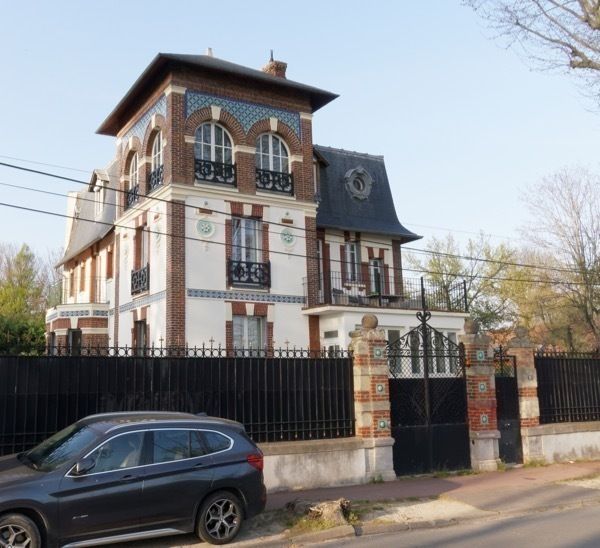
Die Maulbeere wurde Mitte des 19. Jahrhunderts in Saint-Maur-des-Fossés für die Zucht von Seidenraupen angesiedelt, um die Einfuhr dieser wertvollen Stoffe zu reduzieren. Die Kultur bricht sehr schnell zusammen. Ein zweiter Versuch beginnt Anfang der 1860er Jahre... mit dem gleichen Misserfolg. Die Urbanisierung dieses Viertels, das 1859 von Caffin begonnen wurde, ist jedoch langsam und es gibt nur etwa zwanzig «Landhäuser» vor dem Krieg von 1870. Die Wohnsiedlung geht langsam weiter und 1921 gibt es noch viele Wälder und Felder. Erst in den 1950er und 1960er Jahren kam es zu einer fortschreitenden Verstädterung von Feldern und Wäldern und einer Aufteilung der Parzellen. Spazieren wir durch ein Rechteck, das von der Marne im Süden, der Eisenbahn im Osten, der Bonneuil Avenue im Westen und der Denfert-Rochereau Avenue im Norden gebildet wird. Die vorgeschlagene Route ermöglicht es, die Geschichte des Viertels zu verstehen, indem man die Architektur seiner Häuser beobachtet, vom «bemerkenswerten Gebäude» geschützt durch den PLU, bis zum bescheidenen «wirtschaftlichen Haus». Die Broschüre enthält auch eine Schnitzeljagd für Kinder.
Laden Sie die Broschüre auf <saint-maur.com> herunter oder holen Sie sie in der Lobby des Rathauses oder am Stand des Kulturdienstes der Stadt Saint-Maur (Gärten des Rathauses Avenue de la République) an Samstagen und Sonntagen von 14 bis 17 Uhr ab. Öffentlich
The South-East of Mulberry Trees: between rurality and relaxation
The mulberry tree was established in Saint-Maur-des-Fossés in the middle of the 19th century for the breeding of silkworms, in order to reduce imports of this precious fabric. The culture collapsed A…
© Aurélien Prévot
The mulberry tree was established in Saint-Maur-des-Fossés in the middle of the 19th century for the breeding of silkworms, in order to reduce imports of this precious fabric. The culture collapsed very quickly. A second attempt resumed in the early 1860s...with the same failure. The urbanization of this district, begun by Caffin in 1859, is however slow and there are only about twenty «country houses» before the war of 1870. The subdivision continued slowly and, in 1921, many woods and cultivated fields remained. It was not until the 1950s and 1960s that we saw a gradual urbanization of fields and woods and a division of plots. Let’s walk in a rectangle formed by the Marne in the South, the railway in the East, the avenue de Bonneuil in the West and the avenue Denfert-Rochereau in the North. The proposed route allows to understand the history of the neighborhood by observing the architecture of its houses, from the «remarkable building» protected by the PLU, to the modest «economic house». The booklet also includes a treasure hunt for children.
Download the visit booklet on <saint-maur.com> or remove it in the hall of the City Hall or at the stand of the Culture department of the city of Saint-Maur (gardens of the City Hall avenue de la République) on Saturday and Sunday from 14h to 17h The walk lasts about 2 hours. All audiences
Il Sud-Est dei Gelsi: tra ruralità e relax
Il gelso è impiantato a Saint-Maur-des-Fossés a metà del XIX secolo per l'allevamento del baco da seta, al fine di ridurre le importazioni di questo prezioso tessuto. La cultura crolla molto Un degli…
© Aurélien Prévot
Il gelso è impiantato a Saint-Maur-des-Fossés a metà del XIX secolo per l'allevamento del baco da seta, al fine di ridurre le importazioni di questo prezioso tessuto. La cultura crolla molto rapidamente. Un secondo tentativo riprende all'inizio degli anni 1860... con lo stesso fallimento. L'urbanizzazione di questo quartiere, iniziata da Caffin nel 1859, è tuttavia lenta e si contano solo una ventina di «case di campagna» prima della guerra del 1870. La lottizzazione prosegue lentamente e nel 1921 rimangono ancora numerosi boschi e campi coltivati. Bisogna attendere gli anni 1950-1960 per vedere una progressiva urbanizzazione dei campi e del legno e poi una divisione dei lotti. Camminiamo in un rettangolo formato dalla Marna a sud, la ferrovia a est, l'avenue de Bonneuil a ovest e l'avenue Denfert-Rochereau a nord. Il percorso proposto permette di comprendere la storia del quartiere osservando l'architettura delle sue case, dal «notevole edificio» protetto dal PLU, fino alla modesta «casa economica». Il libretto include anche un gioco di pista per bambini.
Scarica il libretto di visita su <saint-Maur.com> o ritiralo nella hall del Municipio o allo stand del servizio Cultura della città di Saint-Maur (giardini del Municipio avenue de la République) il sabato e la domenica dalle 14 alle 17. Pubblico
El sureste de Morera: entre ruralidad y relajación
La morera se implanta en Saint-Maur-des-Fossés a mediados del siglo XIX para la cría del gusano de seda, con el fin de reducir las importaciones de este precioso tejido. La cultura se derrumba muy Un…
© Aurélien Prévot
La morera se implanta en Saint-Maur-des-Fossés a mediados del siglo XIX para la cría del gusano de seda, con el fin de reducir las importaciones de este precioso tejido. La cultura se derrumba muy rápidamente. Un segundo intento comienza a principios de 1860... con el mismo fracaso. La urbanización de este barrio, iniciada por Caffin en 1859, es sin embargo lenta y no se cuentan más que una veintena de «casas de campo» antes de la guerra de 1870. La urbanización continúa lentamente y, en 1921, todavía quedan muchos bosques y campos cultivados. Hubo que esperar hasta los años 1950-1960 para ver una urbanización progresiva de los campos y bosques y una división de las parcelas. Paseemos por un rectángulo formado por el Marne al sur, la vía férrea al este, la avenida de Bonneuil al oeste y la avenida Denfert-Rochereau al norte. El recorrido propuesto permite conocer la historia del barrio observando la arquitectura de sus casas, desde el «edificio notable» protegido por el PLU, hasta la modesta «casa económica». El folleto también incluye un juego de pista para niños.
Descargue el folleto de visita en <saint-Maur.com> o retírelo en el vestíbulo del Hôtel de Ville o en el stand del servicio Culture de la ville de Saint-Maur (jardines del Hôtel de Ville avenue de la République) los sábados y domingos de 14h a 17h El paseo dura aproximadamente 2 horas. Todo público

