Das Album von Jean und Rose
Das Album von Jean und Rose
Aménagements à l'accessibilité
Dalc'het en o c'heflusk
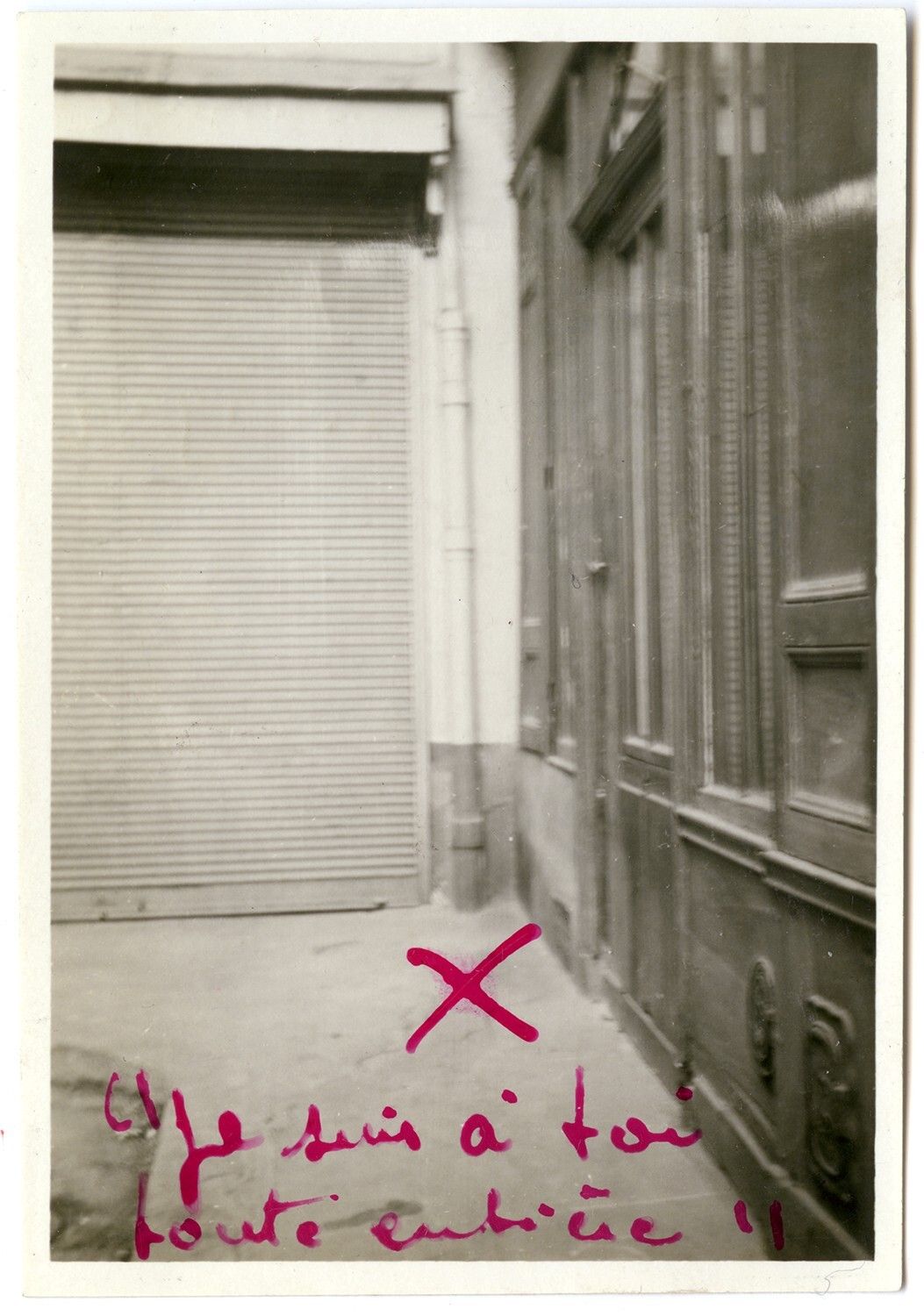
« Je suis à toi toute entière », photographie extraite de l’Album de Jean et Rose, 1930-1932 © Musée de Grenoble, donation de la fondation Antoine de Galbert, ancienne collection Marion et Philippe Jacquier
Das Album von Jean und Rose
Die Galerie Lumière des Roses hat 20 Jahre lang eine beeindruckende Sammlung von volkstümlichen Fotos angesammelt, zum Verkauf, aber auch zur Freude von Marion und Philippe Jacquier, sowohl Sammlern als auch Händlern, bestehend aus Fotos, die ihnen besonders am Herzen lagen. die einen starken ästhetischen Wert hatten.
Zum Abschluss der Galerie wurden etwa 15.000 Fotos zu etwa zehn Themen (Intimität, Geschichte, Porträt, Alltag, entscheidender Moment, Zeremonien usw.) von der Antoine de Galbert-Stiftung erworben und dem Museum von Grenoble übergeben. Einweihung einer Sammlung von volkstümlichen Fotografien in einem Kunstmuseum. Eine Auswahl dieser Fotos wurde bei den Rencontres d'Arles 2025 präsentiert.
Eines der Hauptstücke dieses Ensembles ist "Jean’s Album", das aus Platzgründen nicht in Arles präsentiert wird. Das Museum von Grenoble organisiert eine Ausstellung rund um dieses Album, in der alle Fotografien präsentiert werden. Ein Essay von Michel Frizot, der sich mit diesem Satz von Abzügen beschäftigt hat, wird im ExB-Verlag gleichzeitig mit der Ausstellung veröffentlicht.
Im Jahr 1929 war Jean achtzehn. Er lebt in Paris und arbeitet bei einer Aktiengesellschaft. Am 11. Dezember traf er Rose an der U-Bahn-Station Saint-Lazare. Sie kam nach Paris, um Kurse im Friseurhandwerk zu besuchen, und drei Monate später stieg sie in ein Passagierschiff, das nach Tahiti fuhr. Über ein Jahr nach seinem Weggang stellt Jean ihre Liebesgeschichte wieder her. Er kehrt zu den Orten zurück, die sie besuchten, macht Fotos und zeichnet ein rotes Kreuz an der Stelle auf, wo sie war, wo sie nicht mehr ist. Manchmal notiert er die Abzüge und lässt sie sprechen. Er fasst das Ensemble in einem für Rose bestimmten Album zusammen.
Dieses Fotoobjekt, das von einem jungen Mann voller Liebe entworfen wurde, ist ein Wunder der Poesie. "Schau dir diese Amateure an, deren einziges Ziel es ist, eine Erinnerung zu sammeln. Das ist reine Fotografie!", sagte André Kertesz über die Amateurfotografie. Auf einem Flohmarkt gefunden, ist es ein Echo auf Nadja de Breton, erschienen 1928.
The album of Jean and Rose
The album of Jean and Rose
Aménagements à l'accessibilité
Dalc'het en o c'heflusk
« Je suis à toi toute entière », photographie extraite de l’Album de Jean et Rose, 1930-1932 © Musée de Grenoble, donation de la fondation Antoine de Galbert, ancienne collection Marion et Philippe Jacquier
The album of Jean and Rose
The gallery Lumière des Roses has for 20 years accumulated a wonderful collection of vernacular photos, to sell but also for the pleasure of Marion and Philippe Jacquier, both collectors and merchants, consisting of photos to which they were particularly attached, or who had a strong aesthetic value.
At the close of the gallery, about 15,000 photos on ten themes (intimacy, history, portrait, daily life, decisive moments, ceremonies, etc.) were acquired by the Antoine de Galbert Foundation and donated to the Grenoble museum. inaugurating a collection of vernacular photographs in a Fine Arts museum. A selection of these photos was presented at the 2025 Rencontres d'Arles.
One of the masterpieces of this ensemble is "Jean’s album", not presented in Arles for reasons of space. The museum of Grenoble organizes an exhibition around this album, presenting all the photographs. An essay by Michel Frizot, which looked at this set of prints, will be published by ExB editions at the same time as the exhibition.
In 1929, Jean was eighteen years old. He lives in Paris and works at a stock exchange company. On 11 December, he met Rose at the Saint-Lazare metro station. She came to Paris to take hairdressing classes and three months later boarded a liner bound for Tahiti. More than a year after his departure, Jean reconstitutes their love story. He returns to the places they frequented, takes photographs and draws a cross in red ink at the place where it was, where it is no longer. Sometimes he annotates the prints and makes her talk. He gathers the whole in an album intended for Rose.
This photographic object designed by a young man mad with love is a marvel of poetry. Look at these amateurs whose only purpose is to collect a memory. That’s pure photography!” said André Kertesz about amateur photography. Found in a flea market, it is an echo to Nadja de Breton, published in 1928.


