Projekt "Les Lalleyrous - 2026"
Das Projekt "Les Lalleyrous - 2026" fügt sich voll und ganz in die Feier des 200-jährigen Jubiläums der Fotografie in Frankreich im Jahr 2027 ein, indem es eines seiner Gründungsgenres neu interpretie
Aménagements à l'accessibilité
Dalc'het en o c'heflusk
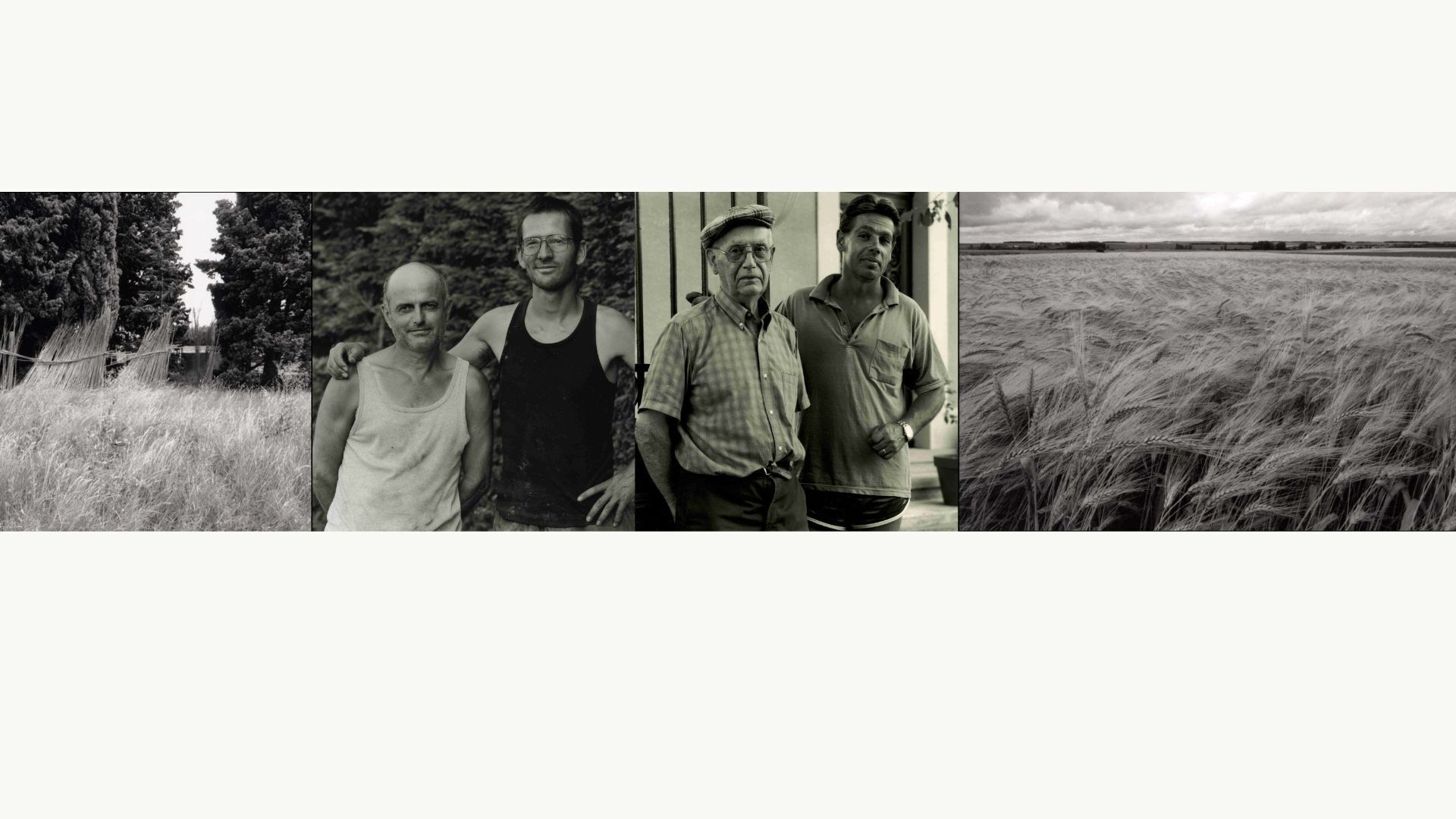
©Pascal Michalon
Das Projekt "Les Lalleyrous - 2026" fügt sich voll und ganz in die Feier des 200-jährigen Jubiläums der Fotografie in Frankreich im Jahr 2027 ein, indem es eines seiner Gründungsgenres neu interpretiert: das Porträt.
Getragen von vier Mitgliedern des Vereins Editions du Stalker, in Partnerschaft mit der Gemeinde Lalley, schlägt er vor, die Porträts der Dorfbewohner in einem handwerklichen und zeitgenössischen Ansatz zu machen.
Inspiriert von den Arbeiten von August Sander und Marie-Pierre Vincent, hinterfragt das Projekt unser aktuelles Verhältnis zum Bild im digitalen Zeitalter und der künstlichen Intelligenz.
Jeder Teilnehmer wird in einer gemeinsamen Kulisse fotografiert, mit einem frei gewählten persönlichen Gegenstand, um eine Einzigartigkeit innerhalb eines kollektiven Rahmens zu zeigen.
Die unter professionellen Bedingungen in Schwarz-Weiß gefertigten Porträts knüpfen an die Tradition des "Geh zum Fotografen" an, eine Praxis, die heute fast verschwunden ist.
Über die künstlerische Schöpfung hinaus zielt das Projekt auch darauf ab, die menschlichen, familiären und geografischen Verbindungen zu dokumentieren, die das Leben eines ländlichen Bergdorfes strukturieren.
Die Fotografien werden zur Herausgabe eines von der Vereinigung veröffentlichten Katalogs führen.
Indem es den Menschen in den Mittelpunkt stellt, würdigt "Les Lalleyrous - 2026" zwei Jahrhunderte fotografischer Geschichte und hinterfragt gleichzeitig die zeitgenössische Nutzung des Bildes.
Project "Les Lalleyrous – 2026"
The project "Les Lalleyrous – 2026" is fully in line with the celebration of the Bicentenary of Photography in France in 2027, by revisiting one of its founding genres: portraiture.
Aménagements à l'accessibilité
Dalc'het en o c'heflusk
©Pascal Michalon
The project "Les Lalleyrous – 2026" is fully in line with the celebration of the Bicentenary of Photography in France in 2027, by revisiting one of its founding genres: portraiture.
Carried by four members of the association Editions du Stalker, in partnership with the municipality of Lalley, it proposes to realize the portraits of the inhabitants of the village in an artisanal and contemporary approach.
Inspired by the work of August Sander and Marie-Pierre Vincent, the project questions our current relationship to the image in the age of digital technology and artificial intelligence.
Each participant will be photographed in a common setting, with a personal object chosen freely, in order to reveal a singularity within a collective framework.
Realized in black and white under professional conditions, the portraits will revive with the tradition of "to go to the photographer", practice today almost disappeared.
Beyond artistic creation, the project also aims to document the human, family and geographical ties that structure the life of a rural mountain village.
The photographs will give rise to the publication of a catalogue published by the association.
By putting the human at the center, "Les Lalleyrous – 2026" pays tribute to two centuries of photographic history while questioning contemporary uses of the image.
Progetto "Les Lalleyrous - 2026"
Il progetto "Les Lalleyrous - 2026" si inserisce pienamente nella celebrazione del Bicentenario della Fotografia in Francia nel 2027, rivisitando uno dei suoi generi fondatori: il ritratto.
Aménagements à l'accessibilité
Dalc'het en o c'heflusk
©Pascal Michalon
Il progetto "Les Lalleyrous - 2026" si inserisce pienamente nella celebrazione del Bicentenario della Fotografia in Francia nel 2027, rivisitando uno dei suoi generi fondatori: il ritratto.
Sostenuto da quattro membri dell'associazione Editions du Stalker, in collaborazione con il comune di Lalley, propone di realizzare i ritratti degli abitanti del villaggio secondo un approccio artigianale e contemporaneo.
Ispirato ai lavori di August Sander e Marie-Pierre Vincent, il progetto mette in discussione la nostra relazione attuale con l'immagine nell'era digitale e dell'intelligenza artificiale.
Ogni partecipante sarà fotografato in un contesto comune, con un oggetto personale scelto liberamente, per rivelare una singolarità all'interno di un quadro collettivo.
Realizzati in bianco e nero in condizioni professionali, i ritratti si riannoverano con la tradizione di "andare dal fotografo", pratica oggi quasi scomparsa.
Oltre alla creazione artistica, il progetto mira anche a documentare i legami umani, familiari e geografici che strutturano la vita di un villaggio rurale di montagna.
Le fotografie daranno luogo all'edizione di un catalogo pubblicato dall'associazione.
Mettendo l'uomo al centro, "Les Lalleyrous - 2026" rende omaggio a due secoli di storia fotografica e interroga gli usi contemporanei dell'immagine.
Projet « Les Lalleyrous – 2026 »
Le projet « Les Lalleyrous – 2026 » s’inscrit pleinement dans la célébration du Bicentenaire de la Photographie en France en 2027, en revisitant l’un de ses genres fondateurs : le portrait.
Aménagements à l'accessibilité
Dalc'het en o c'heflusk
©Pascal Michalon
Le projet « Les Lalleyrous – 2026 » s’inscrit pleinement dans la célébration du Bicentenaire de la Photographie en France en 2027, en revisitant l’un de ses genres fondateurs : le portrait.
Porté par quatre membres de l’association Editions du Stalker, en partenariat avec la municipalité de Lalley, il propose de réaliser les portraits des habitants du village dans une démarche artisanale et contemporaine.
Inspiré des travaux d’August Sander et de Marie-Pierre Vincent, le projet questionne notre rapport actuel à l’image à l’ère du numérique et de l’intelligence artificielle.
Chaque participant sera photographié dans un décor commun, avec un objet personnel choisi librement, afin de révéler une singularité au sein d’un cadre collectif.
Réalisés en noir et blanc dans des conditions professionnelles, les portraits renoueront avec la tradition d’« aller chez le photographe », pratique aujourd’hui presque disparue.
Au-delà de la création artistique, le projet vise aussi à documenter les liens humains, familiaux et géographiques qui structurent la vie d’un village rural de montagne.
Les photographies donneront lieu à l’édition d’un catalogue publié par l’association.
En mettant l’humain au centre, « Les Lalleyrous – 2026 » rend hommage à deux siècles d’histoire photographique tout en interrogeant les usages contemporains de l’image.
Proyecto "Los Lalleyrous - 2026"
El proyecto «Les Lalleyrous - 2026» se inscribe plenamente en la celebración del Bicentenario de la Fotografía en Francia en 2027, al revisitar uno de sus géneros fundadores: el retrato.
Aménagements à l'accessibilité
Dalc'het en o c'heflusk
©Pascal Michalon
El proyecto «Les Lalleyrous - 2026» se inscribe plenamente en la celebración del Bicentenario de la Fotografía en Francia en 2027, al revisitar uno de sus géneros fundadores: el retrato.
Llevado a cabo por cuatro miembros de la asociación Editions du Stalker, en colaboración con el municipio de Lalley, propone realizar los retratos de los habitantes del pueblo en un enfoque artesanal y contemporáneo.
Inspirado en los trabajos de August Sander y Marie-Pierre Vincent, el proyecto cuestiona nuestra relación actual con la imagen en la era digital y de la inteligencia artificial.
Cada participante será fotografiado en un escenario común, con un objeto personal elegido libremente, para revelar una singularidad dentro de un marco colectivo.
Realizados en blanco y negro en condiciones profesionales, los retratos volverán a la tradición de «ir al fotógrafo», práctica hoy casi desaparecida.
Más allá de la creación artística, el proyecto también busca documentar los vínculos humanos, familiares y geográficos que estructuran la vida de un pueblo rural de montaña.
Las fotografías darán lugar a la edición de un catálogo publicado por la asociación.
Al poner el ser humano en el centro, «Les Lalleyrous - 2026» rinde homenaje a dos siglos de historia fotográfica y cuestiona los usos contemporáneos de la imagen.


